
A Chinese podcast · Same story, 4 levels
尼安德特人:为什么只剩下我们?
What Happened to the Neanderthals? Why Homo Sapiens Is the Only Human Species Left
About this story
A simple story about Neanderthals — how they lived, made fire and art, and why they disappeared while we survived. HSK 2 Chinese listening practice.
This is an HSK 2 Chinese listening episode that runs about 3 minutes. The full Mandarin script is shown with tap-for-pinyin and a line-by-line English translation, so you can listen and read at once — comprehensible input in the sense of Stephen Krashen's i+1 theory. It teaches 12 key vocabulary words such as 人、有、家 and walks through 7 grammar patterns, each explained in English with examples. The same news story is retold at 4 difficulty levels — use the level selector above to find the version that is challenging but still understandable for you.
Read at your level
原文Read the complete story in Chinese. Reveal pinyin and English only when you need them.
English transcript reference
Today, I want to talk about Neanderthals.
They are gone now.
They were people too.
They had homes.
They could think and make things.
They and we are all people.
Back then, the weather was very cold.
They lived in caves.
Caves were their homes.
It was very cold in the caves.
They had fire.
Fire is very hot.
When the weather was cold, fire made them warm.
With fire, they could cook food.
They ate fruit and also ate meat.
They also drew.
They drew people.
The things they drew are in the caves.
They lived together.
They made food together.
They ate together.
They looked after the children together.
They drew together.
They thought together.
Their children were people too.
Their bones are still here.
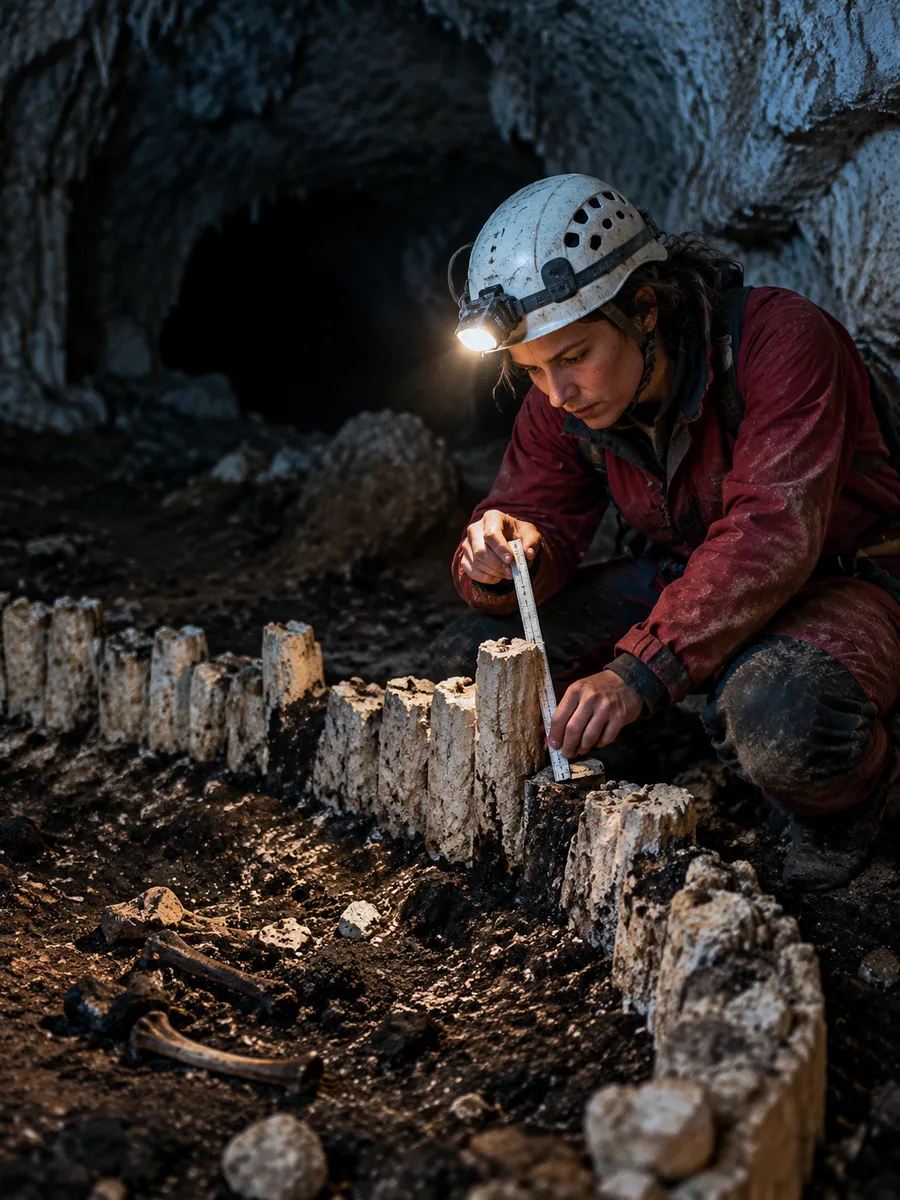
In the caves, we see their bones.
Their bones are very old.
170,000 years ago, they lived in caves.
100,000 years ago, there were many kinds of people.
Neanderthals were one kind.
We are also one kind.
Back then, there were other people too.
They are gone too.
For 400,000 years, there were Neanderthals.
Today, they are all gone.
In the caves, there are no Neanderthals anymore.
Why are they gone?
We don't know.
Some people say the weather was too cold.
Back then, the weather was very cold.
Some people say there were too few of them.
Back then, there weren't many people.
There weren't many Neanderthals either.
Some people say it was luck.
Luck is something you can't predict.
If luck is bad, people can disappear too.
They were not stupid.
Stupid means unable to learn.
They could make things.
They could think and also cook food.
In 2010, some people looked at their genes.
Genes are what mom and dad give their children.
A child's genes are given by mom and dad.
Neanderthal genes are still in our genes.
Not many.
But they didn't all leave.
Their children are our ancestors too.
Among today's people, there are also them.
Today, we see their things.
In the caves, there are their things.
Today, there are eight billion people.
Over a million years, there were many kinds of people.
Today, there is only one kind of people.
We are people too.
People like us are only 300,000 years old.
We can think too.
We can draw too.
Today's people still have them in their genes.
We are still here.
A million years from now, will there still be people?
Listen again
Try it without the transcript and notice what sounds clearer.
What vocabulary does this episode teach?
词汇HSK 1. Basic noun for a person; used throughout to talk about humans.
HSK 1. Shows possession or existence: 他们有火 'they had fire'.
HSK 1. In the script: 他们有家 'they had homes'.
HSK 1. Expresses learned ability: 他们会想 'they could think'.
HSK 1. Common verb: 做东西 'make things', 做吃的 'cook food'.
HSK 1. Refers to objects: 他们会做东西 'they could make things'.
HSK 1. Used to describe the cold climate: 天气很冷 'the weather was very cold'.
HSK 1. Adjective: 山洞里很冷 'it was cold in the caves'.
HSK 1. Adverb: 他们一起吃饭 'they ate together'.
HSK 1. Noun: 他们的孩子 'their children'.
Beyond HSK 1. Compound of 山 'mountain' and 洞 'hole'; central to the story.
Beyond HSK 1. Proper noun for the extinct human species; the topic of the episode.
* beyond level超纲词
What grammar patterns appear in this episode?
语法Subject + 有 + Object
Expresses possession or existence: 'someone has something' or 'there is/are'.
他们有火。
山洞里,有他们的东西。
Subject + 一起 + Verb
Means 'do something together'.
他们一起吃饭。
他们一起画。
Time + 的时候,Subject + Verb
Means 'when (time/condition), ...'.
天气很冷的时候,火让他们热。
Subject + 让 + Object + Adjective
Causative: 'make someone/something (adjective)'.
火让他们热。
Subject + 没有 + 了
Indicates something has disappeared or no longer exists.
他们现在没有了。
今天,他们都没有了。
Proper nouns
专有名词Sources
来源Free account
Keep learning from this story
Create a free account to keep saved words and your preferred level together.
- Keep words with their story context
- Remember your preferred level
- Build your vocabulary over time