
A listen-first Chinese story
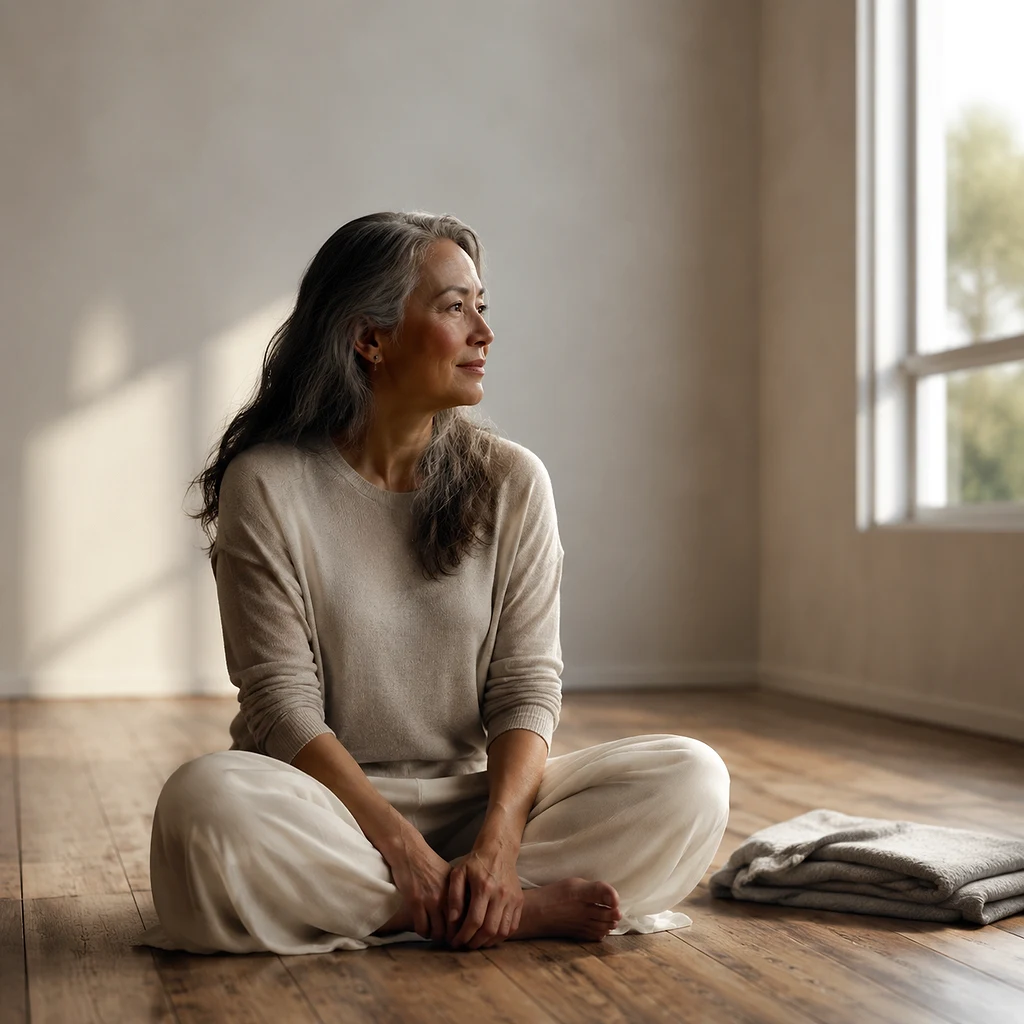
极简主义:在做减法中丰富人生
Danshari Minimalism: Living With Less
About this story
Hideko Yamashita's danshari, Mies van der Rohe's less-is-more, and the dopamine trap of modern consumerism. HSK 5+ Chinese listening practice.
This is an HSK 5+ Chinese listening episode that runs about 5 minutes. The full Mandarin script is shown with tap-for-pinyin and a line-by-line English translation, so you can listen and read at once — comprehensible input in the sense of Stephen Krashen's i+1 theory. It teaches 12 key vocabulary words such as 经济、成本、概念 and walks through 5 grammar patterns, each explained in English with examples.
Read at your level
原文Read the complete story in Chinese. Reveal pinyin and English only when you need them.
English transcript reference
Hello everyone, welcome to today's episode of "Mind Wandering."
I'm your host, Li Ming.
Hello everyone, I'm Wang Fang.
Great to see you all again.
The topic we're discussing today might just hit a sore spot for many modern people.
In this age of extreme material abundance, we own more and more things, but why does happiness seem to be decreasing?
That's right, Li Ming.
I've been thinking about this question recently too.
Especially every time I move or do a big clean-up, looking at the mountains of stuff piled up around the house, that sense of anxiety is truly suffocating.
This brings us to today's topic — minimalism.
When people hear this word, their first reaction is probably "throwing things away," or picturing a bare room with nothing but a bed.
Haha, indeed.
Many people misunderstand minimalism, thinking it's some kind of ascetic practice.
But in reality, the core of minimalism isn't "the less the better," but rather "only keep what truly sparks joy."
Exactly right.
The famous Japanese decluttering consultant Hideko Yamashita proposed the concept of "Danshari" — which is essentially a form of minimalism.
Cut off things you don't need, discard excess clutter, and free yourself from attachment to possessions.
But Wang Fang, did you know?
It's easier said than done.
Why can't we resist the urge to keep buying?
There's actually a deep psychological reason behind this.
Is it because of dopamine?
Absolutely correct.
When we browse shopping websites and see all those dazzling products, our brain releases dopamine, giving us a sense of anticipatory pleasure.
The moment we place an order, this pleasure peaks.
But once the package is opened and the item is tossed aside, that happiness quickly fades, replaced by the emptiness of a thinner wallet.
This is the classic consumerism trap.
Businesses create demand through advertising, making us think "as long as I own this product, I'll become a better person."
For example, buying a treadmill makes you think you'll become an athlete, or buying a Kindle makes you think you'll read extensively.
And the result?
The treadmill becomes a clothes rack, and the Kindle becomes a noodle lid.
Too real.
So the first step of minimalism is actually examining your own desires.
We need to ask ourselves: am I buying this for the item's actual function, or to fill an inner void?
Beyond material minimalism, I think in today's information explosion era, "digital minimalism" is equally important.
Li Ming, how much time do you spend on your phone each day?
Oh, don't even get me started.
Sometimes I just want to check the weather forecast, but accidentally end up scrolling through short videos for an hour.
Information overload makes it very hard for me to concentrate.
This "information obesity" is extremely common nowadays.
Our attention is fragmented into pieces by all kinds of scattered information.
So clearing out apps from your phone and unfollowing those accounts that only create anxiety is also a form of minimalism.
Exactly.
Rather than wasting time following other people's lives, it's better to redirect your energy and focus on the present moment.
I recently tried going offline for half a day on weekends, and I found I didn't miss anything important — in fact, I felt much more at peace.
This is actually the biggest dividend that minimalism brings — freedom.
When we're no longer held hostage by possessions and information, we can free up time and space to pursue what truly matters, like spending time with family, developing hobbies, or simply daydreaming.
Speaking of which, I want to discuss a very practical issue.
Many people, when organizing their things, always think "I don't use this now, but what if I need it someday?"
Or "this was expensive when I bought it, it would be a waste to throw it away."
This is what economists call the "sunk cost fallacy."
Because of the money or time we've invested in the past, we force ourselves to keep things that no longer produce value, which ends up occupying our current space and mental energy.
Right.
Here's a very practical standard for judgment: if the current you were to buy this item again, would you still be willing to pay the same price?
If the answer is no, then it has completed its historical mission and can be let go.
Even if it was once expensive, if it only brings you burden now, its value is actually negative.
Well said.
A minimalist life isn't the goal itself, but rather a tool.
It's meant to free us from the complexity of trivial matters and give us a sense of inner order.
That's right.
As the architectural master Mies van der Rohe said, "Less is more."
Remove the excess decoration to reveal the essence of architecture; remove life's impurities to see the true nature of existence.
For friends who want to try minimalist living, do you have any specific suggestions?
I think you can start with "micro-habits."
For example, throw away or donate one unnecessary item every day; or implement the "one in, one out" rule — buy a new piece of clothing, and you must get rid of an old one.
That's very practical advice.
Don't try to empty your house in one day — that will lead to a rebound.
Take it slow, and feel the sense of lightness that comes with each act of letting go.
Yes.
Life is your own — don't pursue minimalism just for the sake of minimalism, and don't force yourself just for the label.
Finding the balance point where you feel most comfortable is what matters most.
Thank you so much for sharing today, Wang Fang.
After listening to this episode, I'm also planning to go home and clean up my desk.
Haha, take action!
I hope everyone can enrich their lives by subtracting from them.
Thank you for listening, and we'll see you next time on "Mind Wandering."
Goodbye!
Listen again
Try it without the transcript and notice what sounds clearer.
What vocabulary does this episode teach?
词汇A concept of decluttering: refusing unnecessary items, disposing of excess, and separating from attachment to possessions. Originally from a book by Hideko Yamashita.
A lifestyle or artistic style characterized by extreme simplicity.
Accumulating large quantities of goods or materials.
Idiom used to describe a wide variety of beautiful items on display.
A neurotransmitter associated with pleasure and reward mechanisms in the brain.
The theory that an increasing consumption of goods is economically desirable; a preoccupation with buying consumer goods.
HSK 1-4. economy.
HSK 1-4. cost.
HSK 1-4. concept.
HSK 1-4. number, digit.
HSK 1-4. tool.
HSK 1-4. modern times / modern.
What grammar patterns appear in this episode?
语法Not only not..., but on the contrary... (Used to indicate a result contrary to expectations)
感觉非但没有错过什么重要大事,反而心情平静了很多。
Rather than... it is better to... (Used to compare two options and prefer the second one)
与其把时间浪费在关注别人的生活上,不如把精力收回来,专注当下的体验。
The reason why... is because... (A structure to explain the cause or reason for a result)
我们之所以会忍不住买买买,是因为大脑会分泌多巴胺。
What replaces it is... / Replaced by... (Used to introduce a new situation that supersedes the previous one)
那种快乐很快就消失了,取而代之的是钱包变瘪的空虚感。
Proper nouns
专有名词Free account
Keep learning from this story
Create a free account to keep saved words and your preferred level together.
- Keep words with their story context
- Remember your preferred level
- Build your vocabulary over time