
A Chinese podcast · Same story, 4 levels
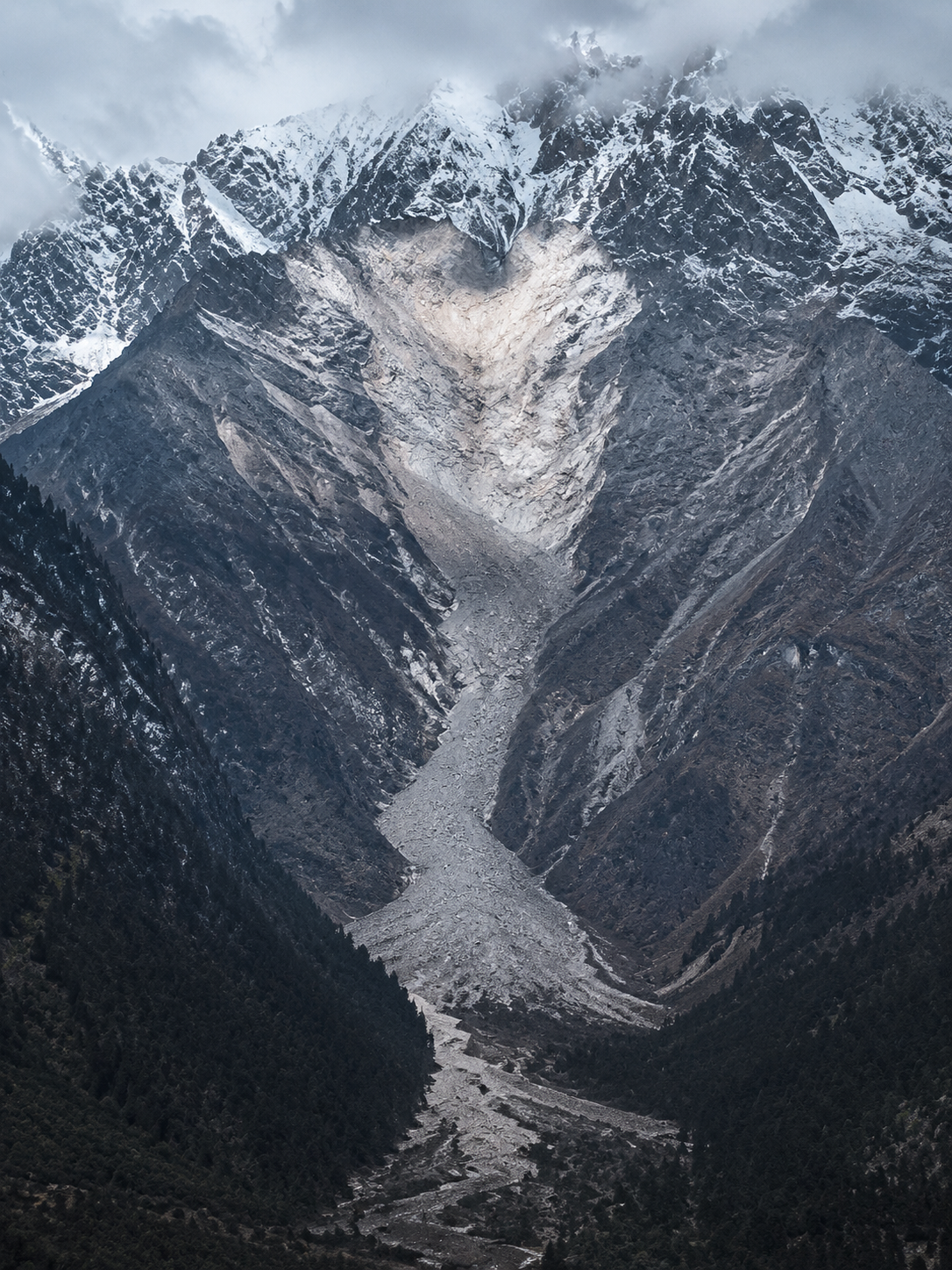
尼泊尔和西藏之间的冰川塌了。仪器上那个四点四级的地震,其实是山掉下来的声音。
Nepal–Tibet Glacier Collapse Mimics Earthquake
About this story
Nepal–Tibet Glacier Collapse Mimics Earthquake. HSK 2 Chinese listening practice.
This is an HSK 2 Chinese listening episode that runs about 2 minutes. The full Mandarin script is shown with tap-for-pinyin and a line-by-line English translation, so you can listen and read at once — comprehensible input in the sense of Stephen Krashen's i+1 theory. It teaches 6 key vocabulary words such as 早上、时候、声音 and walks through 3 grammar patterns, each explained in English with examples. The same news story is retold at 4 difficulty levels — use the level selector above to find the version that is challenging but still understandable for you.
Read at your level
原文Read the complete story in Chinese. Reveal pinyin and English only when you need them.
English transcript reference
Between Nepal and Tibet, there are very high mountains.
It is cold up there, and there is ice on the mountains.
Last Wednesday, a little after eight in the morning.
A huge block of ice on the mountain fell down.
That block of ice was very big, and very heavy.
From a height of 5,200 metres, it fell 1,200 metres.
As the ice came down, it brought a lot of rock down with it.
At the foot of the mountain, there is a river.
The ice and rock fell into the river and blocked it.
The water could not get past. It stopped there, and grew and grew.
Then the rock blocking the river gave way.
All of that water rushed down at once.
Below the mountain there were many people.
They had come from other countries to see the mountains.
When the water came down, they were below the mountain.
As of now, more than six hundred people cannot be found.
And close to four hundred people are already dead.
There is one more thing about this that is strange.
That morning, the instruments showed a magnitude 4.4 earthquake.
So everyone assumed the earthquake was what brought the ice down.
Later, scientists said there was no earthquake that day.
What the instruments picked up was the sound of the ice and rock coming down.
The ice and rock were so heavy that the instruments took it for an earthquake.
So that day, the earthquake was not the cause.
The earthquake was the result.
Think about it:
When we see something happen, why do we so often get the cause wrong?
Listen again
Try it without the transcript and notice what sounds clearer.
What vocabulary does this episode teach?
词汇那天早上 — that morning, when the instruments recorded the signal.
冰掉下来的时候 — at the moment the ice came down.
就是冰和石头掉下来的声音 — it was the sound of the ice and rock falling.
这件事还有一个地方,很奇怪 — there is one more strange thing about this.
Literally "earth shake". The word this episode overturns.
冰和石头掉进河里 — the ice and rock fell into the river.
* beyond level超纲词
What grammar patterns appear in this episode?
语法把 + object + verb + 住
The 住 result means "held fast, stuck in place".
冰和石头掉进河里,把河堵住了。 — The ice and rock fell in and blocked the river.
重到……
"So heavy that ..." — adjective + 到 introduces the consequence.
重到仪器以为,那是地震。 — So heavy that the instruments took it for an earthquake.
以为
To think something that turns out to be wrong. Never use 以为 for a belief that was correct.
大家都以为,是地震让冰掉下来的。 — Everyone assumed the earthquake brought the ice down.
Proper nouns
专有名词Sources
来源Free account
Keep learning from this story
Create a free account to keep saved words and your preferred level together.
- Keep words with their story context
- Remember your preferred level
- Build your vocabulary over time