
A Chinese podcast · Same story, 4 levels
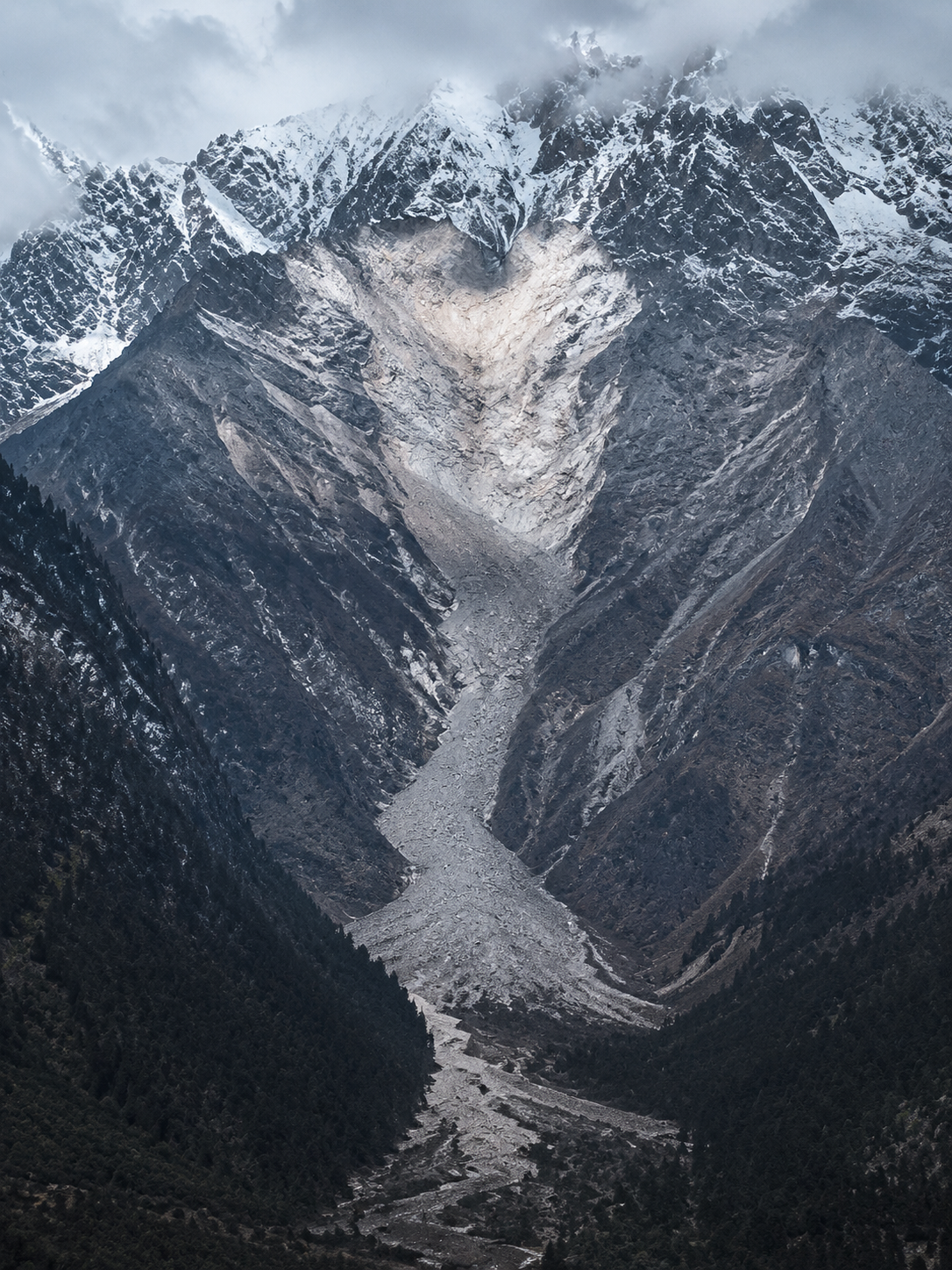
尼泊尔和西藏之间的冰川塌了。仪器上那个四点四级的地震,其实是山掉下来的声音。
Nepal–Tibet Glacier Collapse Mimics Earthquake
About this story
Nepal–Tibet Glacier Collapse Mimics Earthquake. HSK 3 Chinese listening practice.
This is an HSK 3-4 Chinese listening episode that runs about 3 minutes. The full Mandarin script is shown with tap-for-pinyin and a line-by-line English translation, so you can listen and read at once — comprehensible input in the sense of Stephen Krashen's i+1 theory. It teaches 6 key vocabulary words such as 清楚、新闻、原因 and walks through 3 grammar patterns, each explained in English with examples. The same news story is retold at 4 difficulty levels — use the level selector above to find the version that is challenging but still understandable for you.
Read at your level
原文Read the complete story in Chinese. Reveal pinyin and English only when you need them.
English transcript reference
Get the order straight first, because the order is the part of this story worth remembering.
Last Wednesday, at 8:40 in the morning, something happened in a valley between Nepal and Tibet.
It happened at a mountain called Langtang, and there is a glacier on it.
That morning, a huge block of ice at the bottom of the glacier came away from a height of 5,200 metres.
It fell 1,200 metres before it reached the valley floor.
1,200 metres is higher than the tallest building in the world.
A block of ice that size does not come down alone.
On the way it took rock and mud with it, all of it.
When it reached the bottom, it drove into a river in Tibet.
What happened next is the deadliest step in the whole thing.
That ice and rock blocked the river.
The water could not get past. It stopped above the blockage and piled up.
It was not a real dam. It was a heap of rock that had just fallen down.
It could not hold for long, and then it collapsed.
All of the water that had piled up went down at once.
Below the mountain there were many people.
That area is a famous trekking route, and many people come from other countries to walk it.
So far, Nepal has confirmed close to four hundred dead.
Another six hundred trekkers are unaccounted for, from thirty-four countries.
On the Tibet side, more than five hundred people are also missing.
These numbers are still changing every day.
Now the part of this story people most easily get backwards.
That morning, instruments around the world recorded a magnitude 4.4 earthquake.
So the earliest reports were written this way: there was an earthquake, and then the glacier collapsed.
It sounds reasonable.
Then the USGS changed what it said.
They said there had been no earthquake at all that day.
The signal the instruments recorded was given off by the landslide itself.
One corner of a mountain came down heavy enough to move seismometers around the world.
That supposed magnitude 4.4 was later recalculated as a 5.2.
Do you see the order here?
It was not the earthquake that shook the glacier loose.
It was the glacier coming down, doing an impression of an earthquake.
Here, the earthquake is not the cause. It is the result.
How did the scientists work it out?
From satellite photographs.
The first day’s photographs were useless — cloud and dust were in the way.
On the second day the cloud cleared, and they could see it was not only ice that fell. The rock under the ice fell too.
The rock loosened first, and the ice came down with it.
One question still has no answer: why did the rock loosen this time?
Scientists say it is still too early to say directly that this was climate change.
Think about it:
When we see something happen, why do we so often get the cause and the result the wrong way round?
Listen again
Try it without the transcript and notice what sounds clearer.
What vocabulary does this episode teach?
词汇先把顺序说清楚 — get the order straight first.
这条新闻最值得记住的,就是顺序 — the order is what is worth remembering.
地震在这里不是原因 — here, the earthquake is not the cause.
是结果 — it is the result. Paired with 原因 throughout.
Literally "ice river" — a good example of how Chinese builds technical words.
是滑坡本身发出来的 — it was given off by the landslide itself.
* beyond level超纲词
What grammar patterns appear in this episode?
语法不是 A,是 B
Corrects a wrong attribution: not A, but B.
地震在这里不是原因,是结果。 — Here the earthquake is not the cause, it is the result.
The more of one, the more of the other.
就在上面停下来,越积越多。 — It stopped above and piled up more and more.
……本身
"Itself" — emphasises the thing rather than something acting on it.
是滑坡本身发出来的。 — It was given off by the landslide itself.
Proper nouns
专有名词Sources
来源Free account
Keep learning from this story
Create a free account to keep saved words and your preferred level together.
- Keep words with their story context
- Remember your preferred level
- Build your vocabulary over time