
A Chinese podcast · Same story, 4 levels
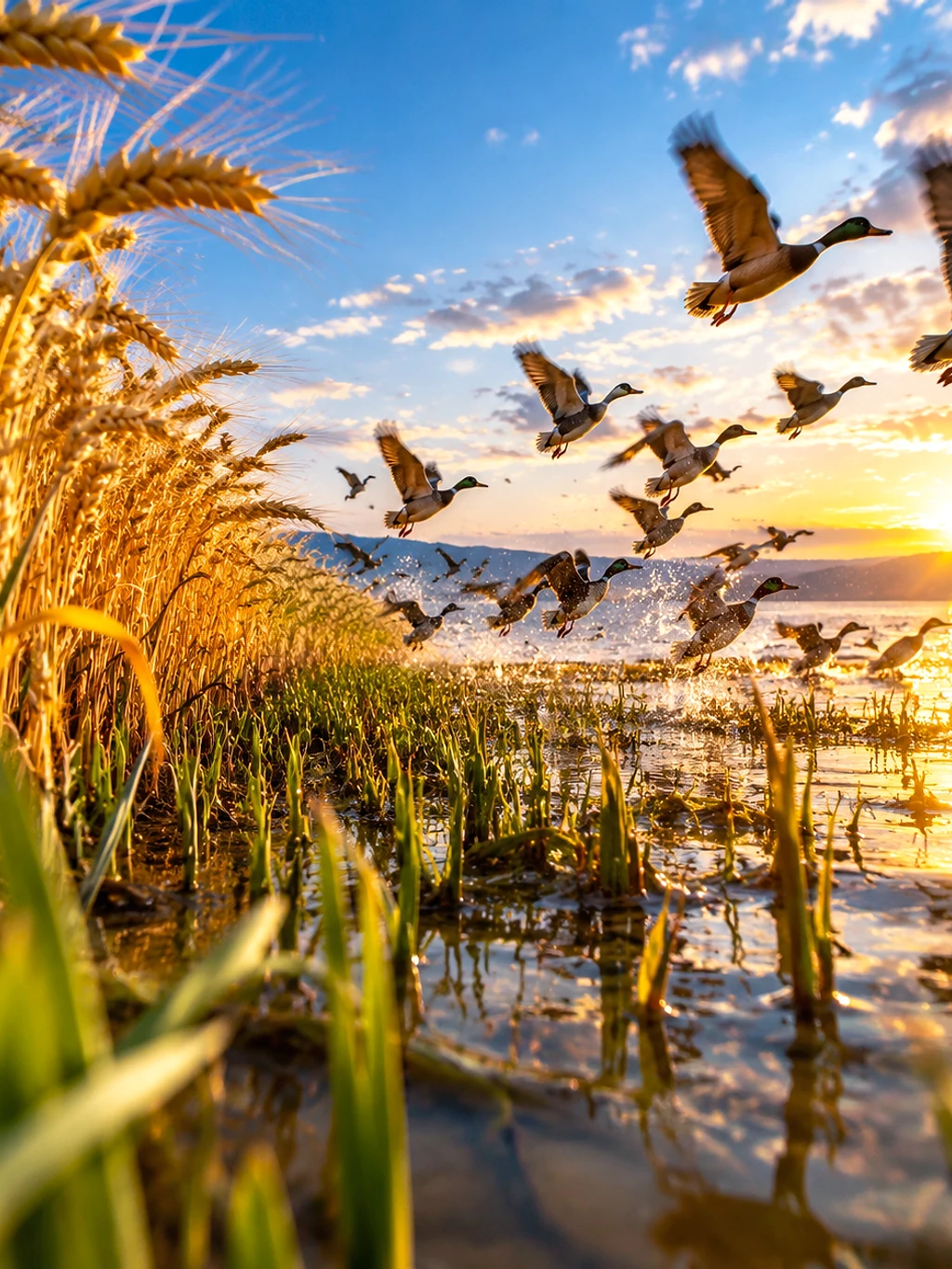
他把七十英亩麦地还给了水:现在那里住着一百四十种鸟,和两种快没有了的鱼
Oregon Barley Field Becomes Wetland for 140 Birds
About this story
A southern Oregon farmer took 70 of his 400 acres of barley ground out of production and let the water back in. The managed wetland now filters phosphorus out of Upper Klamath Lake, records 140 bird species, and is rearing two endangered sucker fish whose young almost never survived. Chinese listening practice at four levels. HSK 1 Chinese listening practice.
This is an HSK 1 Chinese listening episode that runs about 3 minutes. The full Mandarin script is shown with tap-for-pinyin and a line-by-line English translation, so you can listen and read at once — comprehensible input in the sense of Stephen Krashen's i+1 theory. It teaches 12 key vocabulary words such as 水、年、想 and walks through 3 grammar patterns, each explained in English with examples. The same news story is retold at 4 difficulty levels — use the level selector above to find the version that is challenging but still understandable for you.
Read at your level
原文Read the complete story in Chinese. Reveal pinyin and English only when you need them.
English transcript reference
Today we are talking about a farmer.
A farmer is someone who grows things.
His family lives a long way away.
His family has a lot of land.
For a hundred years, his family has grown things on this land.
His father grew things, and his father's father grew things.
In front of this land there is a big lake.
There is water in the lake, and there are fish.
The lake is beautiful.
But there was something wrong with this land.
In winter, there is a lot of water.
The water rises, and the land is all water.
The water is on the land, and it is in the lake.
When the water on the land goes back into the lake, the lake water turns bad.
When the lake water is bad, the fish in the lake are not well either.
The farmer thought about it for many years.
He said: this land — what was it before?
He said: before, this was simply water.
He said: this land wants to be water.
So he made something new.
His land is big.
He did not plant on all of it.
He gave seventy acres to the water.
Seventy acres is a large piece of land.
On those seventy acres, he stopped planting.
He let the water come back.
The water came back, and the grass came.
The grass came, and the insects came.
The insects came, and then the birds came.
How many kinds of bird are there now?
A hundred and forty kinds.
A hundred and forty kinds of bird.
There are big birds and small birds.
In winter, a great many birds come here.
The birds are on the water, and in the grass.
There are fish in the water too.
There is one kind of fish that is very, very rare.
In most waters, this kind of fish is nearly gone.
But here, this kind of fish can live.
Last year, people looked into the water.
They saw fifty big fish.
They were very glad.
This farmer did not leave.
He is still here.
He grows things, and he watches the birds.
Think about it: where you live — what was it before?
Listen again
Try it without the transcript and notice what sounds clearer.
What vocabulary does this episode teach?
词汇HSK 1. The word the whole episode turns on — 他让水回来.
HSK 1. 一百年了,他家都在这个地上种东西 — the length of the habit he broke.
HSK 1. 农民想了很多年, and again in the closing question to you.
HSK 1. 种东西 is how the episode says "to farm" using only floor words.
HSK 1. 他们看见了五十条大鱼 — the moment the whole effort pays off.
HSK 1. The one emotion word in the episode, saved for the fish.
Defined in line two by what he does: 农民是种东西的人。
Introduced with 有水,也有鱼 so the word lands on things already known.
The first thing to come back: 水回来了,草就来了。
The middle link in the chain, without which the birds never arrive.
一百四十种鸟 — the number is repeated so it has time to register.
The point of the story: 这种鱼快没有了,可是在这里可以住。
* beyond level超纲词
What grammar patterns appear in this episode?
语法X 来了,Y 就来了
One thing arrives, and the next follows. Chaining these makes a food chain audible without a single technical word.
水回来了,草就来了。
草来了,虫也来了。
虫来了,鸟就来了。
……,也……
Also, too. 也 goes before the verb, never at the end of the sentence as in English.
爸爸种,爸爸的爸爸也种。
湖里有水,也有鱼。
他种东西,也看鸟。
以前是什么?
以前 means "before, in the past". The episode opens the farmer's decision with it and closes by turning it on you.
他说:这个地,以前是什么?
他说:以前,这里就是水。
你住的地方,以前是什么?
Proper nouns
专有名词Sources
来源Free account
Keep learning from this story
Create a free account to keep saved words and your preferred level together.
- Keep words with their story context
- Remember your preferred level
- Build your vocabulary over time