
A Chinese podcast · Same story, 4 levels
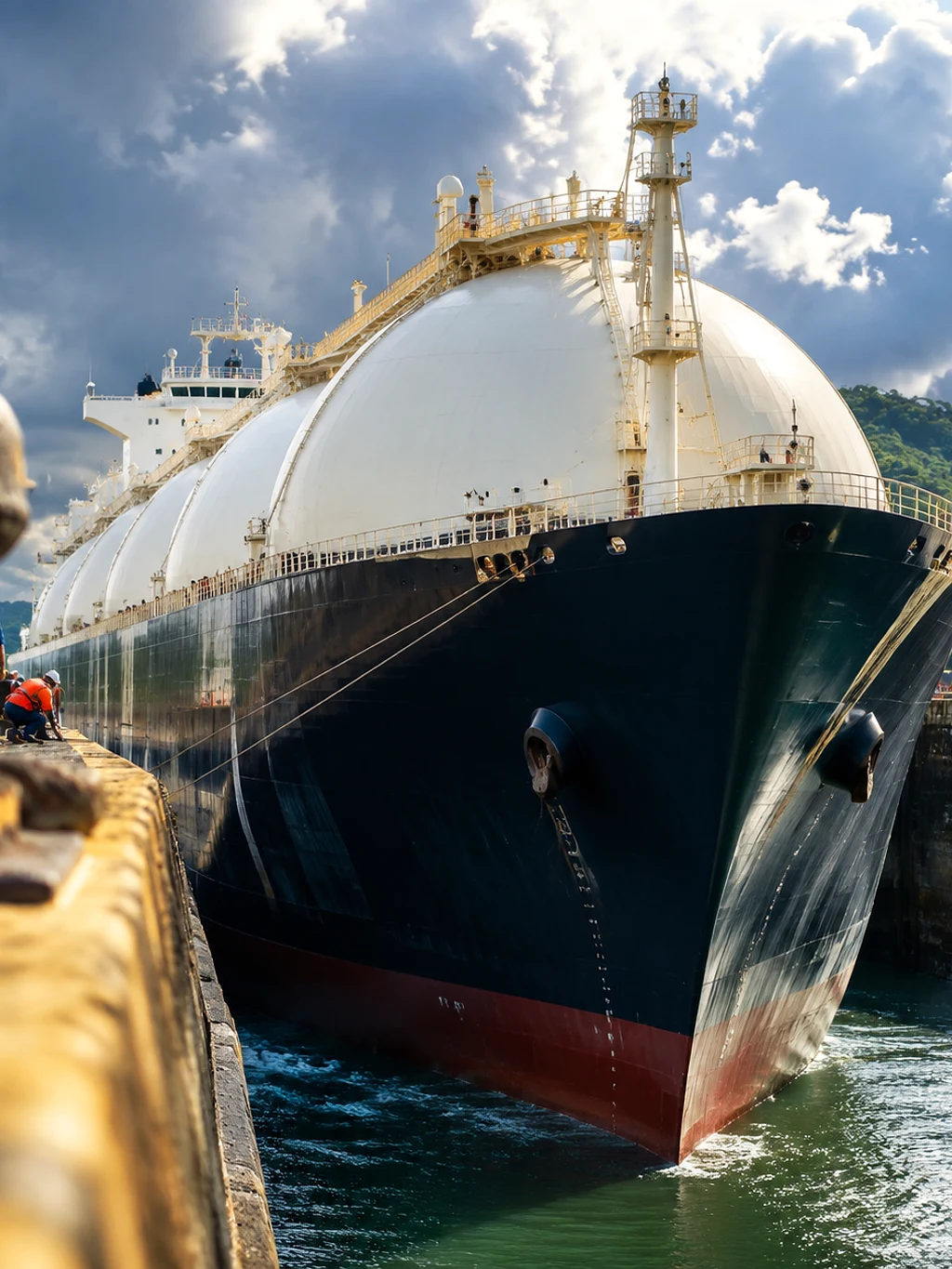
穿过巴拿马运河要花五百万美元:战争和干旱让船票贵到创纪录
Crossing the Panama Canal Now Costs Up to $5 Million, as War and Drought Push Prices to a Record
About this story
Some cargo ships have recently paid up to $5 million to cross the Panama Canal, a record, against an auction average of about $150,000 last winter. Two forces collided: the Iran war rerouted energy, sending Asia-bound LNG tankers from the US Gulf through the canal, while El Niño-linked extreme weather cut daily transits to 32. The canal's locks run on rainwater from Gatún Lake, which also supplies Panamanians' drinking water, and the canal provides 20 cents of every dollar Panama's government takes in. Chinese listening practice at four levels. HSK 2 Chinese listening practice.
This is an HSK 2 Chinese listening episode that runs about 3 minutes. The full Mandarin script is shown with tap-for-pinyin and a line-by-line English translation, so you can listen and read at once — comprehensible input in the sense of Stephen Krashen's i+1 theory. It teaches 12 key vocabulary words such as 船、贵、经过 and walks through 3 grammar patterns, each explained in English with examples. The same news story is retold at 4 difficulty levels — use the level selector above to find the version that is challenging but still understandable for you.
Read at your level
原文Read the complete story in Chinese. Reveal pinyin and English only when you need them.
English transcript reference
Did you know?
These days, a big ship sometimes has to pay five million dollars to use the Panama Canal.
Panama sits between two oceans.
More than a hundred years ago, people dug a river here, called a canal, eighty kilometers long.
With this canal, ships going from one ocean to the other can save a lot of distance.
Of every hundred loads of cargo that big ships carry, six go through this canal.
America uses it most, and China is second.
To use the canal, a ship has to pay a toll.
Most ships book their time months in advance.
A few time slots are held back and auctioned — whoever bids the most gets them.
From last October to this March, the average auction price was around a hundred and fifty thousand dollars.
This summer, some ships bid over a million dollars.
Recently, some ships even paid four or five million dollars.
The canal's new head says this is the highest price in history.
Why is it so expensive?
The first reason is war.
This year, America and Iran went to war.
Natural gas shipments from the Middle East to Asia have been disrupted.
So many Asian countries have started buying natural gas from America.
Ships carrying natural gas leave America and go through the Panama Canal to Asia.
And these ships often don't book ahead, so when they're in a hurry, they have to go to the auction.
The second reason is the weather.
The Panama Canal uses lots of fresh water, and all of it comes from rain.
This year the weather has meant less rain, and less water in the lake.
With less water, ships can't carry too much cargo, or they'd hit the bottom.
Fewer ships can get through the canal, too.
Earlier this year, thirty-eight to forty-one ships a day could pass; now only thirty-two are allowed.
And this water is also what people in Panama drink, so it can't all go to the ships.
With more ships wanting to pass and fewer able to, the price goes up.
The canal's head says: the market decides the price.
She also says she wouldn't be surprised to see prices of two or three million dollars again.
When tolls get more expensive, shipping gets more expensive too, and in the end the things we buy may get more expensive.
For Panama, the canal is extremely important.
Of every dollar the government takes in, twenty cents comes from the canal.
If you were a ship's captain and your ship had to arrive tomorrow, would you pay five million dollars?
Listen again
Try it without the transcript and notice what sounds clearer.
What vocabulary does this episode teach?
词汇HSK 2. 一条大船要走巴拿马运河.
HSK 2. 为什么这么贵?
HSK 2. 要经过巴拿马运河,去亚洲.
HSK 2. 亚洲很多国家,开始从美国买天然气.
HSK 2. 你的船明天必须到.
HSK 2. 她也不会奇怪 — the canal chief expects more high bids.
人们在这里开了一条河,叫运河.
谁出的钱多,就给谁 — the episode's definition.
运天然气的船从美国出发.
第一个原因,是战争.
巴拿马运河要用很多淡水.
HSK 4. 价钱是市场决定的.
* beyond level超纲词
What grammar patterns appear in this episode?
语法谁……,就……谁
Whoever X gets Y — the logic of an auction.
还有很少的一些时间,拿出来拍卖,谁出的钱多,就给谁。
……,不然……
Otherwise — the consequence if you don't.
水少了,船就不能装太多货,不然会碰到水底。
Proper Nouns
专有名词Free account
Keep learning from this story
Create a free account to keep saved words and your preferred level together.
- Keep words with their story context
- Remember your preferred level
- Build your vocabulary over time