
A Chinese podcast · Same story, 4 levels
肽的狂热与冷水:一个身体里本就有的东西,如何被吹成"神药"
Peptides Become Wellness Industry's Miracle Craze
About this story
Peptides Become Wellness Industry's Miracle Craze. HSK 5-6 Chinese listening practice.
This is an HSK 5-6 Chinese listening episode that runs about 4 minutes. The full Mandarin script is shown with tap-for-pinyin and a line-by-line English translation, so you can listen and read at once — comprehensible input in the sense of Stephen Krashen's i+1 theory. It teaches 16 key vocabulary words such as 身体、健康、研究 and walks through 3 grammar patterns, each explained in English with examples. The same news story is retold at 4 difficulty levels — use the level selector above to find the version that is challenging but still understandable for you.
Read at your level
原文Read the complete story in Chinese. Reveal pinyin and English only when you need them.
English transcript reference
Today I want to talk about a topic that's stayed red-hot in health and fitness circles these past couple of years — peptides.
From gym locker rooms to the major social platforms, it's as if overnight everyone is discussing them, chasing after them.
Before we dive in, let's take a minute to clarify what "peptide" itself means.
Plainly put, a peptide is a short segment of amino acids linked together — a substance that already exists naturally in every one of our bodies.
It's not mysterious at all, and hardly some exotic dark technology.
For example, the renowned insulin, used to control blood sugar, is essentially a kind of peptide.
Since it's something the body already contains, how exactly did it suddenly catch fire?
The key driver behind this is, in fact, weight-loss drugs.
In recent years, a wave of weight-loss drugs led by semaglutide swept the globe with immediate results — and they happen to all be peptides.
So a simple yet dangerous association quietly took root in the public mind: if these peptides can slim you down, don't other peptides each have their own miraculous effects?
Yet "the weight-loss drug is a peptide, so other peptides must work too" — that reasoning doesn't hold up from the start.
What truly fueled this wave is the vast army of influencers and bloggers on social media.
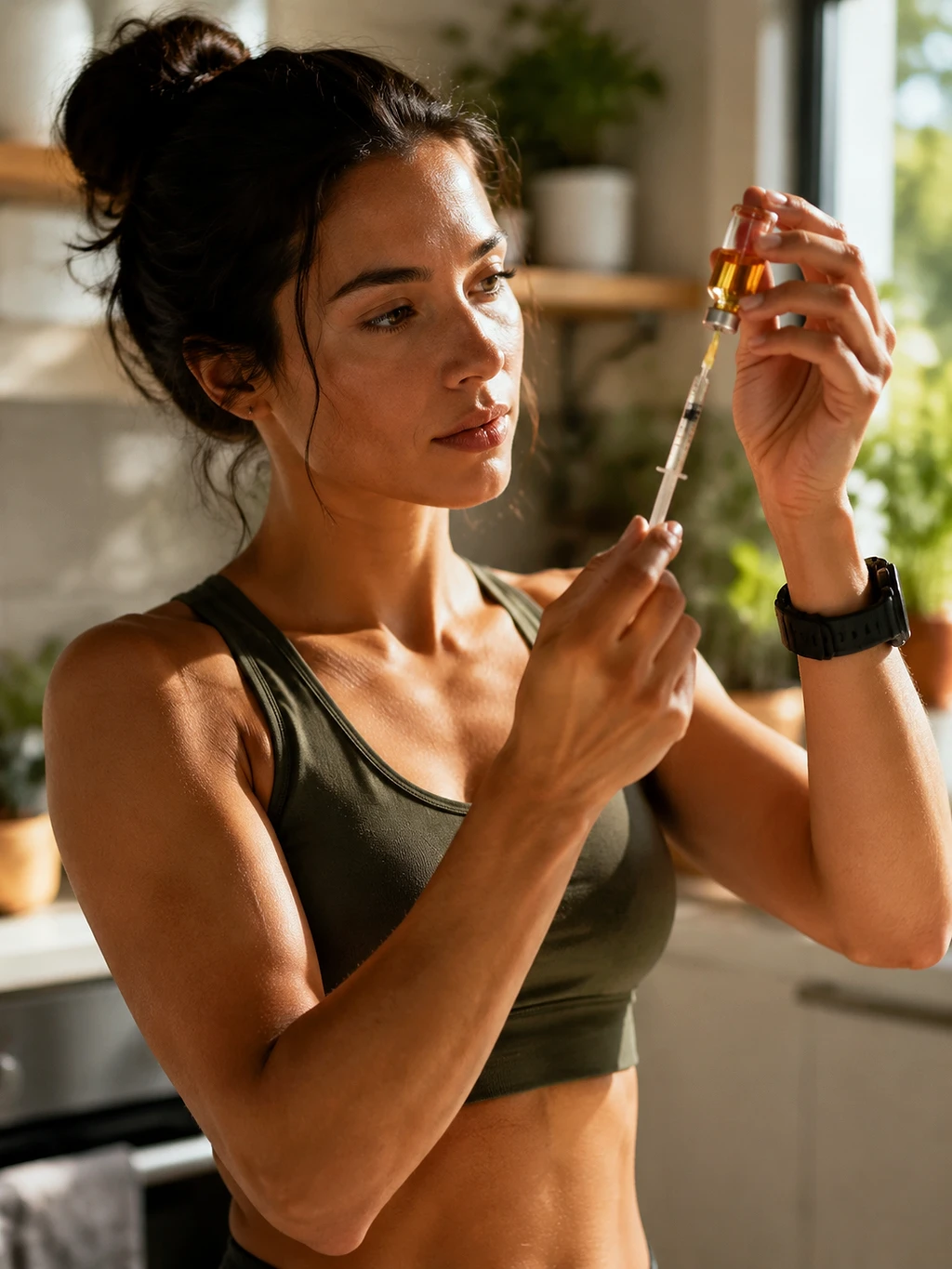
Day after day they promote all sorts of peptides, claiming a single shot can build muscle, speed injury recovery, fight aging, even make your mind sharper.
The one hyped as most miraculous of all is a peptide code-named BPC-157.
In their spiel, peptides have become nothing less than a cure-all miracle elixir.
So over the past two years, more and more ordinary people with no medical background have started injecting themselves with peptides of every kind.
But in stark contrast to this frenzy is the steady stream of cold water from the medical field.
Experts' worries center on two levels.
First, the most fundamental: whether they even work.
Many peptides placed on a pedestal, like BPC-157, have to this day not undergone a single proper human clinical trial.
The vast majority of their so-called effects rest only at the level of small-animal experiments.
In other words, tens of thousands of users are, in effect, using their own bodies as unpaid test subjects.
Second, and even more unsettling, is safety.
When regulators spot-checked peptides sold online, they found as many as 40% of products either had doses that didn't match the label or contained ingredients never listed on it.
Even more spine-chilling, research already suggests certain peptides may accelerate the proliferation of abnormal cells in the body — in theory, possibly touching on cancer.
Beyond that, such substances may trigger a chain of side effects like edema, headaches, and blood-pressure swings.
There's another intriguing detail hidden here: a considerable share of these peptides are sold from places like China, over the internet, to buyers worldwide.
To evade regulation, they mostly wear the label "for research use only," while in fact flowing steadily into the hands of ordinary consumers.
Data shows that in just the first nine months of 2025, U.S. imports of such substances reached over 300 million dollars — a full doubling from the year before.
And early this year, a senior U.S. official publicly declared he'd relax restrictions on some peptides — tantamount to adding another bucket of oil to the fire.
Ultimately, peptides are by no means a magic elixir that turns stone into gold.
In the hands of proper medicine, they hold their own distinct value; but the moment they become goods anyone can buy and inject online at will, the risk is amplified without limit.
Real health has never had such a cheap shortcut.
Okay, that's where we'll leave this topic today; see you next time.
Listen again
Try it without the transcript and notice what sounds clearer.
What vocabulary does this episode teach?
词汇The body. 天然存在于我们的身体里 = exists naturally in our bodies.
Health. 在健康和健身圈里 = in health and fitness circles.
Research. 已有研究提示 = research already suggests.
Safety. 更令人不安的一点,是安全 = the more unsettling point is safety.
A market. 给本就火热的市场浇了一把油 = poured fuel on an already hot market.
Data. 有数据显示 = data shows.
A concept. 把“肽”这个概念讲清楚 = clarify the concept of “peptide”.
Import. 美国进口的此类物质 = such substances imported by the US.
The topic — a short chain of amino acids.
Amino acids. 一小段氨基酸连接起来 = a short segment of amino acids linked together.
Insulin. 用来控制血糖的胰岛素 = insulin, used to control blood sugar.
Weight loss. 一批减肥药风靡全球 = a wave of weight-loss drugs swept the globe.
To inject. 给自己注射五花八门的肽 = injecting themselves with all sorts of peptides.
A side effect. 一连串副作用 = a chain of side effects.
Regulation. 为了规避监管 = to evade regulation.
Clinical. 一项人体临床试验都没有做过 = not a single human clinical trial.
* beyond level超纲词
What grammar patterns appear in this episode?
语法以...为代表
"Represented by... / led by..." — names a leading example.
以司美格鲁肽为代表的一批减肥药。
无异于...
"Tantamount to / no different from..." — an emphatic equivalence.
要放宽限制,无异于给这把火,又添了一桶油。
可一旦...便...
"But once..., then (right away)..." — a sharp conditional turn.
可一旦沦为网上任人乱买乱打的商品,风险便被无限放大。
Proper nouns
专有名词Free account
Keep learning from this story
Create a free account to keep saved words and your preferred level together.
- Keep words with their story context
- Remember your preferred level
- Build your vocabulary over time