
A Chinese podcast · Same story, 4 levels
肽为什么突然火了?一场从减肥药开始的健康热潮
Peptides Become Wellness Industry's Miracle Craze
About this story
Peptides Become Wellness Industry's Miracle Craze. HSK 3 Chinese listening practice.
This is an HSK 3-4 Chinese listening episode that runs about 4 minutes. The full Mandarin script is shown with tap-for-pinyin and a line-by-line English translation, so you can listen and read at once — comprehensible input in the sense of Stephen Krashen's i+1 theory. It teaches 14 key vocabulary words such as 医生、身体、健康 and walks through 3 grammar patterns, each explained in English with examples. The same news story is retold at 4 difficulty levels — use the level selector above to find the version that is challenging but still understandable for you.
Read at your level
原文Read the complete story in Chinese. Reveal pinyin and English only when you need them.
English transcript reference
Today, a topic that's been especially hot in the wellness world lately — "peptides."
For the past year or two, from the gym to social media, it seems everyone is discussing them.
Let's take a minute to explain what a peptide actually is.
Plainly put, a peptide is a short string of amino acids linked together, something that already exists in our bodies.
It's not mysterious at all.
For instance, the famous insulin is, in fact, a kind of peptide.
So here's the question: how did something the body already has suddenly get so hot?
Behind this, there's a key driver: weight-loss drugs.
In recent years, drugs like semaglutide became hugely popular and clearly effective — and they happen to all be peptides.
So many people reasoned: if these peptides help you lose weight, don't other peptides work too?
But actually, "the weight-loss drug is a peptide, so other peptides must work" — that logic simply doesn't hold up.
On top of that, a huge crowd of influencers and bloggers online promote all kinds of peptides daily.
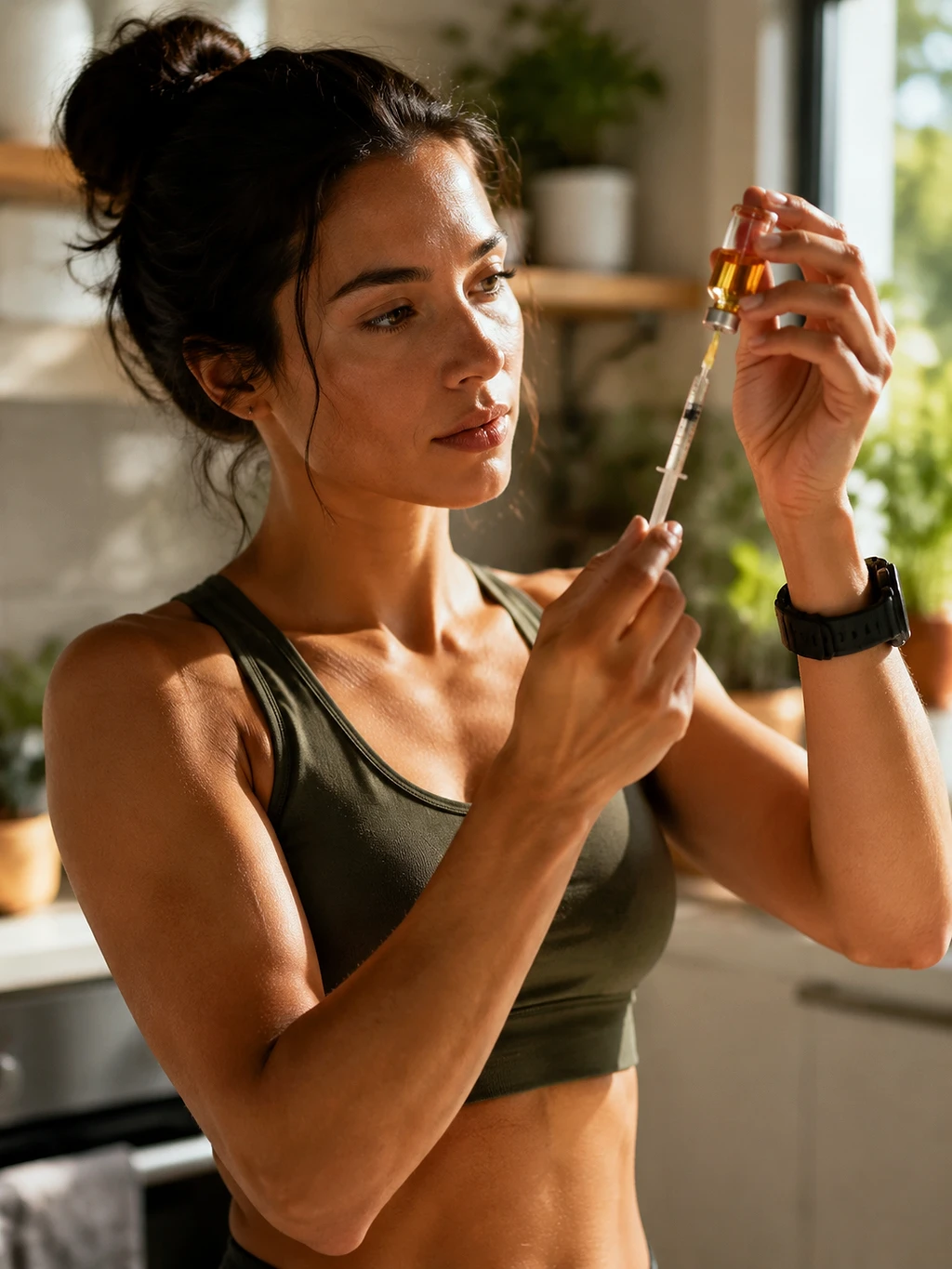
They claim that with a peptide shot, you can build muscle, recover from injury faster, fight aging, even sharpen your mind.
The one hyped as most miraculous is a peptide called BPC-157.
In their telling, peptides have practically become a cure-all miracle drug.
So over the past two years, more and more ordinary people have started injecting all sorts of peptides.
But doctors and experts keep throwing cold water on it.
Their worries center on two points.
First: the question of whether they even work.
Many of the peptides hyped to the skies, like BPC-157, so far haven't had a single proper human clinical trial.
The vast majority of the so-called evidence comes from experiments on small animals.
In other words, many people are turning their own bodies into a testing ground.
The second point, and the more serious one, is safety.
When regulators spot-checked peptides sold online, they found that nearly 40% either had the wrong dose or contained ingredients not stated on the label.
Even more chilling, research suggests some peptides may speed the growth of abnormal cells in the body — in theory, possibly linked to cancer.
On top of that, these substances may cause a string of side effects like edema, headaches, and blood-pressure swings.
There's another telling phenomenon here.
Many of these peptides are sold from places like China, over the internet, to buyers around the world.
To skirt regulation, they mostly fly the banner of "for research use only," while actually being sold to ordinary consumers.
Just how big is this market?
Data shows that in the first nine months of 2025 alone, U.S. imports of such substances hit over 300 million dollars — double the year before.
And early this year, a senior U.S. official publicly said he'd loosen restrictions on some peptides — which only poured more fuel on an already blazing market.
Ultimately, peptides are no magic elixir that turns stone into gold.
In proper medicine they do have their uses; but the moment they become something bought and injected carelessly online, the risks are amplified without limit.
Real health has never had such a cheap shortcut.
Okay, that's where we'll leave this topic today; see you next time.
Listen again
Try it without the transcript and notice what sounds clearer.
What vocabulary does this episode teach?
词汇Doctor. 医生和专家们一直在泼冷水 = doctors and experts keep pushing back.
The body. 本来就存在于我们的身体里 = it already exists in our bodies.
Health. 在健康圈里特别火 = very hot in wellness circles.
An animal. 在小动物身上做的实验 = experiments done on small animals.
Research. 有研究提示 = research suggests.
Safety. 更严重的一点,是安全 = the more serious point is safety.
Serious. 也是更严重的一点 = and the more serious point.
The topic — a short chain of amino acids.
Amino acids. 一小段氨基酸连起来 = a short string of amino acids.
Insulin. 大名鼎鼎的胰岛素就是一种肽 = the famous insulin is a peptide.
Weight loss. 像司美格鲁肽这类减肥药 = drugs like semaglutide.
A side effect. 一系列副作用 = a series of side effects.
Regulation. 监管部门抽查过 = regulators spot-checked.
Clinical. 一个人体临床试验都没做过 = not one human clinical trial.
* beyond level超纲词
What grammar patterns appear in this episode?
语法既然...那...(是不是)...
"Since... then...?" — draws an inference from a premise.
既然这些肽能减肥,那别的肽,是不是也有神奇的好处?
被 + 动词
The passive — "X was (hyped / spot-checked)".
很多被吹上天的肽…
监管部门抽查过网上卖的肽。
一旦...就...
"Once... then..." — a condition and its consequence.
一旦变成网上乱买乱打的东西,风险就被无限放大了。
Proper nouns
专有名词Free account
Keep learning from this story
Create a free account to keep saved words and your preferred level together.
- Keep words with their story context
- Remember your preferred level
- Build your vocabulary over time