
A Chinese podcast · Same story, 4 levels
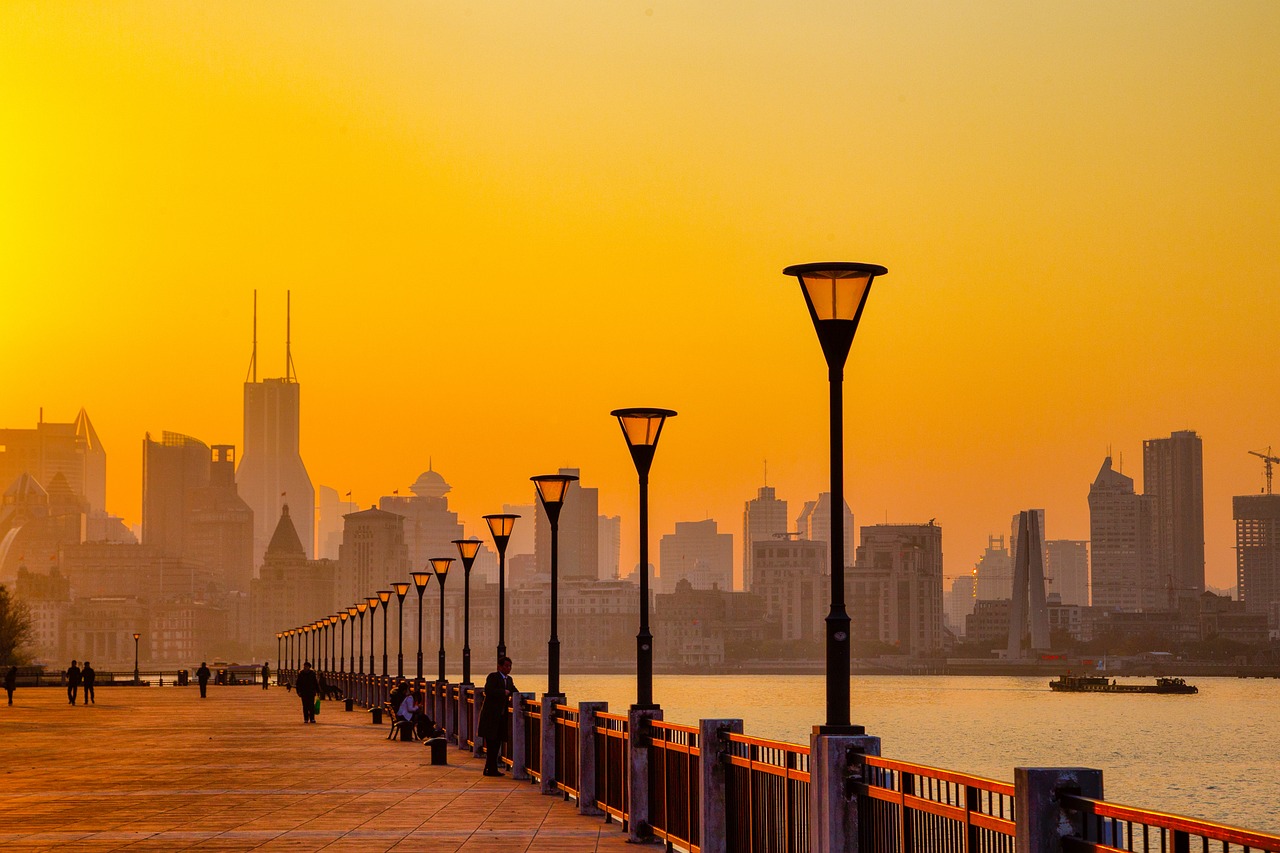
上海:两块钱的船
Shanghai: The Two-Yuan Boat That Built the Skyline
About this story
A two-yuan Shanghai ferry that once carried a million people a day, the 632-metre tower on the far bank, and the lanes that went in 1990. HSK 1 Chinese listening practice.
This is an HSK 1 Chinese listening episode that runs about 3 minutes. The full Mandarin script is shown with tap-for-pinyin and a line-by-line English translation, so you can listen and read at once — comprehensible input in the sense of Stephen Krashen's i+1 theory. It teaches 8 key vocabulary words such as 船、楼、江 and walks through 3 grammar patterns, each explained in English with examples. The same news story is retold at 4 difficulty levels — use the level selector above to find the version that is challenging but still understandable for you.
Read at your level
原文Read the complete story in Chinese. Reveal pinyin and English only when you need them.
English transcript reference
Today I'm in Shanghai.
Shanghai is very big, and there are a lot of people.
Today I'm going to take a boat.
The boat costs two yuan.
There aren't many people on the boat.
A Shanghai man sits down in front of me.
He says: there used to be a lot of people on this boat.
I say: how many, before?
He says: a million people a day.
I say: a million?
He says: yes, a million a day.
I say: how come there are so few now?
He says: before, if you wanted to cross the river, the boat was the only way.
He says: before 1971, there was no other route.
Now there are other routes, so fewer people take the boat.
The boat sets off.
I ask him: what river is this?
He says: this river is called the Huangpu.
He says: the river has an east side and a west side.
I look at the west side.
The houses on the west side are old — over a hundred years old.
I look at the east side.
The towers on the east side are very tall.
The tallest one is six hundred and thirty-two metres.
I say: when did these towers appear?
He says: before 1990, there were no towers on the east side.
I say: what was on the east side then?
He says: nothing at all.
He says: in 1990, Shanghai decided to build the east side.
From that year to now is a bit over thirty years.
I say: thirty-odd years, and there are this many towers?
He says: yes.
The boat reaches the east side.
I get off and look up.
The tower is too tall; I can't see the top.
In the afternoon, I go back to the west side.
I walk into a small lane.
This lane is very narrow.
Both sides of the lane are old houses.
In one house, several families used to live together.
I say: are there still a lot of houses like this now?
He says: not many.
He says: in 1949, Shanghai had over nine thousand lanes like this.
He says: now only a thousand or so of the good ones are left.
I say: how did that happen?
He says: after 1990, a lot of them went.
I say: 1990?
He says: yes — the same year they started building the east side.
I sit down at the side of the lane.
Someone is eating in front of a house.
This lane is very narrow, and I like it a lot.
I go back to the river.
The towers on the east side have their lights on.
I think about this boat.
This boat has been running since 1911.
Two yuan, not many people, very slow on the water.
Before, a million people a day took this boat to the east side.
Now the towers on the east side are very tall, and few people take the boat.
Would you rather live in a very tall tower, or in a small lane like this?
Listen again
Try it without the transcript and notice what sounds clearer.
What vocabulary does this episode teach?
词汇HSK 1. 坐船 — two yuan, a dozen minutes.
HSK 1. The episode is built on looking at each bank in turn.
HSK 1. Two yuan — the whole crossing.
HSK 1. A million a day became almost nobody.
Running since 1911; before 1971 it was the only way across the river.
The tallest on the east bank is 632 metres.
The Huangpu, which splits the city into two different centuries.
In one lane house, several families used to live together.
* beyond level超纲词
What grammar patterns appear in this episode?
语法只能 + verb
Says the only option available.
他说:以前你要过江,只能坐船。
…,就 …
就 marks the result following directly from the change.
现在有别的路了,坐船的人就少了。
太 + adjective + 了
Says something is excessive.
楼太高了,上面看不到。
Proper nouns
专有名词Free account
Keep learning from this story
Create a free account to keep saved words and your preferred level together.
- Keep words with their story context
- Remember your preferred level
- Build your vocabulary over time