
A Chinese podcast · Same story, 4 levels
上海:一九九〇年的两面
Shanghai: The Two-Yuan Boat That Built the Skyline
About this story
The Huangpu ferry from 1911 to two yuan, Pudong announced 18 April 1990, and the shikumen demolition that started the same year. HSK 3 Chinese listening practice.
This is an HSK 3-4 Chinese listening episode that runs about 6 minutes. The full Mandarin script is shown with tap-for-pinyin and a line-by-line English translation, so you can listen and read at once — comprehensible input in the sense of Stephen Krashen's i+1 theory. It teaches 12 key vocabulary words such as 轮渡、隧道、弄堂 and walks through 3 grammar patterns, each explained in English with examples. The same news story is retold at 4 difficulty levels — use the level selector above to find the version that is challenging but still understandable for you.
Read at your level
原文Read the complete story in Chinese. Reveal pinyin and English only when you need them.
English transcript reference
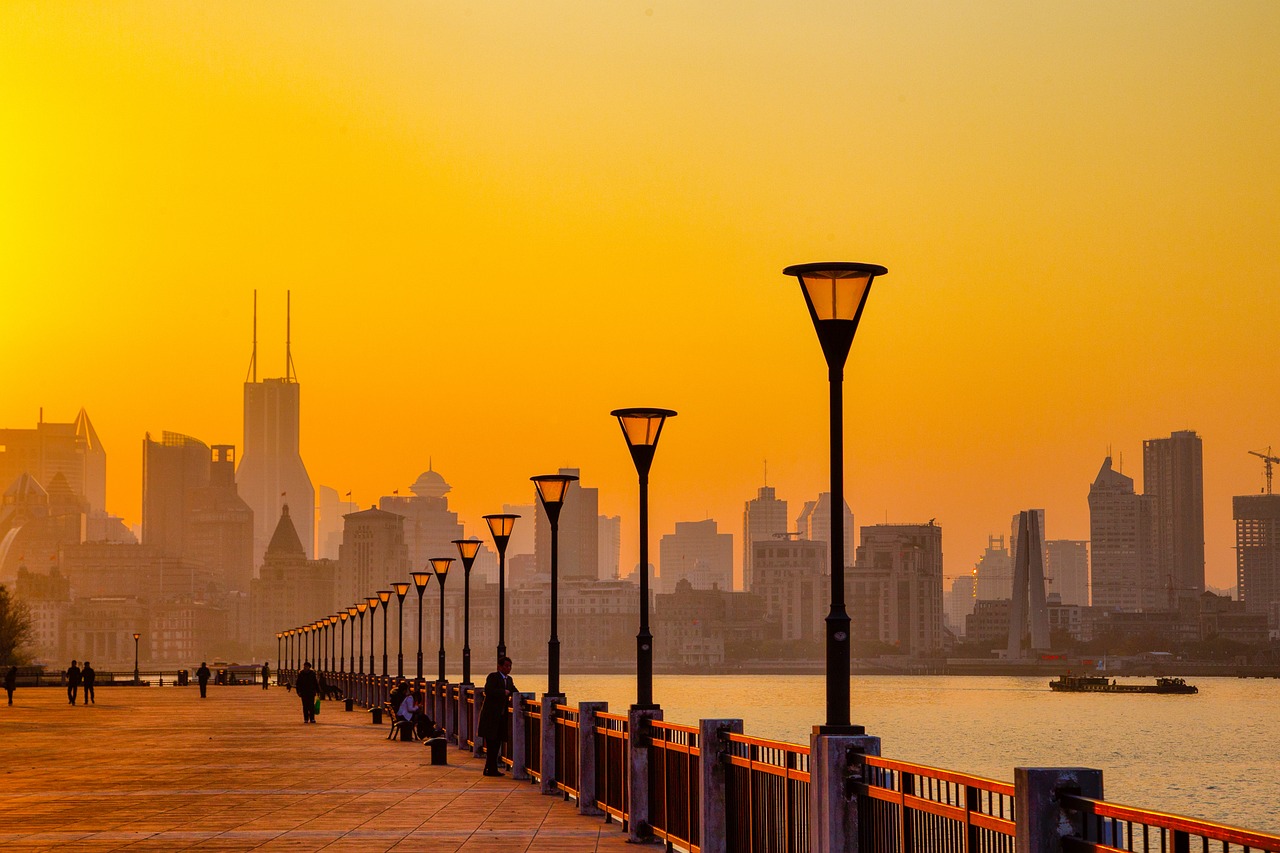
Most people who come to Shanghai go to the Bund first, standing on the riverbank photographing the Pudong skyline to the east.
That photo is very useful, because it compresses a complicated city into one sentence: the old is on this side, the new is on that side.
The trouble is that while the sentence isn't false, it explains almost nothing.
If you want to work out the relationship between the two banks, the cheapest way is to spend two yuan on the ferry.
The ferry isn't a sightseeing attraction; it's municipal transport.
At morning rush hour the deck is packed with commuters and delivery riders pushing bicycles.
They keep their heads down over their phones, with no interest at all in the towers on either side.
For them this is just crossing the river.
But in those dozen minutes you pass through two upheavals spanning more than a century of Shanghai.
Start with the boat itself.
Public ferry service on the Huangpu began in 1911.
Before that, wharves and factories were already being built in Pudong, and workers had to be shuttled across each day by steam launch.
Until the Dapu Road Tunnel opened in 1971, the ferry was the only way across the river.
The Yan'an East Road Tunnel opened in 1989, and bridges and metro lines followed.
The ferry's peak was the 1980s: over a million passenger trips a day, with twenty-two routes on the river.
In 1993 the annual figure was about three hundred and seventy million trips.
A ticket cost six fen then; today it's two yuan.
Get on today and you can usually find a seat.
The west bank is the Bund.
That row of stone buildings went up in the early twentieth century, belonging then to banks, trading houses and insurance companies.
Shanghai in that period was one of the most important treaty ports in the Far East.
The architectural styles came from Europe, the drawings from foreign firms, and the construction was done by Chinese craftsmen.
The east bank is Pudong.
On 18 April 1990, the state announced the development and opening of Pudong, establishing the Lujiazui, Waigaoqiao and Jinqiao development zones that same year.
Before that, Pudong was mainly farmland, wharves, warehouses and small factories.
Shanghai has a widely repeated old saying: better a bed in Puxi than a room in Pudong.
The Oriental Pearl was completed in 1994 at four hundred and sixty-eight metres, the tallest structure in Shanghai at the time.
Today the tallest is the Shanghai Tower, at six hundred and thirty-two metres.
In a bit over thirty years, a stretch of farmland grew into China's highest skyline.
In the afternoon I left the river and walked into a longtang in the old town.
The longtang is a housing form particular to Shanghai: a main lane leads inward, flanked by tightly packed two- and three-storey shikumen houses.
It was once the main way this city lived, not merely the nostalgia of a few people today.
In 1949, Shanghai had over nine thousand two hundred shikumen lanes, more than two hundred thousand buildings, covering some twenty million square metres.
At that time seventy to eighty percent of the city's population lived in them.
Walk in today and it's much more complicated.
Some houses still have their old residents; some have become cafés and guesthouses; and whole districts have been demolished.
The statistics don't fully agree, but more than eighty percent have been demolished, and only about one thousand nine hundred reasonably complete examples remain.
What's most worth noticing is the timing.
Large-scale demolition began around 1990.
Which is to say: the same few years in which Pudong's development was announced were the years Shanghai began clearing shikumen block by block.
Building a new city on the east bank, demolishing the old city on the west.
These two things are usually told separately; they are in fact two sides of one decision.
In one lane I met an older woman who had lived there for more than forty years.
I asked whether she'd be willing to move.
She listed the drawbacks first: small rooms, cold winters, an inconvenient bathroom.
Then she said she knows every single person in that lane.
After moving to a new estate the flat is certainly bigger, but she might not exchange more than a few sentences with a neighbour in a year.
She said that when people discuss old housing, they usually only discuss the housing.
What's genuinely hard to rebuild is the relationships between people.
That remark made me look again at the contrast between the Bund and Pudong.
We're used to telling Shanghai as a story about speed: a new city built in thirty years.
The speed is real, and so is the achievement.
But speed has a cost, and the cost usually lands on specific families.
At dusk I went back to the river, and the lights on the far bank started changing colour.
Before leaving I took the ferry once more, the same two yuan.
The first time I rode it, I thought I was going from the old city to the new one.
The second time I understood: this boat carried the people across first, and only then did the towers appear over there.
Now the towers are six hundred and thirty-two metres tall, and the boat is empty.
If you had one day, would you go up the six-hundred-metre observation deck, or walk a lane that may not be there in a few years?
Listen again
Try it without the transcript and notice what sounds clearer.
What vocabulary does this episode teach?
词汇HSK 3. The ferry is transport, not sightseeing.
HSK 3-4. The Bund's row of them came from Europe by way of Chinese hands.
HSK 3. What is hardest to rebuild after a lane is cleared.
HSK 3-4. Real, and never free.
Municipal transport, not a tourist ride — which is the point.
The 1971 Dapu Road tunnel ended the ferry's monopoly.
Shanghai's characteristic lane housing form.
9,200 lanes in 1949; over 80% demolished.
Shanghai's role in the Far East trade of the period.
The 18 April 1990 announcement that produced Pudong.
Began at scale around the same year.
The word that reframes the whole speed story.
* beyond level超纲词
What grammar patterns appear in this episode?
语法… 以前,…
Anchors an event before a stated date.
一九七一年打浦路隧道通车以前,轮渡是过江的唯一方式。
一边 … 一边 …
Two things happening at the same time.
一边在江东建新城,一边在江西拆老城。
Proper nouns
专有名词Free account
Keep learning from this story
Create a free account to keep saved words and your preferred level together.
- Keep words with their story context
- Remember your preferred level
- Build your vocabulary over time