
A Chinese podcast · Same story, 4 levels
上海:同一年,一边建一边拆
Shanghai: The Two-Yuan Boat That Built the Skyline
About this story
Pudong was announced on 18 April 1990 — the same year Shanghai started clearing its shikumen lanes. Told from a two-yuan ferry. HSK 2 Chinese listening practice.
This is an HSK 2 Chinese listening episode that runs about 5 minutes. The full Mandarin script is shown with tap-for-pinyin and a line-by-line English translation, so you can listen and read at once — comprehensible input in the sense of Stephen Krashen's i+1 theory. It teaches 8 key vocabulary words such as 石库门、里弄、工厂 and walks through 3 grammar patterns, each explained in English with examples. The same news story is retold at 4 difficulty levels — use the level selector above to find the version that is challenging but still understandable for you.
Read at your level
原文Read the complete story in Chinese. Reveal pinyin and English only when you need them.
English transcript reference
On my first day in Shanghai, my friend didn't take me to the tallest tower.
She took me to ride a boat.
I said: a boat?
She said: two yuan, about a dozen minutes.
I said: is this a boat for tourists?
She said: no.
She said: this is the boat Shanghai people take to work.
We walked to the river and got on.
Some people had bicycles with them; some were in work clothes.
The boat set off.
My friend said: this river is called the Huangpu.
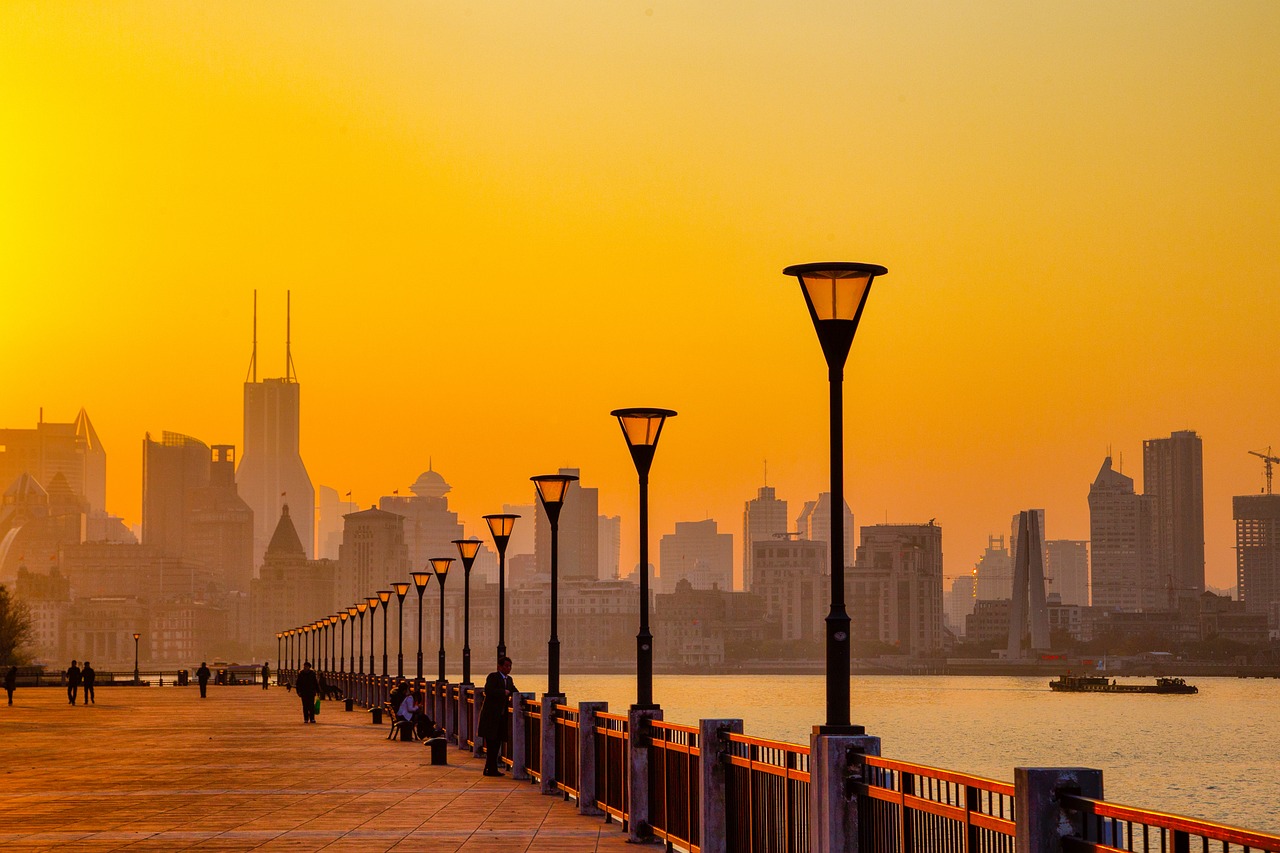
The west bank is called the Bund; the east bank is called Pudong.
I said: why are the two sides so different?
She said: because they didn't start at the same time.
Those buildings on the Bund were already there a hundred years ago.
Most of the towers in Pudong were built in the last thirty years.
I said: thirty years?
She said: yes.
She said: on 18 April 1990, the state announced it would develop Pudong.
Before that, Pudong was mainly farmland and small factories.
There's an old saying in Shanghai: better a bed in Puxi than a room in Pudong.
I said: and now?
She said: the tallest tower in Pudong now is six hundred and thirty-two metres.
The Oriental Pearl opened in 1994, four hundred and sixty-eight metres.
Back then people thought that was already very tall.
I looked at the towers on the east bank.
I found it hard to believe that thirty-odd years ago that was farmland.
My friend said: this boat you're sitting on is much older than those towers.
She said: it's been running since 1911.
I said: over a hundred years?
She said: yes.
She said: before 1971, the boat was the only way across the river.
That year the first road crossing opened.
Before that, workers going to Pudong all had to take the boat.
I said: there must have been a lot of people on it then.
She said: in the eighties, over a million a day.
There were twenty-two ferry routes on the river.
In 1993, three hundred and seventy million passenger trips in one year.
I said: what did a ticket cost back then?
She said: six fen.
I said: six fen?
She said: yes, six fen — now it's two yuan.
The boat took only a dozen minutes to cross.
My friend said: in those dozen minutes, you looked at a hundred years.
We walked around in Pudong.
The roads are wide and the towers are tall; at midday a lot of people in white shirts came out to eat.
An hour later, they all went back in.
In the afternoon we took the boat back to the west bank.
She said: now I'll show you another Shanghai.
We walked into a very narrow lane.
The houses on both sides are old, only two or three storeys.
She said: houses like these are called shikumen.
People were hanging laundry, and someone was washing vegetables in a doorway.
An old man sat on a small chair listening to a radio.
I said: it's very quiet here.
The road outside is so noisy, and you walk in here and it's quiet.
My friend said: Shanghai people nearly all used to live in houses like these.
In 1949, Shanghai had over nine thousand of these lanes.
Back then, seventy to eighty percent of the whole city lived in them.
I said: how many are left now?
She said: over eighty percent were demolished.
She said: the reasonably intact ones number about one thousand nine hundred.
I said: when were they demolished?
She said: the large-scale demolition started in 1990.
I said: 1990?
She said: yes.
She said: the same year the state announced it would develop Pudong.
For a moment I didn't say anything.
The same year: building on one side, demolishing on the other.
I asked her: do you think that was a good thing?
She thought for a moment.
She said: I grew up in a lane house.
It was crowded, cold in winter, and the toilet was inconvenient.
But I remember every single person's name.
Now I live in a new tower and the flat is much bigger.
But I might not say more than a few sentences to a neighbour in a year.
In the evening we went back to the river.
The towers on the east bank all had their lights on.
I thought about that two-yuan boat in the morning.
It once carried a million people a day.
The people it carried across built the towers on the other side.
Now the towers are tall and the boat is empty.
When you go to a new city, do you want to see its highest point, or the places where people live?
Listen again
Try it without the transcript and notice what sounds clearer.
What vocabulary does this episode teach?
词汇HSK 2. Commuters wheel them onto the ferry.
HSK 2. Work clothes on the boat, laundry in the lane.
HSK 2. Cold, in the friend's memory of the lane house.
HSK 2. Used to guess how crowded the ferry must have been.
Over nine thousand lanes of it in 1949; about 1,900 intact today.
Where 70-80% of Shanghai lived in 1949.
What Pudong mostly was before 1990.
What the old man in the lane is listening to.
* beyond level超纲词
What grammar patterns appear in this episode?
语法因为 …
Gives the reason for what was just said.
她说:因为它们不是一个时候开始的。
A 比 B + adjective + 多了
A comparison intensified: far more so.
朋友说:你现在坐的这条船,比那些楼老多了。
都得 + verb
得 states obligation: everyone had to do it.
在这以前,工人要去浦东上班,都得坐船。
Proper nouns
专有名词Free account
Keep learning from this story
Create a free account to keep saved words and your preferred level together.
- Keep words with their story context
- Remember your preferred level
- Build your vocabulary over time