
A Chinese podcast · Same story, 4 levels
什么是“夏季达沃斯”?这个夏天,全世界的大人物都来了大连
Summer Davos in Dalian Puts AI at Center
About this story
What is Davos, and why is there a 'Summer Davos' in China? The story of a small Swiss town that became the name of the world's top economic forum, the 1,700+ leaders gathering in Dalian, and this year's big topic: AI and robots. HSK 2 Chinese listening practice.
This is an HSK 2 Chinese listening episode that runs about 3 minutes. The full Mandarin script is shown with tap-for-pinyin and a line-by-line English translation, so you can listen and read at once — comprehensible input in the sense of Stephen Krashen's i+1 theory. It teaches 14 key vocabulary words such as 新闻、公司、问题 and walks through 7 grammar patterns, each explained in English with examples. The same news story is retold at 4 difficulty levels — use the level selector above to find the version that is challenging but still understandable for you.
Read at your level
原文Read the complete story in Chinese. Reveal pinyin and English only when you need them.
English transcript reference
Today we'll talk about a word you may often hear but not quite understand — 'Davos'.
It comes up a lot in the news lately.
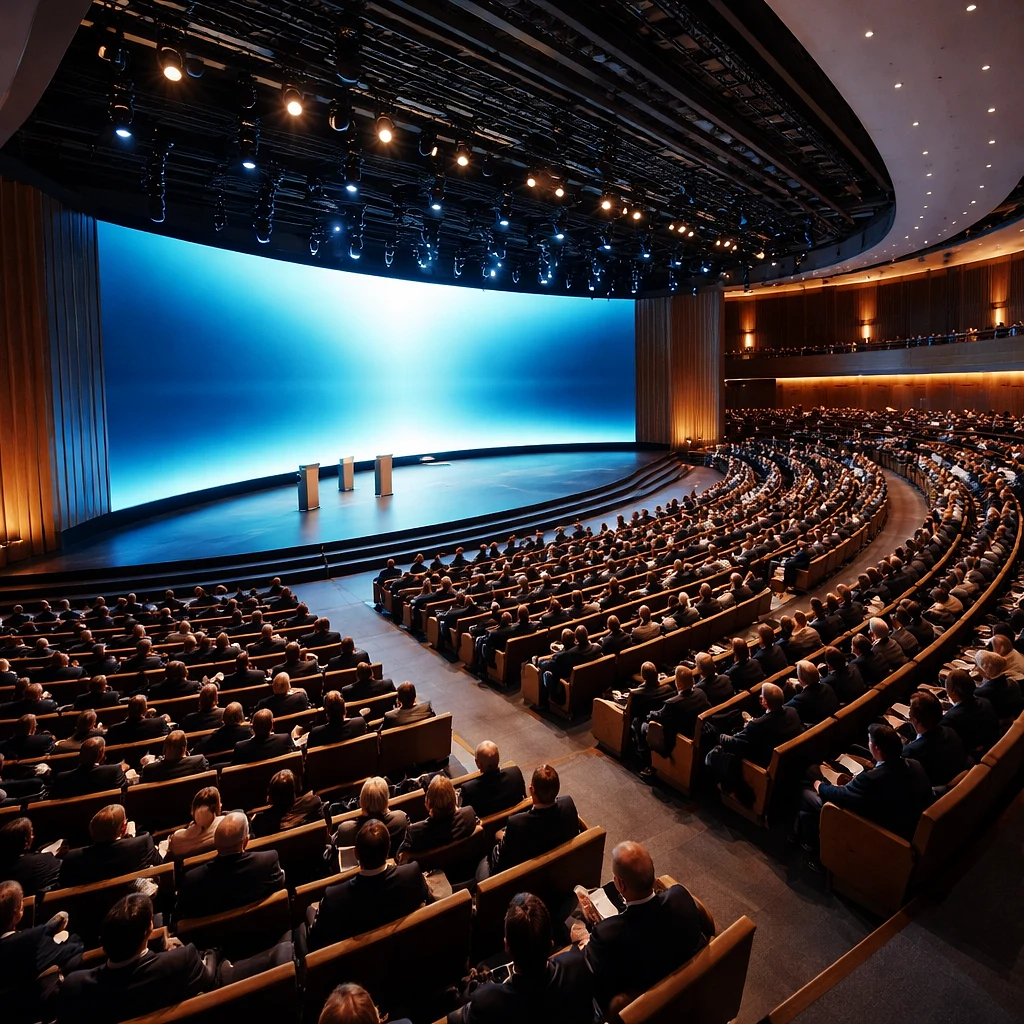
Because in these very days, Dalian, China, is hosting a big meeting, and that meeting is called Summer Davos.
So what exactly is 'Davos'?
Let's start from the beginning.
Many years ago, in Europe there was a very small town named Davos.
Ever since, every winter, the world's richest, most famous, and most powerful people go there for a meeting.
There they discuss the world economy, and the future.
Slowly, the town's name, Davos, became the name of the meeting itself.
Later, this meeting also came to China.
Because it's held in summer, people call it Summer Davos.
It's held in China every year; this year it's Dalian's turn.
So this year, who came?
A great many came — over 1,700 people, from more than ninety countries.
There are big-company bosses, government officials, and brilliant minds from universities.
With so many people gathered, what do they most want to discuss this year?
You may have already guessed: AI — artificial intelligence — and robots.
They say today's AI and robots are more and more capable.
For example, some factories have already begun using robots to do the work.
Some even say that perhaps, in the future, one person plus a few AIs could run a company.
Of course, they also discussed their worries.
For example, will AI cause some people to lose their jobs?
At this point, you might feel these things are far from you.
But in fact they're not.
What these big figures discuss today is precisely the life we'll face tomorrow.
How they view and use AI will, in the end, affect every ordinary one of us.
Finally I want to ask you: about AI, are you more excited, or more worried?
Listen again
Try it without the transcript and notice what sounds clearer.
What vocabulary does this episode teach?
词汇最近,新闻里,经常说到它 = lately the news mentions it a lot.
HSK 1-2. company.
HSK 1-2. problem / question.
HSK 1-2. to start / to begin.
HSK 1-2. to feel / to think.
HSK 1-2. to worry.
HSK 1-2. because.
这个词,叫达沃斯 = this word is 'Davos'. Glossed as a Swiss town turned forum name.
在欧洲,有一个,很小的小镇 = in Europe there was a small town.
它的名字,就叫达沃斯 = the town was named Davos.
最有权力的人 = the most powerful people.
聊全世界的经济 = they discuss the world economy.
聊未来 = they discuss the future.
有政府的官员 = there are government officials.
* beyond level超纲词
What grammar patterns appear in this episode?
语法从头说起 (to start from the beginning)
A storytelling device for going back to the origin.
我们,从头说起。
从那以后,每 ... 都 ... (ever since, every...)
Marks a recurring habit since a point in time.
从那以后,每年冬天,最有权力的人,都会去那里。
X 变成了 Y (X turned into Y)
Describes a transformation.
这个小镇的名字,就变成了,这个大会的名字。
轮到 + Someone/Place (it's X's turn)
Indicates rotation.
今年,轮到了大连。
正是 ... (is precisely...)
Emphatic identification.
今天聊的,正是,我们明天,就要面对的,生活。
会不会 + Verb?(will it / won't it...?)
A yes-no question about a possibility.
AI,会不会,让一些人,丢了工作?
你是更 X,还是更 Y?(are you more X or more Y?)
An either-or question for the close.
对于AI,你是,更期待,还是,更担心呢?
Proper Nouns
专有名词Free account
Keep learning from this story
Create a free account to keep saved words and your preferred level together.
- Keep words with their story context
- Remember your preferred level
- Build your vocabulary over time