
A Chinese podcast · Same story, 4 levels
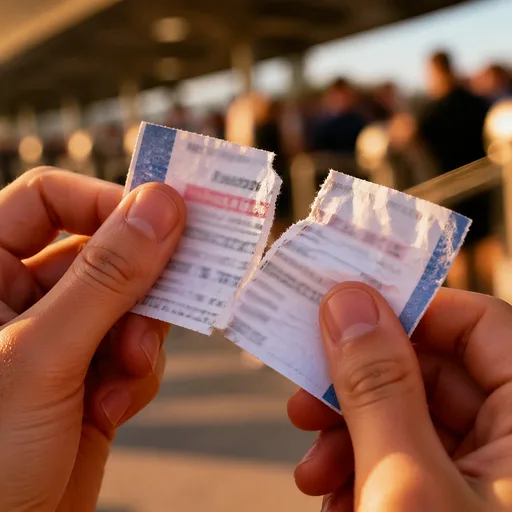
一块七毛二的正义:Ticketmaster垄断案与现场音乐产业的清算
Ticketmaster Monopoly Ruling Orders Refunds
About this story
US court rules Ticketmaster and Live Nation an illegal monopoly — Taylor Swift's Eras Tour fans get $1.72 a ticket back. HSK 5-6 Chinese listening practice.
This is an HSK 5-6 Chinese listening episode that runs about 8 minutes. The full Mandarin script is shown with tap-for-pinyin and a line-by-line English translation, so you can listen and read at once — comprehensible input in the sense of Stephen Krashen's i+1 theory. It teaches 12 key vocabulary words such as 百分之、政治、政府 and walks through 4 grammar patterns, each explained in English with examples. The same news story is retold at 4 difficulty levels — use the level selector above to find the version that is challenging but still understandable for you.
Read at your level
原文Read the complete story in Chinese. Reveal pinyin and English only when you need them.
English transcript reference
When it comes to the word antitrust, most people feel it's far removed from their lives.
But if you've ever bought a concert ticket in America.
If you've ever been shocked by "service fees" at checkout.
Then this case is about you.
April 15th, Manhattan federal court, New York — a jury delivered a comprehensive verdict.
Live Nation and its subsidiary Ticketmaster violated federal and state antitrust laws.
They constituted an illegal monopoly in the primary ticketing market and the large amphitheater market.
And they engaged in illegal tying by bundling venue access with ticketing services.
The jury ruled for the plaintiffs on every key legal question.
This wasn't a partial defeat.
This was a total failure from head to toe.
Let's understand why this case is so important.
Live Nation Entertainment is not an ordinary company.
It's the behemoth of the global live entertainment industry.
It simultaneously plays three roles.
The first role is concert promoter.
It's the world's largest.
The second role is venue operator.
Many of America's best amphitheaters belong to it or are exclusively operated by it.
The third role is ticketing platform.
Ticketmaster controls approximately 80% of America's primary concert ticketing market.
This market share would be suffocating in any industry.
But the real problem isn't the market share itself.
It's the bundling of these three roles.
Imagine you're an artist.
You want to hold a 20,000-person concert tour.
You need venues.
The best amphitheaters are Live Nation's.
If you use their venue, you must use Ticketmaster to sell tickets.
Because the venue and ticketing platform are bundled.
You have no choice.
Now you're a fan.
You want to see this artist perform.
Where do you buy tickets?
Ticketmaster.
You can't buy them anywhere else.
Because exclusive agreements lock tickets to Ticketmaster's platform.
You also have no choice.
This is vertical integration monopoly.
From the supply side to the demand side, every link is controlled by the same entity.
It doesn't need to raise prices to insane levels.
It just needs to add a little extra at every step.
Service fees, convenience fees, processing fees, facility fees.
These various extra charges with different names.
Can exist without any restraint in an environment without competition.
Because where would you go?
Ticketmaster is the only way out.
Either you pay.
Or you don't see the show.
After four days of deliberation, the jury determined.
Consumers were overcharged an average of one dollar and seventy-two cents per ticket.
This number doesn't look large.
But put it in the context of the entire industry's scale.
Ticketmaster handles ticket transactions numbering in the hundreds of millions per year.
One dollar seventy-two times hundreds of millions of tickets.
That's hundreds of millions of dollars flowing extra from consumers' pockets every year.
And this was only calculated for the 22 states that reached the damages phase.
What triggered this case?
November 2022.
Taylor Swift's Eras Tour presale.
Ticketmaster's system completely collapsed when millions of people flooded in simultaneously.
Fans who waited hours ended up with nothing.
This incident itself wasn't illegal.
But it detonated the public anger that Ticketmaster had accumulated over years.
The US Senate convened a special hearing about it.
Ticketmaster's executives explained in front of cameras why the system crashed.
Nobody was satisfied with the explanation.
May 2024.
The US Department of Justice joined over thirty states in formally filing suit.
This was the largest legal challenge since Live Nation and Ticketmaster merged in 2010.
The legal basis was the Sherman Antitrust Act of 1890.
This is America's oldest and most powerful antitrust tool.
The case began formal trial in March this year.
Lasted five weeks.
An interesting twist occurred during the first week of trial.
The DOJ and some states reached a separate settlement with Live Nation.
The terms were Live Nation pays 280 million dollars.
Limits service fees at certain venues.
Allows venues greater flexibility in choosing ticketing platforms.
But the remaining 33 states rejected the settlement.
They said money wasn't enough.
What they wanted was a legal verdict.
A conclusion, written on paper, determined by a jury.
You are a monopoly.
April 15th.
They got it.
The jury voted "yes" on every core question.
Live Nation monopolized the primary ticketing market.
Live Nation monopolized the large amphitheater market.
Live Nation engaged in illegal tying.
Total defeat.
Complete defeat.
New York Attorney General Letitia James said.
"Live Nation and Ticketmaster broke the law, costing consumers millions of dollars."
Billboard called the verdict "a total defeat."
Live Nation's response?
They say the verdict isn't final yet.
They say they will appeal "any unfavorable rulings."
They still deny being a monopoly.
But the jury doesn't see it that way.
Now the most critical phase is remedies.
Judge Arun Subramanian must decide how to fix this market.
There are several options.
The first and most aggressive is structural breakup.
Meaning forcing Live Nation to sell Ticketmaster to an independent third party.
Making the ticket seller and the concert organizer no longer the same company.
This has been critics' core demand for years.
If achieved.
Independent ticketing companies could compete with the former Ticketmaster.
Venues could freely choose who to partner with.
Competition would push down service fees.
Consumers directly benefit.
The second option is behavioral remedies.
Don't break up the company, but restrict its behavior.
Such as banning exclusive ticketing agreements.
Such as requiring service fee transparency.
Such as opening APIs for third-party platform access.
This approach is more moderate.
But also weaker in effect.
Because the company's structure hasn't changed.
It still has the motivation and ability to operate in gray areas.
The third option is enhanced oversight.
The government establishes a monitoring body.
Continuously reviewing Live Nation's business practices.
Ensuring it doesn't re-establish a monopoly.
These options might be used in combination.
The specifics are up to the judge.
But regardless of the outcome.
This verdict has already changed something.
From a legal perspective.
Live Nation and Ticketmaster's business model has been ruled illegal.
This isn't a political statement.
This isn't an online complaint.
This is a legal ruling made by a federal jury after a five-week trial.
From a cultural perspective.
This verdict responds to millions of ticket buyers' years of anger.
Starting from Pearl Jam boycotting Ticketmaster in the nineties.
To Taylor Swift fans testifying at congressional hearings.
To The Cure publicly criticizing Ticketmaster's pricing.
This anger accumulated for thirty years.
Today it finally has a legal response.
One dollar seventy-two isn't much.
But it represents a systemic determination.
You were overcharged.
You weren't imagining it.
You weren't just complaining.
The law confirmed what you felt.
What comes next is up to the judge.
Whether to break up, reform, or regulate.
But regardless.
These three characters have been written into the verdict.
You are a monopoly.
Listen again
Try it without the transcript and notice what sounds clearer.
What vocabulary does this episode teach?
词汇HSK 1-4. percent.
HSK 1-4. politics.
HSK 1-4. government.
HSK 1-4. institution, organization.
HSK 1-4. market.
HSK 1-4. price.
When one company controls multiple stages of production and distribution.
Forcing purchase of one product to get another. Illegal in antitrust law.
An extremely large and powerful entity.
So dominant it leaves no room for others.
Forcing a company to sell off divisions to create competition.
Restricting a companys actions without breaking it up.
* beyond level超纲词
What grammar patterns appear in this episode?
语法Proper nouns
专有名词Sources
来源Free account
Keep learning from this story
Create a free account to keep saved words and your preferred level together.
- Keep words with their story context
- Remember your preferred level
- Build your vocabulary over time