
A Chinese podcast · Same story, 4 levels
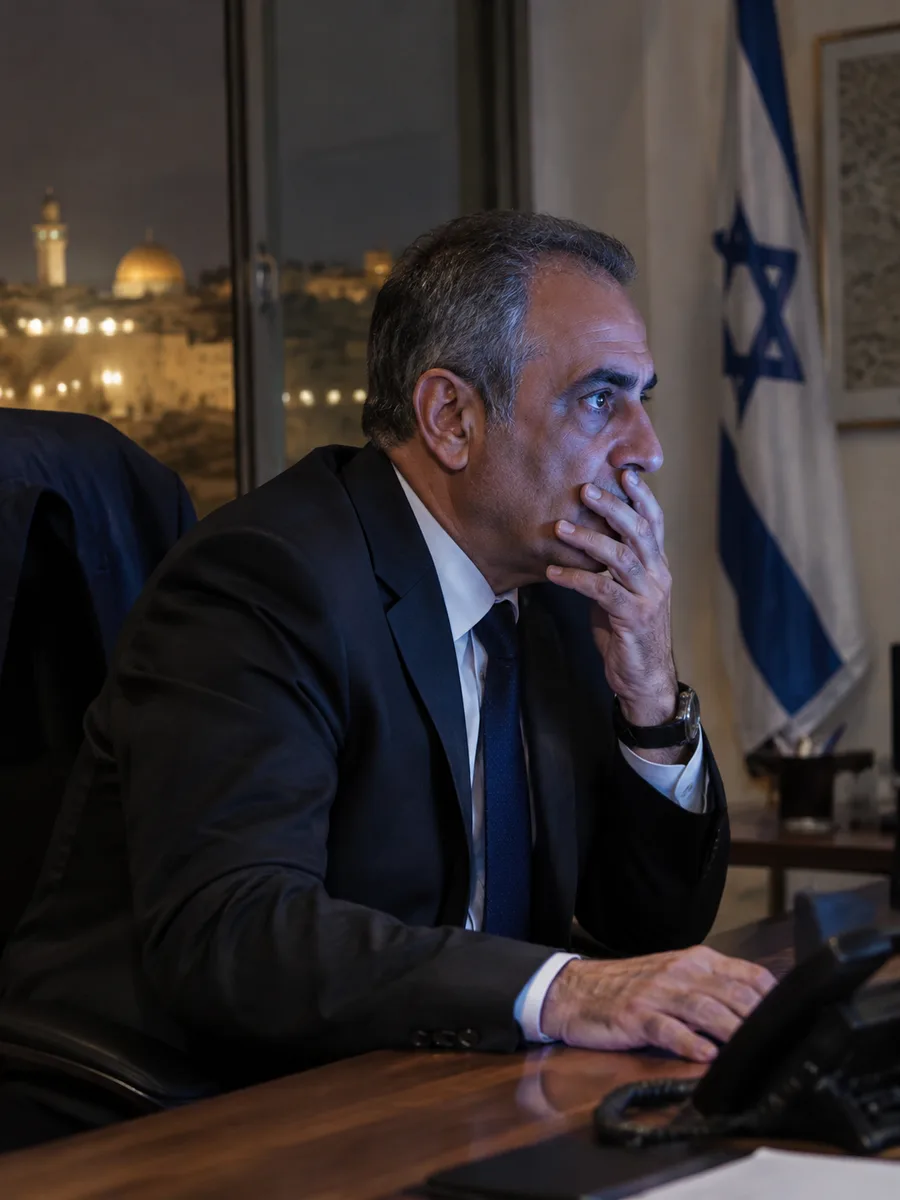
特朗普要断军援,共和党败选怪以色列
Trump Moves to Cut Israel Military Aid as Republicans Blame Israel for Midterm Defeat
About this story
Trump says US military aid to Israel may end this year as Republicans lose Congress and Vance blames the Iran war and Israel ties for the defeat. HSK 4 Chinese listening practice.
This is an HSK 4 Chinese listening episode that runs about 3 minutes. The full Mandarin script is shown with tap-for-pinyin and a line-by-line English translation, so you can listen and read at once — comprehensible input in the sense of Stephen Krashen's i+1 theory. It teaches 12 key vocabulary words such as 采访、政治、数字 and walks through 7 grammar patterns, each explained in English with examples. The same news story is retold at 4 difficulty levels — use the level selector above to find the version that is challenging but still understandable for you.
Read at your level
原文Read the complete story in Chinese. Reveal pinyin and English only when you need them.
English transcript reference
US military aid to Israel may stop by the end of this year.
The person who said this was Trump, in a television interview on election day itself.
He said Israel is doing very well now, and continuing to give money is politically "hard to justify."
He was referring to roughly four billion dollars a year in military aid.
That number is not small, but what is more surprising is when he said it.
On the very same day, the Republicans lost in the midterm elections.
The Democrats took both the Senate and the House, and Washington's landscape changed overnight.
The next day, Vice President Vance came out to explain the defeat.
He attributed the cause to the war in Iran and to America's relationship with Israel.
In his post-election analysis, the first point was "end this war."
Another point was written even more directly: change our relationship with Israel.
In the same election, Michigan's El-Sayed won a key race.
He has consistently criticized US military aid to Israel.
He also accused Israel of committing genocide in Gaza, which Israel denies.
It is worth noting that an important pro-Israel lobbying group in the US changed its approach before the election.
It announced it would no longer endorse specific candidates and would no longer directly donate to campaigns.
But it still plans to keep spending through its own super PAC.
In Michigan's Democratic primary, it spent more than thirty million dollars opposing El-Sayed.
On the Israeli side, Netanyahu lost his parliamentary majority before the election.
He has in fact long advocated gradually phasing out American aid over ten years.
Israeli diplomats say privately that he and his coalition have "become poison in America."
The current aid package was signed ten years ago, at nearly four billion dollars a year.
The package expires in 2028, and Trump's statement surprised Israeli officials.
If the aid really stops, Israel will be short seventy billion dollars over the next two years.
Trump's suggestion is that Israel can pay for it itself and keep buying American weapons.
Some of the weapons Israel has already ordered will not be delivered until after 2028.
For these weapons alone, Israel will have to pay another ten billion dollars.
Once military aid stops, Israel will also lose diplomatic protection.
The US frequently uses its veto at the Security Council to block resolutions targeting Israel.
This kind of protection is not something Israel can buy with its own money.
Just recently, Britain announced sanctions over settler violence in the West Bank.
Israel's reliable friends in the international community are growing fewer.
Moreover, the relationship between the two countries has never been just about money.
The US military has radar stations and intelligence facilities in Israel.
Recently, the US military also expanded an air base in the Negev in the south.
The two sides share intelligence and satellite data, and Israel still has friends in Congress.
So military aid can be stopped with a single sentence, but these forms of cooperation will not disappear along with it.
Listen again
Try it without the transcript and notice what sounds clearer.
What vocabulary does this episode teach?
词汇HSK 3. 电视采访 (TV interview); verb: 采访某人.
HSK 3. 政治上 (politically), 政治家 (politician).
HSK 3. Used for statistics and amounts; 这个数字不小 = this figure is not small.
HSK 3. 让人意外 (surprising), 很意外 (very surprised).
HSK 3. 解释失败 (explain the defeat); noun use also common.
HSK 3. 把原因归到……上 = attribute the cause to….
HSK 3. 批评某人的做法; also a noun.
HSK 3. 支持候选人 (support a candidate); opposite 反对.
HSK 3. 军事援助 (military aid), 军事基地 (military base).
HSK 3. Often 军事援助 / 经济援助; also used as a verb: 援助某国.
HSK 3. 中期选举 (midterm elections), 选举日 (election day).
HSK 3. 游说组织 (lobbying group); verb: 组织活动.
* beyond level超纲词
What grammar patterns appear in this episode?
语法可能 + Verb Phrase
Expresses possibility: 'may / might do something'. Often paired with a time expression.
美国给以色列的军援,可能到今年年底就停。
把 + Object + Verb + 到……上
The 把 construction moves the object before the verb; 归到……上 means 'attribute to'.
他把原因归到伊朗战争,以及美国跟以色列的关系上。
Means 'once…, then…', stressing that the second result follows immediately from the first condition.
军援一旦停掉,以色列还会丢掉外交上的保护。
不是……能 + Verb + 的
Emphasizes that something cannot be achieved by the stated means: 'not something that can be bought'.
这种保护,不是以色列自己花钱能买到的。
不再 + Verb
Means 'no longer do something', negating a former habit or policy.
它宣布不再支持特定候选人,也不再直接给竞选捐款。
让 + Person + Adjective / Verb
Causative construction: 'make someone feel/do something'.
特朗普的表态让以色列的官员很意外。
从来不只是……
从来 stresses 'always, from the start'; 不只是 = 'not merely'. Together: 'has never been just…'.
而且,两国的关系从来不只是钱。
Proper nouns
专有名词Sources
来源Free account
Keep learning from this story
Create a free account to keep saved words and your preferred level together.
- Keep words with their story context
- Remember your preferred level
- Build your vocabulary over time