
A Chinese podcast · Same story, 4 levels
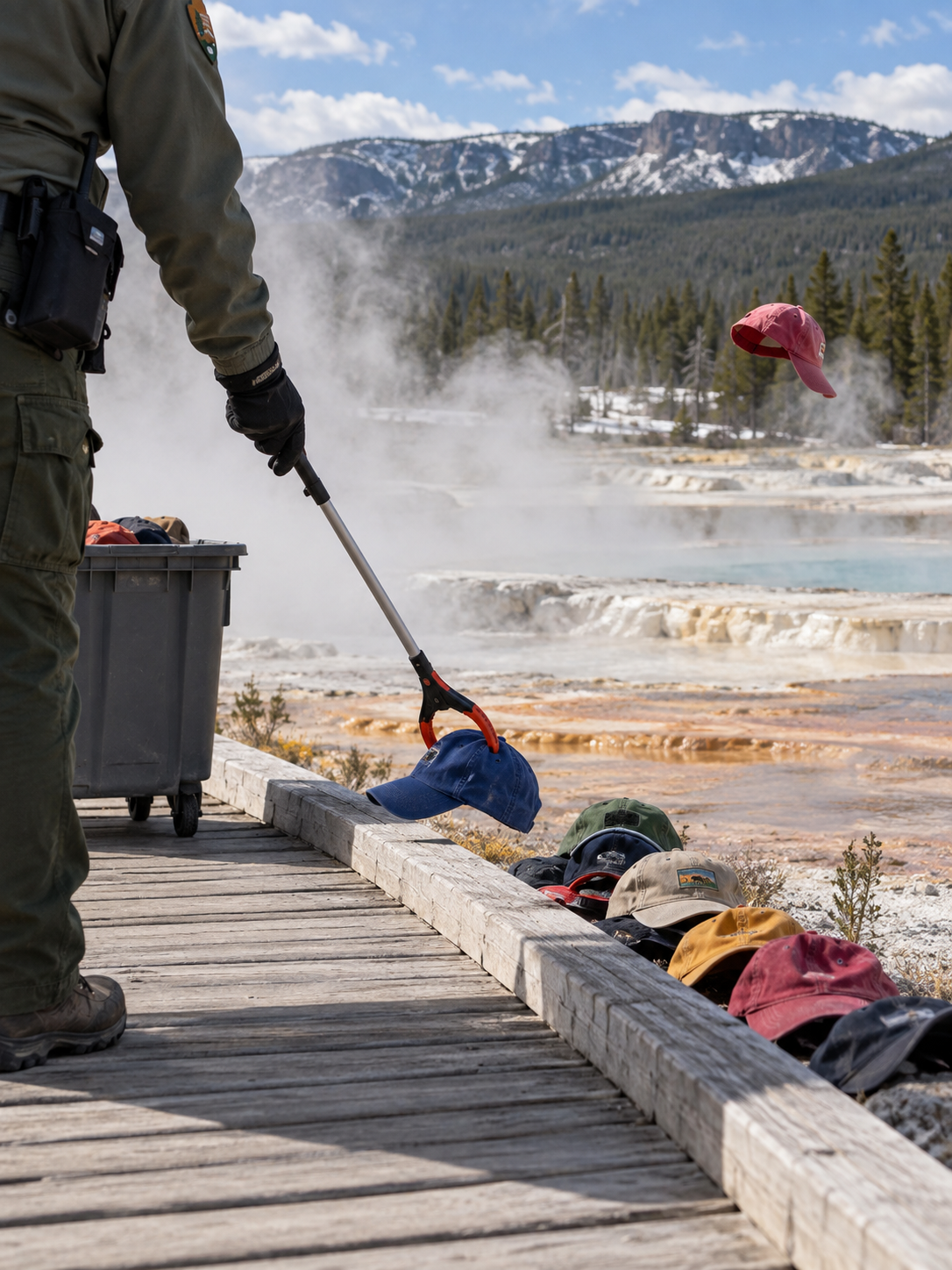
黄石公园热泉区清出280多顶帽子
Yellowstone Finds Over 280 Hats in Hot-Spring Areas
About this story
Yellowstone's 2026 geothermal-area cleanup found over 280 hats and more than 20,100 pieces of trash, along with coins, retainers and toys. HSK 5-6 Chinese listening practice.
This is an HSK 5-6 Chinese listening episode that runs about 2 minutes. The full Mandarin script is shown with tap-for-pinyin and a line-by-line English translation, so you can listen and read at once — comprehensible input in the sense of Stephen Krashen's i+1 theory. It teaches 8 key vocabulary words such as 风、危险、还是 and walks through 3 grammar patterns, each explained in English with examples. The same news story is retold at 4 difficulty levels — use the level selector above to find the version that is challenging but still understandable for you.
Read at your level
原文Read the complete story in Chinese. Reveal pinyin and English only when you need them.
English transcript reference
More than 280 hats have been found in Yellowstone's hot-spring areas this year.
The park's geology team reports a striking total: by early September it had cleared over 20,100 pieces of trash, plus more than 5,600 rocks and sticks.
For this team, it is already a record-breaking year.
Looking at those figures, you might ask why hats turn up near the springs.
Yellowstone can be windy, and a visitor's hat may blow off while they take in the view.
So it would be wrong to treat every hat as deliberately dumped trash.
Whether the wind took it or someone tossed it aside, staff ultimately have to deal with it.
Besides hats, they found 54 camera lens caps, 36 pairs of sunglasses, and 17 baby pacifiers.
Stranger finds included six retainers, five wireless earbuds, and a lump of glittery pink slime.
You might laugh at those objects, but workers must clean them up carefully.
The hot-spring areas can be extremely hot, so visitors must not enter dangerous areas to retrieve things themselves.
Coins are another problem: a hot spring is not a wishing well, and throwing money in will not grant wishes.
If a hat can still be used, the park will wash it and donate it.
Its owner may not get it back, but at least some hats will not become trash.
For visitors, the simplest step in strong wind is to secure their belongings.
If something falls into a dangerous area near a hot spring, do not chase it; tell a park worker.
Behind more than 280 hats are many quick accidents and a long, careful cleanup by staff.
When you see Yellowstone's springs, will you secure your hat or put it in your bag first?
Listen again
Try it without the transcript and notice what sounds clearer.
What vocabulary does this episode teach?
词汇对游客来说,风大的时候,最简单的做法是收好随身物品。
温泉区水温很高,所以游客不能自己走进危险区域,捡拾物品。
你去Yellowstone看热泉,会把帽子戴紧,还是干脆先放进包里?
公园地质团队的统计更惊人。
公园地质团队的统计更惊人。
帽子为什么会出现在热泉附近?
Yellowstone的温泉区,今年找到了两百八十多顶帽子。
工作人员却要认真清理。
* beyond level超纲词
What grammar patterns appear in this episode?
语法Proper nouns
专有名词Sources
来源Free account
Keep learning from this story
Create a free account to keep saved words and your preferred level together.
- Keep words with their story context
- Remember your preferred level
- Build your vocabulary over time