
A Chinese podcast · Same story, 4 levels
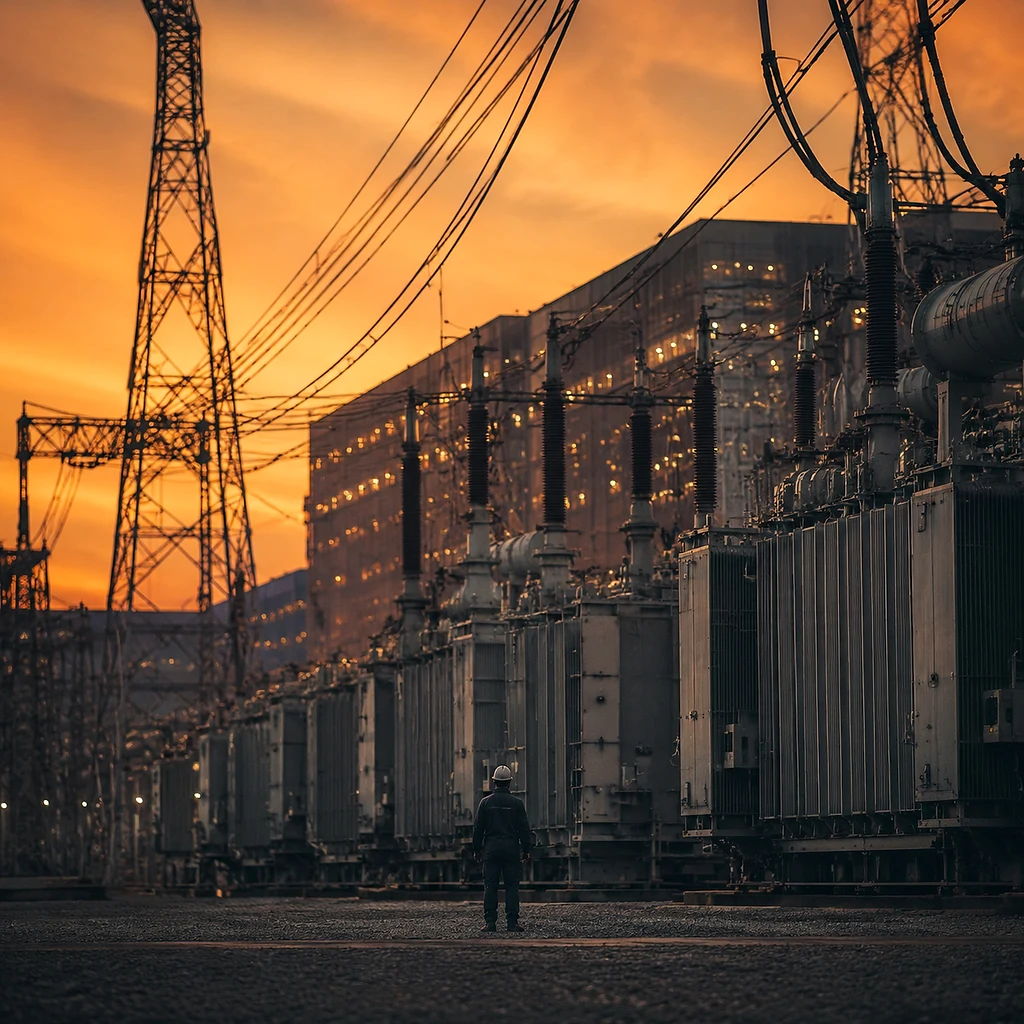
AI 很大
AI Is So Big It Makes Computers, Phones and Workers Hard to Find
About this story
A simple story about how the AI boom makes phones, computers and skilled workers expensive and hard to find. HSK 1 Chinese listening practice.
This is an HSK 1 Chinese listening episode that runs about 1 minute. The full Mandarin script is shown with tap-for-pinyin and a line-by-line English translation, so you can listen and read at once — comprehensible input in the sense of Stephen Krashen's i+1 theory. It teaches 12 key vocabulary words such as 什么、今天、现在 and walks through 5 grammar patterns, each explained in English with examples. The same news story is retold at 4 difficulty levels — use the level selector above to find the version that is challenging but still understandable for you.
Read at your level
原文Read the complete story in Chinese. Reveal pinyin and English only when you need them.
English transcript reference
Hello.
Hello everyone.
I am the host.
Today we speak about AI.
What is AI?
AI is a computer.
Computers are smart.
Just like people.
This is AI.
Point one.
AI is very big.
AI needs money.
Needs a lot of money.
What is money?
Money is 'Money'.
Companies have money.
Companies buy AI.
Used big money.
Many many money.
Where does money go?
Money goes to buy AI.
Everyone is buying.
AI is very big.
AI needs money.
What else?
Point two.
Now there are problems.
What problems?
Things are not enough.
What are things?
Things are 'Things'.
People are also not enough.
What are people?
People are 'People'.
Workers are very few.
Workers are 'Worker'.
Electricians are very few.
Electricians fix electricity.
Finding electricians is hard.
Because people are few.
Also mobile phones.
What are mobile phones?
Mobile phones are 'Phone'.
Mobile phones are expensive.
What is expensive?
Expensive is 'Expensive'.
Mobile phones will be more expensive.
Because AI is big.
AI used the money.
Others have no money.
This is very hard.
This is AI.
AI is very big.
Thank you everyone.
Goodbye.
Listen again
Try it without the transcript and notice what sounds clearer.
What vocabulary does this episode teach?
词汇Noun. Currency or wealth. Common collocation: 很多钱 (hěn duō qián - a lot of money).
Adjective. High price. Opposite of 便宜 (piányi - cheap).
Adjective. Not many. Used here to describe shortages of workers.
Noun. A person who does manual labor. Measure word: 个 (gè).
Noun. Literally 'hand machine'. Measure word: 部 (bù) or 个 (gè).
Noun. Literally 'electric brain'. Measure word: 台 (tái).
HSK 1. what.
HSK 1. today.
HSK 1. now.
HSK 1. thank you.
HSK 1. goodbye.
HSK 1. also / in addition.
What grammar patterns appear in this episode?
语法Simple description. '很' (hěn) is often used to link a noun and an adjective, even if not strictly translating to 'very'.
AI 很大 (AI is [very] big)
手机很贵 (Phones are [very] expensive)
工人很少 (Workers are [very] few)
Equating two things, similar to 'A is B'.
AI 是电脑 (AI is a computer)
钱是 Money (Money is Money)
手机是 Phone (Mobile phone is Phone)
Comparison pattern meaning 'Subject is like Object'.
像人一样 (Just like people)
Expressing non-possession or non-existence, 'Subject does not have Object'.
别的没有钱 (Others do not have money)
Present continuous tense, indicating an action is happening now.
大家都在买 (Everyone is buying)
Proper Nouns
专有名词Sources
来源Free account
Keep learning from this story
Create a free account to keep saved words and your preferred level together.
- Keep words with their story context
- Remember your preferred level
- Build your vocabulary over time