
A Chinese podcast · Same story, 4 levels
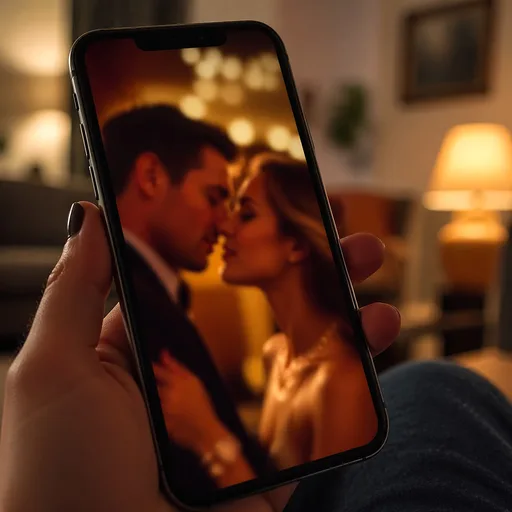
一天四百七十部,电脑在做短剧
China Publishes 470 AI Micro-Dramas a Day
About this story
China makes 470 short dramas a day with AI — hits like Fox-Spirit Revenge reach the US and Europe with no human actors needed. HSK 2 Chinese listening practice.
This is an HSK 2 Chinese listening episode that runs about 6 minutes. The full Mandarin script is shown with tap-for-pinyin and a line-by-line English translation, so you can listen and read at once — comprehensible input in the sense of Stephen Krashen's i+1 theory. It teaches 14 key vocabulary words such as 为什么、公司、问题 and walks through 4 grammar patterns, each explained in English with examples. The same news story is retold at 4 difficulty levels — use the level selector above to find the version that is challenging but still understandable for you.
Read at your level
原文Read the complete story in Chinese. Reveal pinyin and English only when you need them.
English transcript reference
Speaking of things you watch on your phone, there's been a big change in China recently.
Have you heard the word "duanju" (short drama)?
Duanju are little movies made specifically for phones.
Each episode is only one or two minutes.
The stories are simple, but incredibly gripping.
You watch one episode, then want to watch the next.
You watch the next one, then want to watch another.
A few hours just pass by like that.
There are so many people in China watching these short dramas now.
Several hundred million people watch on their phones every day.
This market is extremely large.
How large?
Last year the entire short drama industry earned over 100 billion yuan.
One hundred billion.
This number is shockingly big.
This year is expected to be even more.
So everyone wants to make short dramas.
More and more people want to make them.
But this year there's a big change.
What is this change?
AI has arrived.
AI is artificial intelligence.
Simply put, extremely smart computers.
Now many short dramas aren't shot by people.
They're made by computers.
How many short dramas made by computers come out each day?
Take a guess.
About 470 new short dramas go online each day.
470.
In one day.
What does that mean?
It means a new short drama comes out every minute.
A person couldn't watch them all in a lifetime.
Among all the hottest short dramas.
Last year AI-made ones were only 7%.
This year it jumped to 38%.
From 7% to 38%.
Grew five times.
In one year.
That's the speed of AI.
So how are these AI-made short dramas made?
There are two kinds.
The first is "AI-assisted."
Real people still do the filming.
But AI helps write the stories.
AI helps make special effects.
AI helps make backgrounds.
AI helps translate into other languages.
This kind is the most common.
The second kind is even more impressive.
It's "AI-native."
Even the actors are made by AI.
AI draws a person by itself.
Then lets that AI character act.
Everything you see is generated by computer.
The one speaking isn't a real person.
The background isn't a real scene.
But it looks real.
These AI-native short dramas are still in the experimental stage.
But they're growing very fast.
Why are so many companies making AI short dramas?
The biggest reason is cost.
How much does it cost to shoot a traditional short drama?
You have to pay actors.
You have to pay directors.
You have to pay cinematographers.
You have to rent locations.
You have to buy clothes.
The cost of one short drama might be several hundred thousand yuan.
With AI?
The cost can be reduced a lot.
And the speed is fast.
Traditional shooting takes several weeks.
AI can make one in just a few days.
Or even a few hours.
But AI short dramas also have problems.
The biggest problem is copyright.
Some companies use AI to make a celebrity you recognize.
That celebrity didn't actually film this short drama.
AI "generated" them.
This violates the celebrity's rights.
The Chinese government started regulating because of this.
Starting January 1st this year.
Before making a short drama you must first report to the government.
Only after government approval can you make it.
Otherwise it's illegal.
At the same time, the investment threshold for large short dramas was raised from 1 million to 3 million.
This is to make the industry more regulated.
Not just anyone can make them.
Don't make shoddy stuff.
What does this change mean for ordinary people?
The good side: you can see more fresh content.
There are more choices.
More stories.
More genres.
The bad side: people who used to do these jobs may lose work.
Actors, directors, cinematographers.
Their jobs might all be replaced by AI.
Another problem is that telling real from fake is getting harder.
The person you see on your phone may not exist at all.
That scene may never have happened.
We are entering a new era.
An era where content can be produced infinitely.
An era where real and fake are getting blurrier.
China's short drama industry is just the beginning.
America will have this soon too.
Europe will too.
The whole world will.
Are you ready?
By the way, let me give you a real example.
In March this year, an AI short drama called "The Fox Spirit's Revenge" suddenly went viral.
Everything in this drama was made by AI.
The characters were drawn by AI.
The backgrounds were made by AI.
Even the fighting moves were AI-generated.
The team making this drama had only three people.
Only took two weeks.
The cost was less than one-fifth of traditional short dramas.
But the online view count exceeded 100 million.
This is a signal.
It shows AI can make content that audiences love.
Not just low cost.
But actually engaging.
After this drama.
Many small studios started imitating this approach.
A new industry model is starting to form.
Each of us has to learn how to live in this new era.
Listen again
Try it without the transcript and notice what sounds clearer.
What vocabulary does this episode teach?
词汇HSK 1-2. why.
HSK 1-2. company.
HSK 1-2. problem / question.
HSK 1-2. matter/thing.
HSK 1-2. mobile phone.
HSK 1-2. hour.
HSK 1-2. to prepare / preparation.
Platforms like Douyin, Instagram, etc.
Machines that simulate human intelligence.
A commercial market or marketplace.
To estimate or forecast.
To help or support.
Natively produced (as in AI-native).
Visual effects in film.
* beyond level超纲词
What grammar patterns appear in this episode?
语法Proper nouns
专有名词Sources
来源Free account
Keep learning from this story
Create a free account to keep saved words and your preferred level together.
- Keep words with their story context
- Remember your preferred level
- Build your vocabulary over time