
A Chinese podcast · Same story, 4 levels
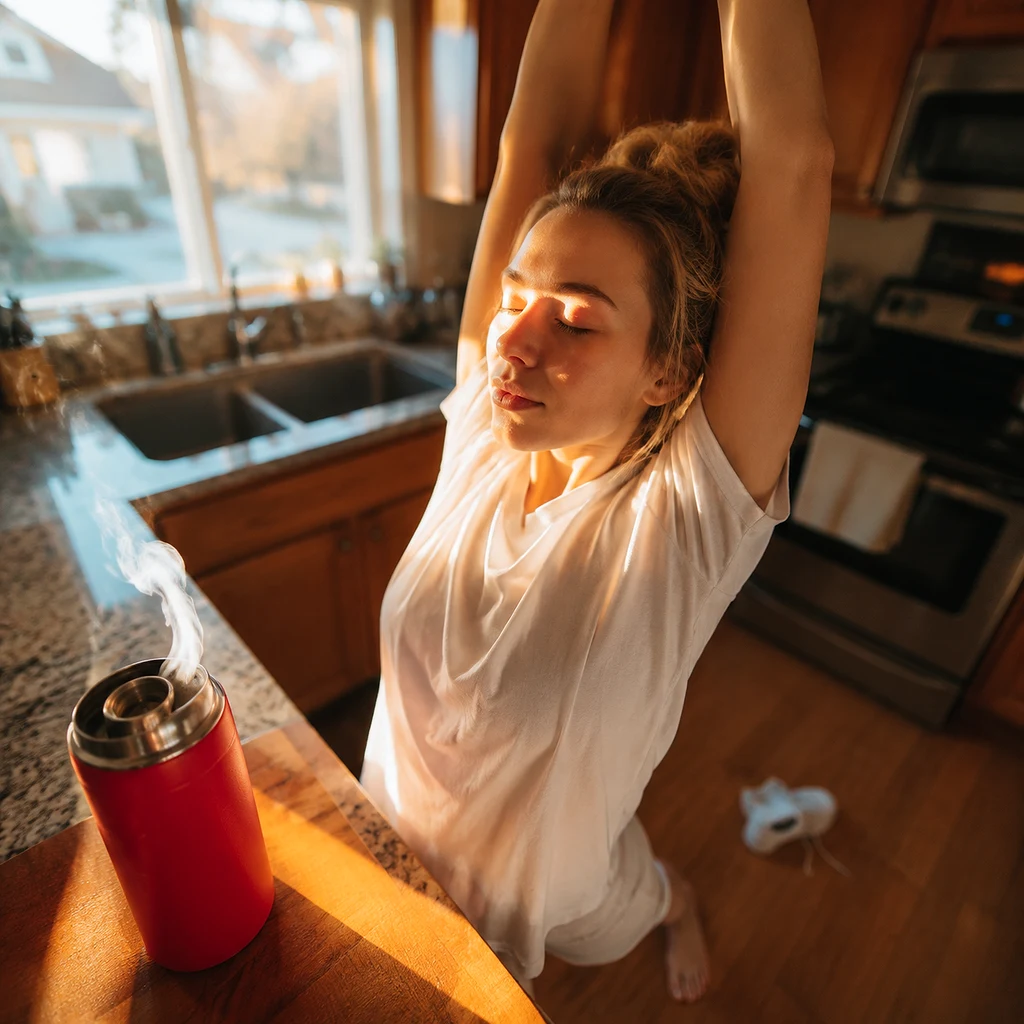
大卫学中国人
Chinamaxxing Trend Spreads Across US TikTok
About this story
A simple story about David, a young American who starts copying Chinese habits — hot water, slippers, morning exercises — as part of the Chinamaxxing TikTok trend. HSK 1 Chinese listening practice.
This is an HSK 1 Chinese listening episode that runs about 6 minutes. The full Mandarin script is shown with tap-for-pinyin and a line-by-line English translation, so you can listen and read at once — comprehensible input in the sense of Stephen Krashen's i+1 theory. It teaches 12 key vocabulary words such as 喝、朋友、喜欢 and walks through 6 grammar patterns, each explained in English with examples. The same news story is retold at 4 difficulty levels — use the level selector above to find the version that is challenging but still understandable for you.
Read at your level
原文Read the complete story in Chinese. Reveal pinyin and English only when you need them.
English transcript reference
Let me tell you a story.
David is American.
He is twenty years old.
He studies at university.
He is not very happy.
School is expensive.
Housing is also expensive.
Seeing a doctor is expensive too.
He doesn't have much money.
He is very tired.
He often thinks: I'm tired.
He doesn't know what to do.
One day, he is at home.
He looks at his phone.
There are videos on his phone.
He watches a lot of videos.
There is one video he really likes.
In the video are Chinese people.
That Chinese person is drinking water.
What he's drinking is hot water.
Not cold water.
It's hot.
David watches and finds it strange.
He thinks: why drink hot water?
He watches another video.
That person also drinks hot water.
He watches another one.
Also drinks hot water.
He hears people say: hot water is good.
Hot water is good for the body.
Cold water is not good.
David says: okay, I'll drink it too.
He goes and buys a cup.
The cup is big.
Inside is hot water.
He drinks it every day.
He drinks, he drinks, he drinks.
He drinks for a week.
He says: it really does seem good.
One day, he is at home.
He is wearing his shoes.
He watches a video again.
In the video, someone is at home.
That person doesn't wear shoes.
He is wearing slippers.
He walks in the living room.
He walks in the kitchen.
All in slippers.
He doesn't wear shoes.
David thinks: okay.
I also want to wear slippers.
He goes and buys a pair of slippers.
The slippers are new.
They are blue.
He puts them on when he gets home.
He doesn't wear shoes.
His feet are very comfortable.
He smiles.
He says: so comfortable.
He watches a video again.
This time the video is about the morning.
In the video someone is exercising.
That's not running.
It's also not very tiring exercise.
It's done slowly.
Slow, slow, slow.
There are eight movements.
One by one.
David also wants to do it.
He does it in the kitchen.
He learns the first movement.
Then the second.
Then the third.
He does eight of them.
He sweats a little.
He drinks a sip of hot water.
He sits down.
He is very happy.
He thinks: I feel comfortable.
At night, he doesn't look at his phone.
He goes to bed at ten o'clock.
He gets up at six in the morning.
He sleeps well.
His friend sees him.
The friend asks: what's up with you?
David says: I'm learning to be Chinese.
I drink hot water.
I wear slippers.
I exercise.
I sleep early.
I feel good.
The friend asks: is it fun?
David says: it's fun.
The friend says: I'll try too.
The friend also buys slippers.
The friend also drinks hot water.
They exercise together.
They sleep early together.
They are very happy.
Some people don't get it.
Those people say: what's up with you guys?
Are you Chinese?
David smiles.
He says: I'm not Chinese.
I'm American.
But I like doing this.
Drinking hot water is good.
Wearing slippers is good.
Exercising is good.
Sleeping early is good.
I like this kind of life.
The friend smiles too.
He says: me too.
We're in this together.
What about you?
Do you like drinking hot water?
Do you wear slippers at home?
Do you sleep early or not?
What is this story really about?
It's about a news story.
Right now, many young Americans are starting to learn the Chinese way of life.
They drink hot water.
They wear slippers at home.
They exercise in the morning.
They sleep early.
They watch videos online.
They also make videos.
Their friends are learning too.
They say: this is good.
Some watch on TikTok.
Some watch on Xiaohongshu.
Xiaohongshu is a Chinese phone app.
They say, this is a new way of life.
The new way of life is the Chinese way.
This thing is called "becoming Chinese."
In English it's Chinamaxxing.
This word is very new.
A lot of people are talking about it.
A lot of people are doing it.
What about you?
Do you also want to try?
Listen again
Try it without the transcript and notice what sounds clearer.
What vocabulary does this episode teach?
词汇Basic HSK 1 verb. Used throughout the script as 喝水 (drink water) and 喝热水 (drink hot water).
HSK 1 noun. Measure word: 个. The script uses it for David's friend who joins him in learning the Chinese way of life.
HSK 1 verb. Can be followed by a noun (喜欢热水) or a verb phrase (喜欢喝热水).
HSK 1 noun. Measure word: 个. In the script, David buys a big cup (大杯子) to drink hot water from.
HSK 1 adjective. Used in the script when David is happy after his morning exercises.
HSK 1 verb. In the script, the simpler form 学 is used a lot to mean 'to imitate / pick up' a habit. 学习 is the full dictionary form.
Central beyond-HSK-1 noun the episode teaches. Measure word: 双 (a pair) or 只 (a single one). In China, people typically change out of outdoor shoes into 拖鞋 at home.
HSK 2. Both a noun ('exercise') and a verb ('to exercise'). 做运动 = to do exercise.
HSK 2 adjective. The opening describes David as 很累 (very tired).
HSK 2 adverb. Goes before the verb: 我们一起做 = we do it together. Used when David and his friend do things together.
HSK 2 noun. 早上六点 = six o'clock in the morning.
HSK 2 verb. Used to express opinion or feeling. 他觉得很舒服 = he feels comfortable.
* beyond level超纲词
What grammar patterns appear in this episode?
语法The most basic identity sentence in Chinese. 是 functions like 'is/am/are' and links subject to a noun.
大卫是美国人。
我是美国人。
小红书是中国的一个手机软件。
Subject + 不 + Verb / Adjective
Negate verbs and adjectives by placing 不 directly before them.
他不太开心。
他不知道怎么办。
他不穿鞋子。
Subject + 也 + Verb
也 means 'also'. Always goes between subject and verb, never at the start of the sentence the way English 'also' does.
我也喝。
朋友也买了拖鞋。
他们也喝热水。
在 marks a location: 'at / in / on'. The location follows directly after 在.
他在大学读书。
他在家。
他在厨房里做。
了 after a verb marks a completed action. Often translated as past tense in English.
他笑了。
他出汗了一点。
他喝了一个星期。
你 + Verb + 吗?
Adding 吗 at the end of a statement turns it into a yes/no question.
你喜欢喝热水吗?
你在家穿拖鞋吗?
你也想试试吗?
Proper nouns
专有名词Free account
Keep learning from this story
Create a free account to keep saved words and your preferred level together.
- Keep words with their story context
- Remember your preferred level
- Build your vocabulary over time