
A Chinese podcast · Same story, 4 levels
大理:十天
Dali: A Thousand-Year Tea and Ten Days' Notice
About this story
Nineteen peaks, a 250-square-kilometre lake, a tea over a thousand years old, and the ten days in 2017 that emptied the shore. HSK 1 Chinese listening practice.
This is an HSK 1 Chinese listening episode that runs about 3 minutes. The full Mandarin script is shown with tap-for-pinyin and a line-by-line English translation, so you can listen and read at once — comprehensible input in the sense of Stephen Krashen's i+1 theory. It teaches 8 key vocabulary words such as 洱海、苍山、茶 and walks through 3 grammar patterns, each explained in English with examples. The same news story is retold at 4 difficulty levels — use the level selector above to find the version that is challenging but still understandable for you.
Read at your level
原文Read the complete story in Chinese. Reveal pinyin and English only when you need them.
English transcript reference
Today I'm in Dali.
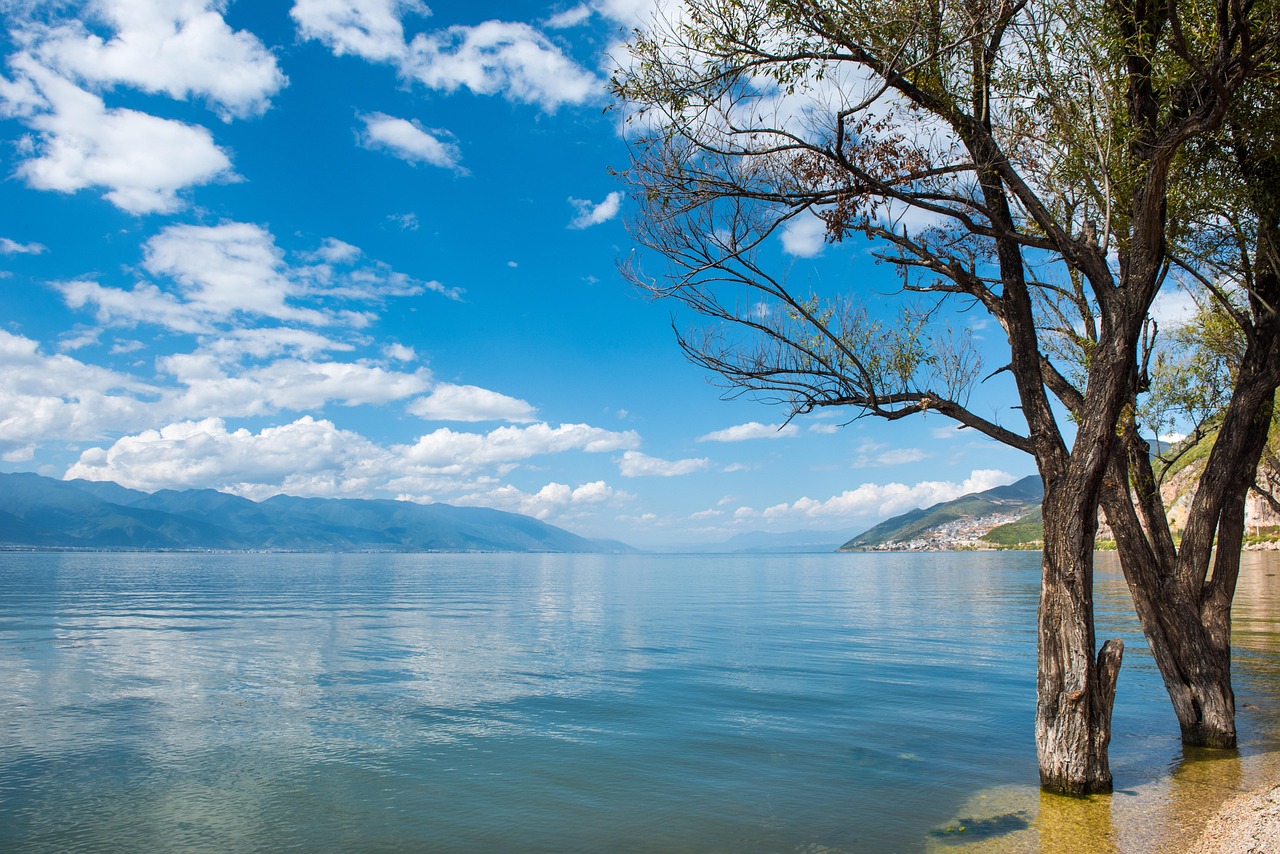
Dali has mountains, and a lake.
The mountain is called Cangshan.
The lake is called Erhai.
Cangshan has nineteen peaks.
Erhai is very big.
Erhai is two hundred and fifty square kilometres.
Dali sits below the mountain, and beside the lake.
In the morning, I walk by the lake.
There's a lot of water.
I look at the mountain.
A man is sitting by the lake.
He is Bai.
I say: who are the Bai?
He says: the Bai are the people from here.
He says: we've lived here for many years.
In the afternoon, he invites me to drink tea.
There are three teas.
The first tea is bitter.
The second tea is sweet.
The third tea isn't bitter, and isn't sweet.
I say: what is the third one?
He says: the third tea has ginger in it.
I drink it.
The taste of this tea keeps changing.
He says: this is called huiwei — aftertaste.
He says: one bitter, two sweet, three aftertaste.
I say: is this tea very old?
He says: very old.
He says: it's been here for over a thousand years.
I say: over a thousand years?
He says: yes, over a thousand years.
I go back to the lake.
I see a lot of empty buildings.
I say: why is nobody in these buildings?
He says: they all used to be guesthouses.
He says: in 2017, a lot of the guesthouses closed.
I say: how did they close?
He says: too many guesthouses, and the water stopped being clean.
He says: on the 31st of March, the authorities said they had to close.
He says: ten days — all of them had to close.
I say: ten days?
He says: yes, ten days.
Over a thousand guesthouses, all closed within ten days.
I say: what about those people?
He says: some left, and some are still here.
I say: and the water?
He says: the water is a bit better.
He says: making the water good takes many years.
He says: making it bad only takes a few.
I look at the lake.
I don't know what to say.
I look at the mountain, I look at the lake, and I look at these empty buildings.
Nineteen peaks on Cangshan.
Two hundred and fifty square kilometres of Erhai.
Three-course tea, over a thousand years old.
Ten days in 2017.
All of it in Dali.
Would you rather live beside the lake, or have the water in the lake be clean?
Listen again
Try it without the transcript and notice what sounds clearer.
What vocabulary does this episode teach?
词汇HSK 1. Three cups, in a fixed order.
HSK 1. Years to make clean, a few years to ruin.
HSK 1. What happened to every business on the shore.
250 square kilometres of it, right beside the town.
Nineteen peaks along the western side.
The first of the three cups.
The second of the three cups.
Over a thousand of them closed in ten days.
* beyond level超纲词
What grammar patterns appear in this episode?
语法A 不 X,也不 Y
Denies two qualities at once.
第三个茶不苦,也不甜。
…,就 …
就 marks the direct consequence.
他说:客栈太多,水就不干净了。
要 + duration
States how long something takes.
他说:水变好要很多年。
Proper nouns
专有名词Free account
Keep learning from this story
Create a free account to keep saved words and your preferred level together.
- Keep words with their story context
- Remember your preferred level
- Build your vocabulary over time