
A Chinese podcast · Same story, 4 levels
大理:一苦二甜三回味
Dali: A Thousand-Year Tea and Ten Days' Notice
About this story
Bai three-course tea from the 8th century onto the UNESCO list, and why a thousand lakeside guesthouses closed in ten days. HSK 2 Chinese listening practice.
This is an HSK 2 Chinese listening episode that runs about 4 minutes. The full Mandarin script is shown with tap-for-pinyin and a line-by-line English translation, so you can listen and read at once — comprehensible input in the sense of Stephen Krashen's i+1 theory. It teaches 8 key vocabulary words such as 回味、客栈、高原 and walks through 3 grammar patterns, each explained in English with examples. The same news story is retold at 4 difficulty levels — use the level selector above to find the version that is challenging but still understandable for you.
Read at your level
原文Read the complete story in Chinese. Reveal pinyin and English only when you need them.
English transcript reference
Dali is a small place, but it has a very big mountain and a very big lake.
The mountain is called Cangshan, and it has nineteen peaks.
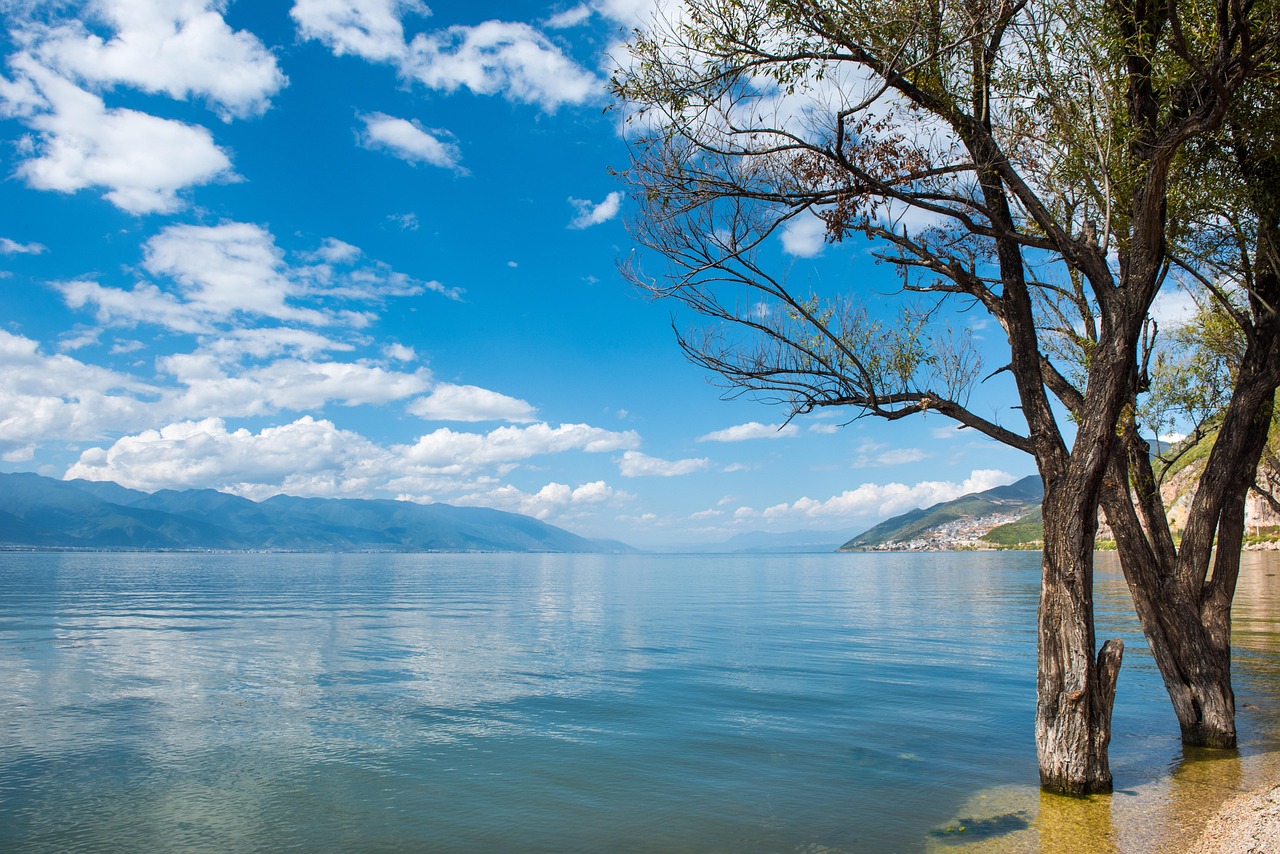
The lake is called Erhai, and it covers two hundred and fifty square kilometres.
Erhai is the second largest highland lake in China.
The old town sits right between the mountain and the lake.
The owner of my guesthouse isn't from Dali.
He used to work in Shanghai, twelve hours a day.
One year he came to Dali and stayed a week.
After he got back to Shanghai, he kept thinking about Cangshan.
The next year, he moved here.
I asked him: don't you miss Shanghai?
He said: sometimes.
But now I can see Cangshan every day.
He said: there are a lot of people like me in Dali.
Local people call them new Dali people.
In the afternoon, I walked around the old town.
There are a lot of shops on both sides — tea, clothes, coffee.
I said: this isn't what I expected.
The owner said: what did you think Dali was like?
I said: I thought it would be quiet.
He said: the old town is lively; the lakeside is quieter.
The next day, I cycled out to Erhai.
On one side of the road was the lake, on the other the mountain.
I rode for two hours.
An old man was sitting in a doorway, and he invited me in for tea.
He said: when we Bai receive a guest, we serve three courses of tea.
The first course is very bitter.
The second has brown sugar, sesame and walnut in it — very sweet.
The third has Sichuan pepper, fresh ginger, cassia bark and honey.
I drank the third one.
My mouth went numb and sweet at once, and the taste kept shifting.
I said: what is this taste?
He said: this is called huiwei — aftertaste.
He said: one bitter, two sweet, three aftertaste.
I said: how old is this tea?
He said: over a thousand years.
He said: back in the eighth century, people here were already drinking tea like this.
He said: in 2014, the state listed it as intangible cultural heritage.
In 2022 it went onto the UNESCO list.
I said: a cup of tea?
He said: a cup of tea.
After the tea, he pointed at the lake and told me something else.
He said: there used to be a lot of guesthouses along the lake.
He said: more and more opened, and the water got dirty.
I said: and then?
He said: on 31 March 2017, the authorities announced an inspection.
Every business along the lake had to close within ten days.
Over a thousand guesthouses, restaurants and bars — all shut in ten days.
I said: ten days?
He said: ten days.
After that, the lakeside emptied out overnight.
I said: do you think that was right?
He didn't answer straight away.
He said: after they closed, a lot of people had no work.
When I was small, you could drink the water in Erhai.
Later you couldn't.
These last few years it's been getting better again.
He said: making the water good takes many years.
Making it bad only takes a few.
I looked at the lake.
The water was clear and the sky was blue.
The lakeside was very quiet that afternoon.
In the evening, I went back to the old town.
The streets were still full of people, still lively.
But now I know Dali has two faces.
One is the old town at night.
One is the lakeside in the afternoon.
Both of them are real.
When you go somewhere, do you want to stay on the liveliest street, or far out by the lake?
Listen again
Try it without the transcript and notice what sounds clearer.
What vocabulary does this episode teach?
词汇HSK 3. The lakeside, as against the old town at night.
HSK 1. What people lost when the shore closed.
HSK 3. The old town, as against the lakeside.
HSK 2. Dali has two of them inside one day.
The third course, which gives you no conclusion.
A thousand of them, ten days' notice.
Erhai is China's second largest highland lake.
Nineteen of them on Cangshan.
* beyond level超纲词
What grammar patterns appear in this episode?
语法被 + verb / 要 + verb
States what was required of everyone.
所有湖边的店,十天以内都要关。
越 … 越 …
The more of one, the more of the other.
他说:客栈越开越多,水就脏了。
以前 … 后来 …
Contrasts an earlier state with a later one.
我小的时候,洱海的水可以喝。
Proper nouns
专有名词Free account
Keep learning from this story
Create a free account to keep saved words and your preferred level together.
- Keep words with their story context
- Remember your preferred level
- Build your vocabulary over time