
A Chinese podcast · Same story, 4 levels
胡迪尼的大象与好奇心
Economist Bartleby Column: Andrew Palmer on the Hidden Costs of Workplace Curiosity
About this story
Economist Bartleby columnist Andrew Palmer argues workplace curiosity has real costs — distraction, delayed decisions and blind-alley experiments — despite its proven benefits. HSK 5+ Chinese listening practice.
This is an HSK 5+ Chinese listening episode that runs about 2 minutes. The full Mandarin script is shown with tap-for-pinyin and a line-by-line English translation, so you can listen and read at once — comprehensible input in the sense of Stephen Krashen's i+1 theory. It teaches 12 key vocabulary words such as 成本、结论、干扰 and walks through 7 grammar patterns, each explained in English with examples. The same news story is retold at 4 difficulty levels — use the level selector above to find the version that is challenging but still understandable for you.
Read at your level
原文Read the complete story in Chinese. Reveal pinyin and English only when you need them.
English transcript reference
Curiosity has been almost universally praised by the workplace as an all-purpose virtue, yet some people insist on tallying up its costs.
The one keeping this account is Andrew Palmer, who writes a column under the name Bartleby in a long-established British weekly.
His conclusion is stated plainly: curiosity is inherently distracting — it makes people lose focus and pushes decisions that should be made further back.
Over the past few years, employers have treated curiosity as a superpower for coping with upheaval, with recruiting, evaluation and training all leaning on it.
Palmer does not deny this; he merely reminds us that superpowers are never free — someone always has to pay the bill.
The evidence supporting this fine reputation is indeed plentiful.
Sophie von Stumm of the University of York and her co-authors completed a meta-analysis.
The results found that intellectual curiosity can predict academic performance, and this link appears repeatedly across different studies.
Another study cited in the column shows that when people are eager to know an answer, they remember noticeably more.
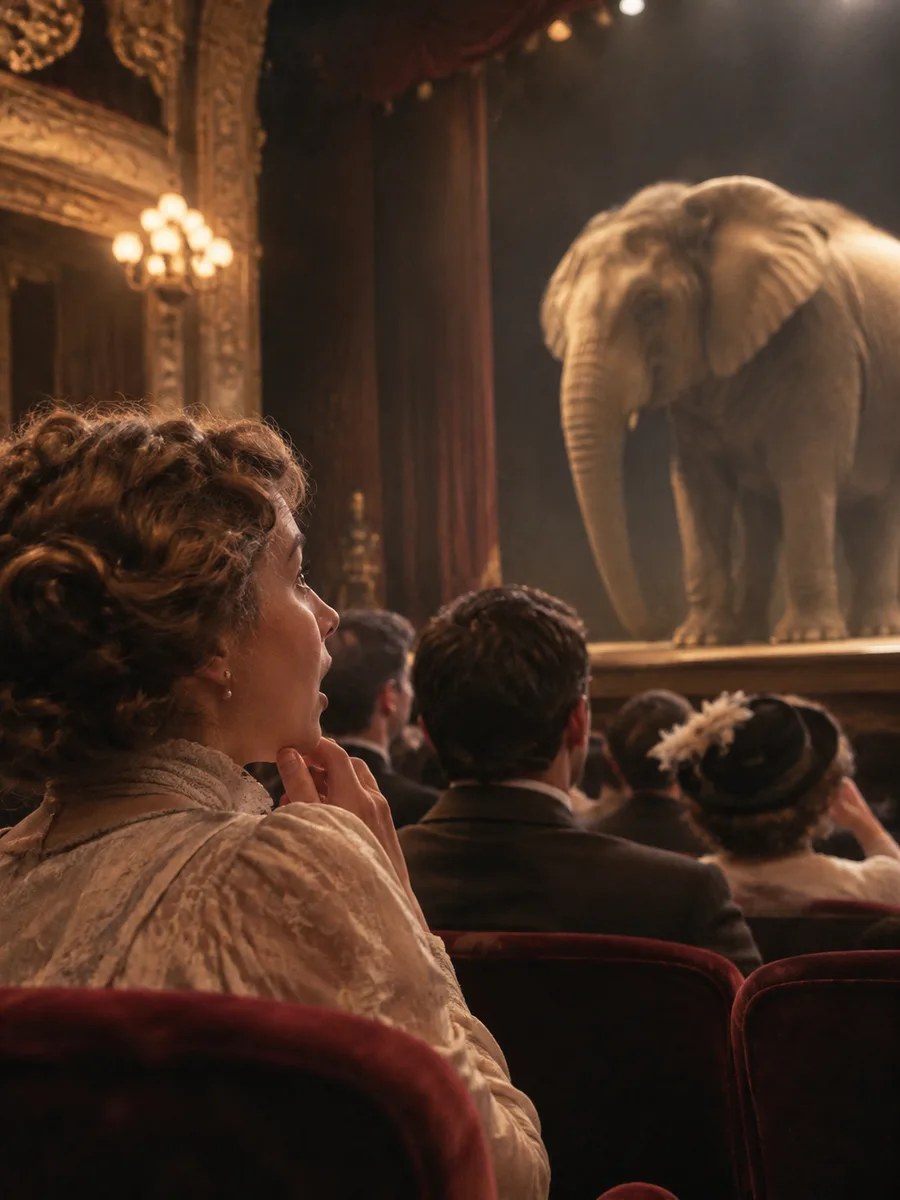
In one experiment, participants were asked to guess how Houdini made an elephant disappear back in the day.
Those told they were very close but not correct came up with more new solutions afterward than those told they had answered correctly.
Companies learned long ago to harness this drive.
Google wrote only a math problem on a billboard with no identifying marks at all.
Those who could solve it followed the clues to a recruitment page; those who couldn't had no idea it was a recruitment ad.
Charitable fundraising has similar mechanisms.
One organization found that asking for 8.23 dollars made people more likely to open their wallets than asking for a round 10 dollars.
Spencer Harrison of INSEAD calls curiosity itself a productive inefficiency.
In his words, curiosity brings short-term detours again and again, and the payoff may only be realized long afterward.
In another study, people who chose which video to watch themselves were more curious about the subject than those assigned to watch the same video.
Stefan Thomke of Harvard Business School studies corporate experimentation culture; his example is the online booking platform Booking.com.
At Booking.com, roughly a thousand controlled experiments are running simultaneously at any given moment.
Palmer writes that to use curiosity well, one must accept trade-offs.
Some time is destined to be spent in dead ends, some experiments show no results for a long time, and the books don't look good.
He wrote at the end of his column that there is almost nothing bad about curiosity.
Then he added two words: almost.
Listen again
Try it without the transcript and notice what sounds clearer.
What vocabulary does this episode teach?
词汇HSK 5. Business/economics term for the cost of production or an action. 记一笔成本 means 'to record a cost'.
HSK 5. The final judgment reached after reasoning. 得出结论 = to draw a conclusion.
HSK 5. To disrupt or disturb. 干扰性 = the quality of being disruptive.
HSK 5. An official evaluation of work or study. 绩效考核 = performance appraisal.
HSK 5. Job or skills training. 培训班 = training class.
HSK 5. To refuse to admit a fact. 并不否认 = does not deny at all.
HSK 5. Proof or facts supporting a claim. 提供证据 = to provide evidence.
HSK 5. To forecast based on data. 预测结果 = predicted results.
HSK 5. 好奇心 is the noun form; 好奇 alone is the adjective 'curious'. Common collocation: 满足好奇心 (satisfy curiosity).
HSK 5. A moral excellence or good quality. Often used in set phrases like 传统美德 (traditional virtue).
HSK 5. A regular signed article in a publication. 写专栏 = to write a column.
HSK 5. Used for hiring staff. 招聘页面 = recruitment page; 招聘会 = job fair.
* beyond level超纲词
What grammar patterns appear in this episode?
语法被 + Verb + 成 / 作
The 被 construction marks the passive voice; adding 成/作 after the verb means 'be regarded/treated as'.
欧洲工商管理学院的斯宾塞·哈里森则把好奇心本身称作生产性低效。
并不 / 并不否认
并不 + verb is a softened, emphatic negation meaning 'not at all / does not actually'. It often precedes a concession before a 只是 clause.
帕尔默并不否认这一点,他只是提醒,超能力从不免费,总得有人付账。
账面上并不好看。
把 + Object + Verb Phrase
The 把 construction moves the object before the verb to emphasize how something is handled or affected.
要把好奇心用好,就得接受取舍。
越…越 / 比…更…
比 introduces comparison; 更 marks a higher degree. 比 + A + 还要 + adj stresses 'even more than'.
开口要八点二三美元,比开口要十美元整更容易让人掏钱。
事后想出的新解法,比被告知答对的人还要多。
得 + Verb (draft/děi)
得 (děi) as an auxiliary means 'must / have to', expressing obligation.
要把好奇心用好,就得接受取舍。
总得有人付账。
让 / 使 + Object + Verb
Causative verbs 让 and 使 introduce the person or thing being made to do or feel something.
它让人分神,也让该拍的板往后拖。
有实验让受试者去猜胡迪尼当年是怎么把一头大象变没的。
是…的 / 是…的 + Noun
The 是…的 pattern highlights or defines something; here 是…的 is used to identify who does what.
支撑这份美名的证据确实不少。
Proper nouns
专有名词Sources
来源Free account
Keep learning from this story
Create a free account to keep saved words and your preferred level together.
- Keep words with their story context
- Remember your preferred level
- Build your vocabulary over time