
A Chinese podcast · Same story, 4 levels
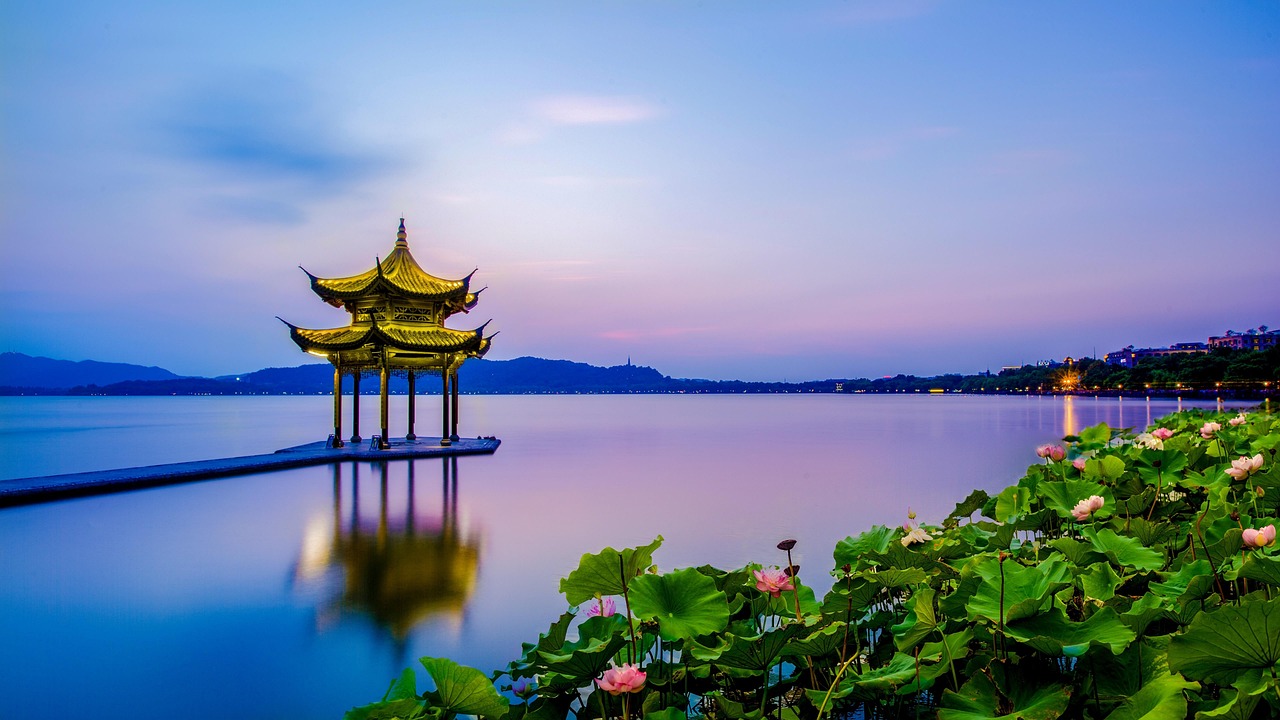
杭州:不挖,湖会没有
Hangzhou: The Lake That Would Vanish If Nobody Dug It
About this story
Su Shi built the causeway from dredged mud in 1089, Leifeng Pagoda fell in 1924 because people stole its bricks, and West Lake became World Heritage in 2011. HSK 2 Chinese listening practice.
This is an HSK 2 Chinese listening episode that runs about 4 minutes. The full Mandarin script is shown with tap-for-pinyin and a line-by-line English translation, so you can listen and read at once — comprehensible input in the sense of Stephen Krashen's i+1 theory. It teaches 8 key vocabulary words such as 苏堤、沼泽、砖 and walks through 3 grammar patterns, each explained in English with examples. The same news story is retold at 4 difficulty levels — use the level selector above to find the version that is challenging but still understandable for you.
Read at your level
原文Read the complete story in Chinese. Reveal pinyin and English only when you need them.
English transcript reference
I used to think West Lake was a natural lake.
After three days in Hangzhou, I knew I'd got that wrong.
West Lake is six point three nine square kilometres, with hills on three sides.
My friend said: there's one thing you need to know first.
She said: if nobody looked after this lake, it would slowly turn into a swamp.
I said: how come?
She said: mud from the hills keeps coming into the lake.
She said: if you don't dig it out, the lake gets shallower and shallower.
So for over a thousand years, Hangzhou people have been digging this lake.
On the first day, we walked the Su Causeway.
The Su Causeway is two point eight kilometres long, with six bridges on it.
My friend said: this causeway was built in 1089.
I said: over nine hundred years ago.
She said: yes.
The official in Hangzhou at the time was called Su Shi, also known as Su Dongpo.
He had people dig the mud off the lake bed, and piled that mud into this causeway.
I said: so the road under my feet was originally on the lake bed.
She said: yes.
I said: it doesn't look man-made at all.
She said: that's the most interesting part.
In the afternoon, we saw a pagoda.
My friend said: that's Leifeng Pagoda.
She said: but this one is new — it was only finished in 2002.
I said: and the old one?
She said: the old pagoda collapsed on 25 September 1924.
I said: why did it collapse?
She said: a lot of people believed the bricks in the pagoda were useful, that they kept you safe.
She said: they took the bricks away, one at a time.
She said: so many people took them that the pagoda collapsed on its own.
I said: a pagoda emptied out by people?
She said: yes.
On the second day, we went up into the hills for tea.
The hills west of West Lake produce Longjing tea.
My friend said: Longjing is the name of a tea, and also the name of a place.
I said: so drinking this cup of tea is also learning Hangzhou's geography.
She said: you could put it that way.
On the third morning there was fog.
The far hills were pale, the near hills dark.
My friend said: West Lake has ten famous views, called the Ten Scenes of West Lake.
She said: these names were set down over eight hundred years ago.
She said: every name has a time and a weather in it.
For example, the Su Causeway on a spring morning, the moon on an autumn night, the Broken Bridge after snow.
I said: so with no snow today, I can't see that one.
She said: right.
She said: these names are teaching you to pay attention to time and weather.
I said: that's a good idea.
On the last day, I walked the Su Causeway again.
In June 2011, West Lake became a World Heritage Site.
My friend said: the reason given wasn't only that the scenery is beautiful.
She said: the reason was that people and nature have been working here together for over a thousand years.
I said: so West Lake is a work of art.
She said: and this work is still being made.
Every year they still have to clear the lake bed.
Six point three nine square kilometres of water, two point eight kilometres of causeway, nine hundred years of mud.
When you see a beautiful landscape, do you assume it grew that way, or that someone made it?
Listen again
Try it without the transcript and notice what sounds clearer.
What vocabulary does this episode teach?
词汇HSK 3. What West Lake looks like, and isn't.
HSK 2. What the visitor used to assume.
HSK 2. Longjing is a tea and a place.
2.8km, six bridges, built 1089 from lake mud.
What West Lake becomes if nobody dredges it.
People took them one at a time until the pagoda fell.
Where the causeway under your feet came from.
West Lake was inscribed in June 2011.
* beyond level超纲词
What grammar patterns appear in this episode?
语法如果 …,会 …
A condition and its predicted outcome.
她说:这个湖如果没有人管,会慢慢变成沼泽。
越来越 + adjective
Progressive change over time.
她说:不挖,湖就会越来越浅。
本来 + verb
States the original state of affairs.
我说:所以我脚下这条路,本来在湖底。
Proper Nouns
专有名词Free account
Keep learning from this story
Create a free account to keep saved words and your preferred level together.
- Keep words with their story context
- Remember your preferred level
- Build your vocabulary over time