
A Chinese podcast · Same story, 4 levels
查尔斯三世:不抱怨的国王
King Charles III at Four Years: Cancer, Family Scandal and a 58% Approval Rating — How He Stopped Complaining
About this story
HSK 1: Four years after becoming king, Charles III is liked by 58% of Britons, has recovered from cancer, and faces the slavery question at the Antigua summit.
This is an HSK 2 Chinese listening episode that runs about 2 minutes. The full Mandarin script is shown with tap-for-pinyin and a line-by-line English translation, so you can listen and read at once — comprehensible input in the sense of Stephen Krashen's i+1 theory. It teaches 12 key vocabulary words such as 说、做、工作 and walks through 8 grammar patterns, each explained in English with examples. The same news story is retold at 4 difficulty levels — use the level selector above to find the version that is challenging but still understandable for you.
Read at your level
原文Read the complete story in Chinese. Reveal pinyin and English only when you need them.
English transcript reference
Four years ago, Charles became the king of the United Kingdom.
At that time, many people said he would not do it well.
He himself also said: I don't know what I should do.
After becoming king, he got sick, very seriously sick.
Three months later, he came back out to work.
Last year, his younger brother Andrew was no longer a prince.
This year, the police came, and his brother went with them.
His brother said: I did nothing wrong.
At the beginning, many people said Britain no longer wanted a king.
Now, fewer people say this.
Someone asked many British people.
Out of one hundred people, fifty-eight said he was good.
His eldest son William is even better.
Out of one hundred people, seventy-four said he was good.
His younger son Harry is a bit lower.
Out of one hundred people, only twenty-nine said he was good.
His mother was also a queen before.
His mother once said a sentence: Don't say the days are bad, and don't explain.
Before, he often said the days were bad.
Now, he doesn't say it anymore.
There is a person who wrote his story.
This person said: to meet the king once, many leaders all want to.
Many years ago, the king read an old book.
The book said: being king is very hard.
The book also said: the king has something others don't have, called ceremony.
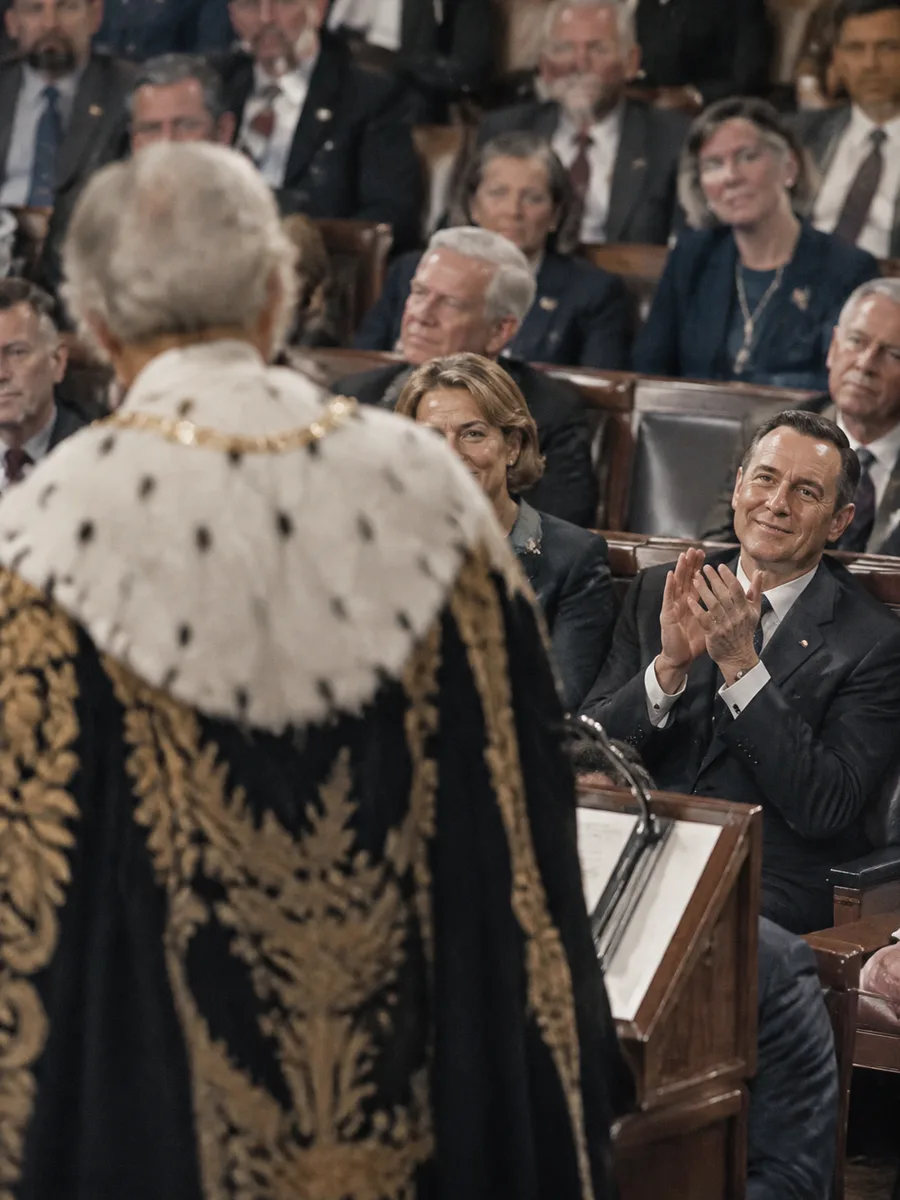
This year, he went to America to give a speech.
Many people stood up and clapped again and again.
Ceremony is also useful.
On November third, leaders of many countries will hold a meeting.
The place of the meeting is called Antigua.
A long time ago, Britain took many people away from Africa.
These people worked, and Britain did not give them money.
This matter is hard to talk about.
He also has to go and talk about this matter.
Listen again
Try it without the transcript and notice what sounds clearer.
What vocabulary does this episode teach?
词汇HSK 1. Used for both quoting speech and describing opinions: 很多人说他做不好.
HSK 1. 做不好 = to not do (something) well.
HSK 1. 出来工作 = to come back out to work.
HSK 1. 他的弟弟安德鲁 = his younger brother Andrew.
HSK 1. 大儿子 = eldest son; 小儿子 = youngest son.
HSK 1. 他的妈妈以前也是女王 = his mother was also a queen before.
HSK 1. Often paired with 现在: 以前…现在…
HSK 1. 现在,这样说的人少了 = now, fewer people say this.
HSK 1. 当上国王 = to become king.
HSK 1. 英国的国王 = the king of Britain.
HSK 1. 去美国讲话 = to go to America to give a speech.
HSK 3. 不是王子了 = was no longer a prince.
* beyond level超纲词
What grammar patterns appear in this episode?
语法当上 + Noun
当上 means 'to become (a role)', used with a position or title. It stresses successfully taking up the role.
四年前,查尔斯当上了英国的国王。
当上国王以后,他病了,病得很重。
Verb + 得 + Complement
The 得 structure describes how an action is done. 做不好 = does not do (it) well; 病得很重 = is very seriously ill.
很多人说他做不好。
他病了,病得很重。
一百个人里,有 + Number + 个人
'Out of one hundred people, (number) people…' — 里 means 'among/out of', used to report poll results.
一百个人里,五十八个人说他好。
一百个人里,七十四个人说他好。
一百个人里,只有二十九个人说他好。
不是 + Noun + 了
不是…了 marks a change of state: something is no longer what it was.
去年,他的弟弟安德鲁不是王子了。
一开始,很多人说英国不要国王了。
说 + Clause (reported speech)
说 introduces quoted or reported speech without any change in word order; the speaker comes before 说.
他自己也说过:我不知道我该做什么。
弟弟说:我没有做错事。
这个人说:见国王一面,很多领导人都想。
也 + Verb
也 means 'also/too', linking two similar facts.
他的妈妈以前也是女王。
仪式也有用。
他也要去说这件事。
要 + Verb
要 marks a future plan or obligation: 'is going to / has to do something'.
十一月三日,很多国家的领导人要开会。
他也要去说这件事。
给 + Person + Noun (double object)
Verbs like 给 take an indirect object (person) then a direct object (thing).
这些人干活,英国不给他们钱。
Proper nouns
专有名词Sources
来源- Royal family favourability trackers, October 2026
- King to speak about slavery with 'unflinching honesty' at Commonwealth summit
- Who is Andrew Mountbatten-Windsor? Ex-prince tied to Epstein scandal
- King Charles to Return to Public Duties, Reassuring Anxious Royal Watchers
- As King Charles hosts Trump for state visit, here's what to look for
Free account
Keep learning from this story
Create a free account to keep saved words and your preferred level together.
- Keep words with their story context
- Remember your preferred level
- Build your vocabulary over time