
A Chinese podcast · Same story, 4 levels
查尔斯三世:不抱怨的国王
King Charles III at Four Years: Cancer, Family Scandal and a 58% Approval Rating — How He Stopped Complaining
About this story
Four years after Queen Elizabeth II's death, King Charles III holds 58% approval, beats cancer, strips Prince Andrew's title, and heads to Antigua to address slavery. HSK 3 Chinese listening practice.
This is an HSK 3 Chinese listening episode that runs about 3 minutes. The full Mandarin script is shown with tap-for-pinyin and a line-by-line English translation, so you can listen and read at once — comprehensible input in the sense of Stephen Krashen's i+1 theory. It teaches 12 key vocabulary words such as 相信、工作、弟弟 and walks through 7 grammar patterns, each explained in English with examples. The same news story is retold at 4 difficulty levels — use the level selector above to find the version that is challenging but still understandable for you.
Read at your level
原文Read the complete story in Chinese. Reveal pinyin and English only when you need them.
English transcript reference
Four years ago, the British queen died.
Her son Charles became king.
She was queen for a much longer time.
At that time, many people did not believe he could do it well.
Some people even saw him and forgot to call him "King".
Four years have passed, and there is much less of this kind of talk.
Now, out of every one hundred British people, fifty-eight say he is doing a good job.
More people say his eldest son William is doing well.
Out of one hundred people, seventy-four say William is good.
In these four years, he has encountered quite a few difficulties.
He had cancer, which is a very serious illness.
But only three months after getting sick, he came back to work.
His younger brother Andrew also had problems.
In 2025, people around the king said his brother could no longer be called a prince.
In 2026, his brother was taken away by the police.
He said he had not done anything wrong.
In recent years, Britain has changed several people who run the country, but the king has always been him.
Many people say he is doing better than everyone thought.
He rarely says he is tired, and rarely says he has a hard time.
In the past, everyone called him "the prince who always says he has a hard time".
His mother the queen said, do not say you have a hard time, and do not explain too much.
Now, he has learned this sentence.
He likes to talk to flowers and plants; in the past people would laugh at him.
He also built a small town; at that time everyone did not understand either.
Looking at it now, these things are not strange at all.
Leaders of many countries want to meet him.
There is a person who wrote his story who said a sentence.
He said meeting the king is what many leaders most want to do.
He thought very early on about what a king really is.
Many years ago, he read a very old book, and there was a passage in the book.
That passage said a king's life is not easy, and all he has is "ceremony".
Ceremony is when everyone stands properly, there is music, and many people do things together.
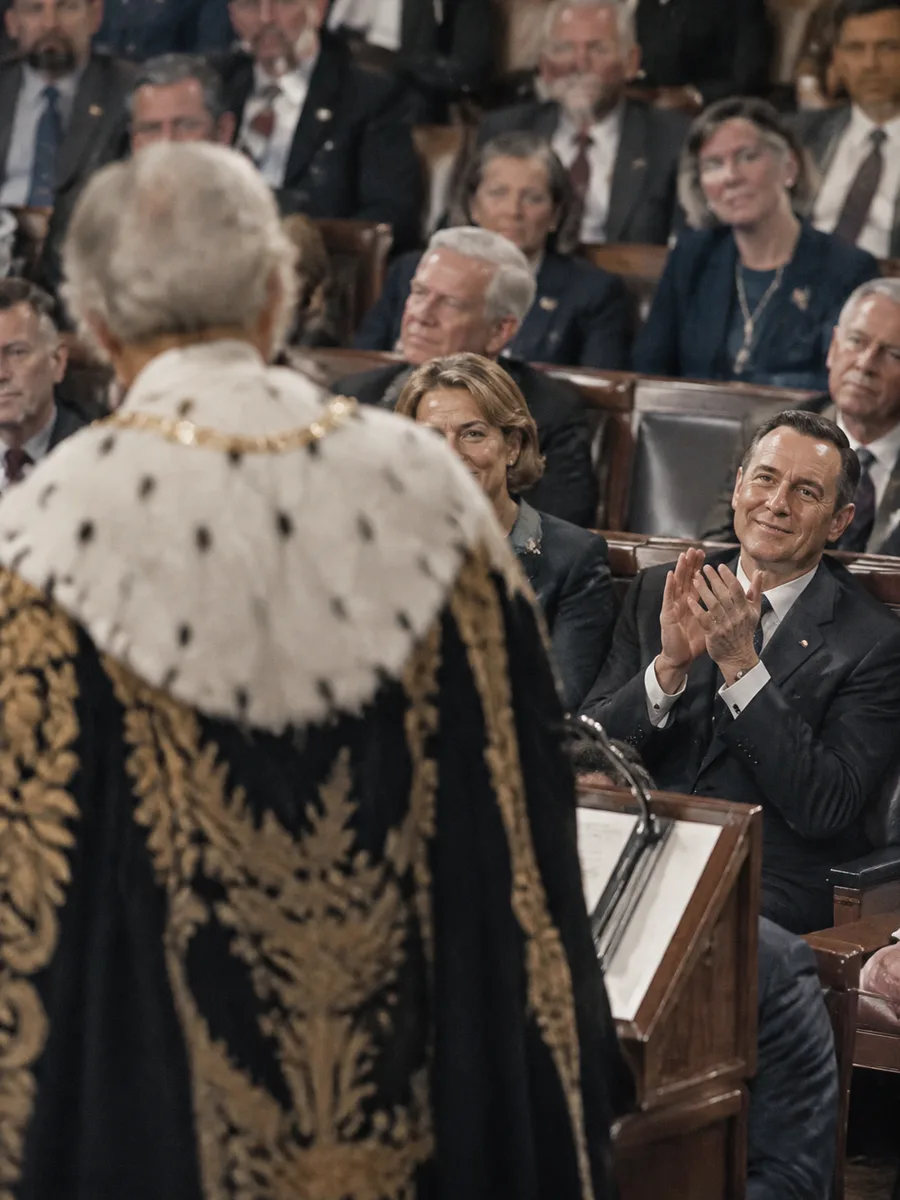
This year, he went to America and gave a speech.
The people below stood up again and again, clapping for him.
These are also ceremonies, but ceremonies are sometimes really useful.
Next, he is going to a place called Antigua.
A very big meeting will be held there, and leaders of many countries will come.
He will talk about a difficult thing at the meeting.
A long time ago, Britain sold Black people like things.
This matter is not easy to bring up, but he is still going to talk about it.
Listen again
Try it without the transcript and notice what sounds clearer.
What vocabulary does this episode teach?
词汇HSK 2. 相信 means to believe or trust; here 很多人不相信他能做好.
HSK 1. 工作 can be a noun or verb; here 他就回来工作了.
HSK 1. 弟弟 is younger brother; here it refers to 安德鲁.
HSK 2. 警察 means police; here 被警察带走了.
HSK 2. 做错事 means to do something wrong; here 自己没有做错事.
HSK 1. 国家 means country; here 很多国家的领导人.
HSK 2. 累 means tired; here 他很少说自己累.
HSK 2. 以前 means before or previously; here 以前别人会笑他.
HSK 2. 国王 is a noun meaning king; used throughout the script as 查尔斯成了国王.
HSK 1. 美国 is the United States; here 他去美国讲了一次话.
Beyond HSK 2. 癌症 means cancer; here 他得过癌症.
Beyond HSK 2. 王子 means prince; here 不能再叫王子了.
* beyond level超纲词
What grammar patterns appear in this episode?
语法The 把 construction moves the object before the verb to emphasize what happens to it.
英国把黑人当成东西一样卖。
现在,他把这句话学会了。
The 被 construction marks the passive voice, showing the subject receives the action.
他的弟弟被警察带走了。
才 + Time/Verb
才 emphasizes that something happened later or with difficulty than expected.
可是病了才三个月,他就回来工作了。
比 + Noun + Verb + 得 + Complement
The 比 comparison with a degree complement shows how much more one thing is than another.
他比大家想的做得好。
一百个人里,有 + Number + 个
This pattern expresses a proportion or statistic out of a group.
现在,一百个英国人里,有五十八个说他做得好。
一百个人里,有七十四个说威廉好。
Verb + 过 + 了
The 过 aspect marker indicates a past experience, often with 了 for completion.
这四年,他遇到过不少难事。
他的弟弟安德鲁也出过事。
是 + Noun + 的
The 是…的 structure highlights or explains a fact, often in the past.
这些也是仪式,可仪式有时候真的有用。
Proper nouns
专有名词Sources
来源- Royal family favourability trackers, October 2026
- King to speak about slavery with 'unflinching honesty' at Commonwealth summit
- Who is Andrew Mountbatten-Windsor? Ex-prince tied to Epstein scandal
- King Charles to Return to Public Duties, Reassuring Anxious Royal Watchers
- As King Charles hosts Trump for state visit, here's what to look for
Free account
Keep learning from this story
Create a free account to keep saved words and your preferred level together.
- Keep words with their story context
- Remember your preferred level
- Build your vocabulary over time