
A Chinese podcast · Same story, 4 levels
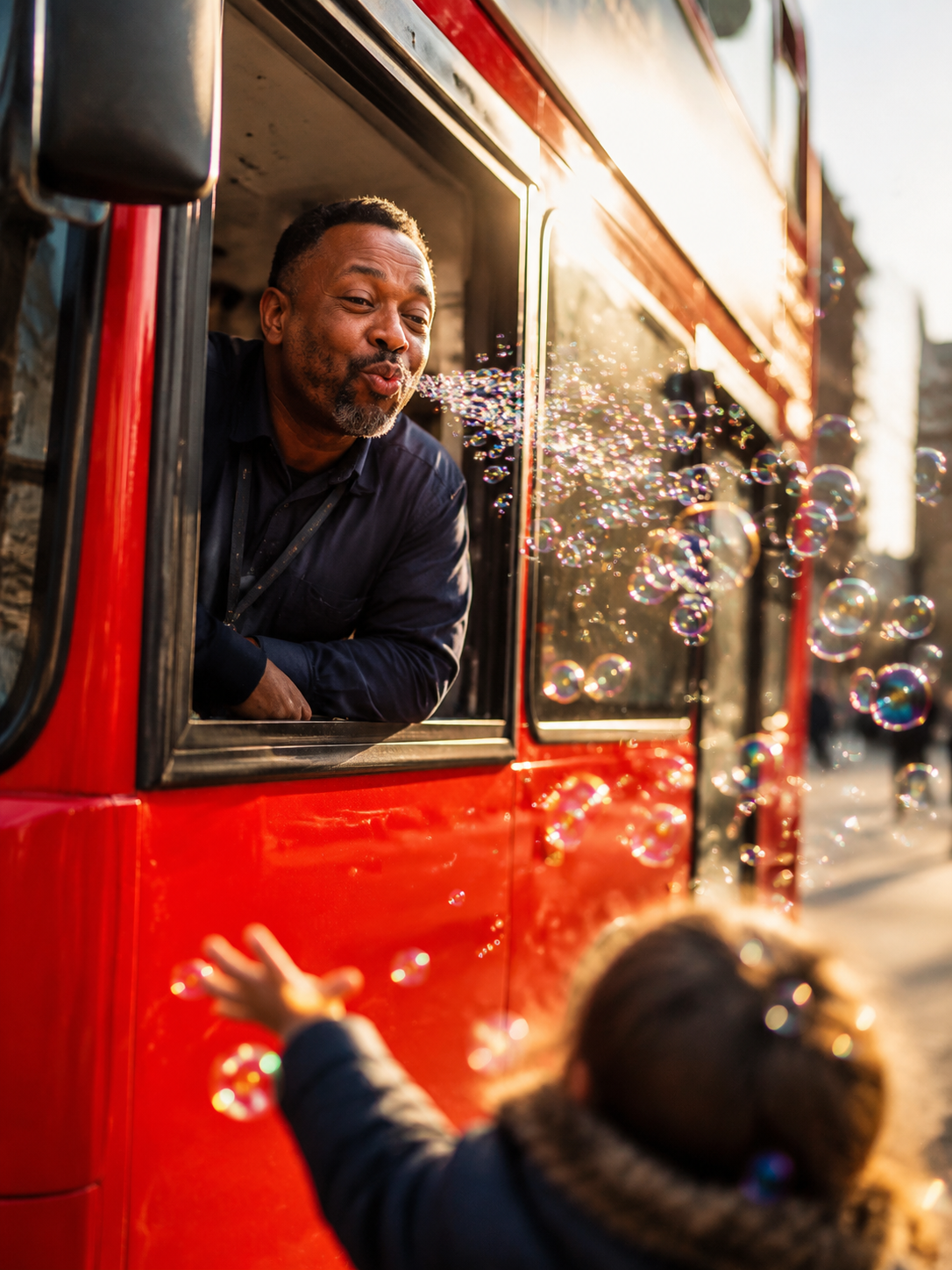
伦敦孩子管他的车叫「泡泡巴士」。公司以「安全考虑」叫停了他,至今没说是什么考虑。
London's Bubble Bus Driver Banned Over Safety
About this story
London's Bubble Bus Driver Banned Over Safety. HSK 3 Chinese listening practice.
This is an HSK 3-4 Chinese listening episode that runs about 2 minutes. The full Mandarin script is shown with tap-for-pinyin and a line-by-line English translation, so you can listen and read at once — comprehensible input in the sense of Stephen Krashen's i+1 theory. It teaches 12 key vocabulary words such as 表情、宁可、恐怕 and walks through 3 grammar patterns, each explained in English with examples. The same news story is retold at 4 difficulty levels — use the level selector above to find the version that is challenging but still understandable for you.
Read at your level
原文Read the complete story in Chinese. Reveal pinyin and English only when you need them.
English transcript reference
First, how small this is: a bus driver blows bubbles as passengers board.
That is all it is, and it ended up in an American newspaper.
In London, riding the bus is the most expressionless thing there is: get on, find a seat, head down over the phone, get off at your stop.
The whole way, very few people look up.
But on one route in north-east London, there is a driver who does not do that.
Every time the doors open, he blows out a stream of bubbles that drift in front of the people boarding.
Grown-ups smile. Children shout.
Over time, all the local kids knew this bus, and gave it a name: the bubble bus.
Some would rather wait, and let another bus go by, just to ride this one.
Later, Hackney Council went and interviewed him and put the video online.
Right — now what happened this year.
The bus company came to him and said: stop.
The reason given was "safety considerations".
Considerations about what, specifically?
Blocking the driver’s view? Children getting distracted at the door?
The company did not say, and to this day has given no specific explanation.
It only replied with one line: what we do is get people where they are going, on time.
So the driver stopped.
The bus still runs, the route is unchanged, the passengers are the same passengers.
It is only that when the children board, there are no longer bubbles in front of them.
This spread, I suspect, not because of the bubbles.
It spread because a lot of people recognised the shape of it at once: a reason nobody can explain can push down a thing that plainly made people happy.
Think about it: if a small thing really is unsafe, why is nobody willing to say how?
Listen again
Try it without the transcript and notice what sounds clearer.
What vocabulary does this episode teach?
词汇最没有表情的一件事 = the most expressionless thing there is.
有的孩子宁可多等 = some would rather wait.
恐怕不是因为泡泡 = probably not because of the bubbles.
一件明确让人高兴的事 = a thing that plainly made people happy.
一个说不清楚的理由 = a reason nobody can explain.
具体是什么考虑? = considerations about what, specifically?
是怕挡视线 = worry about blocking the view.
还是怕孩子分心? = or that children get distracted?
哈克尼区的官方账号 = Hackney Council’s official account.
官方账号去采访了他 = the official account interviewed him.
路线没变 = the route is unchanged.
乘客还是那些乘客 = the passengers are the same passengers.
What grammar patterns appear in this episode?
语法宁可……也……
"would rather A than B". Shows what someone is willing to give up.
有的孩子宁可多等,看见别的车来了也不上。
恐怕
"probably, I suspect". Softens a claim you cannot prove.
这件事传开,恐怕不是因为泡泡。
把 + object + 按下去
把 puts the object first; 按下去 = to press it down, to quash it.
可以把一件明确让人高兴的事,按下去。
Proper nouns
专有名词Sources
来源Free account
Keep learning from this story
Create a free account to keep saved words and your preferred level together.
- Keep words with their story context
- Remember your preferred level
- Build your vocabulary over time