
A Chinese podcast · Same story, 4 levels
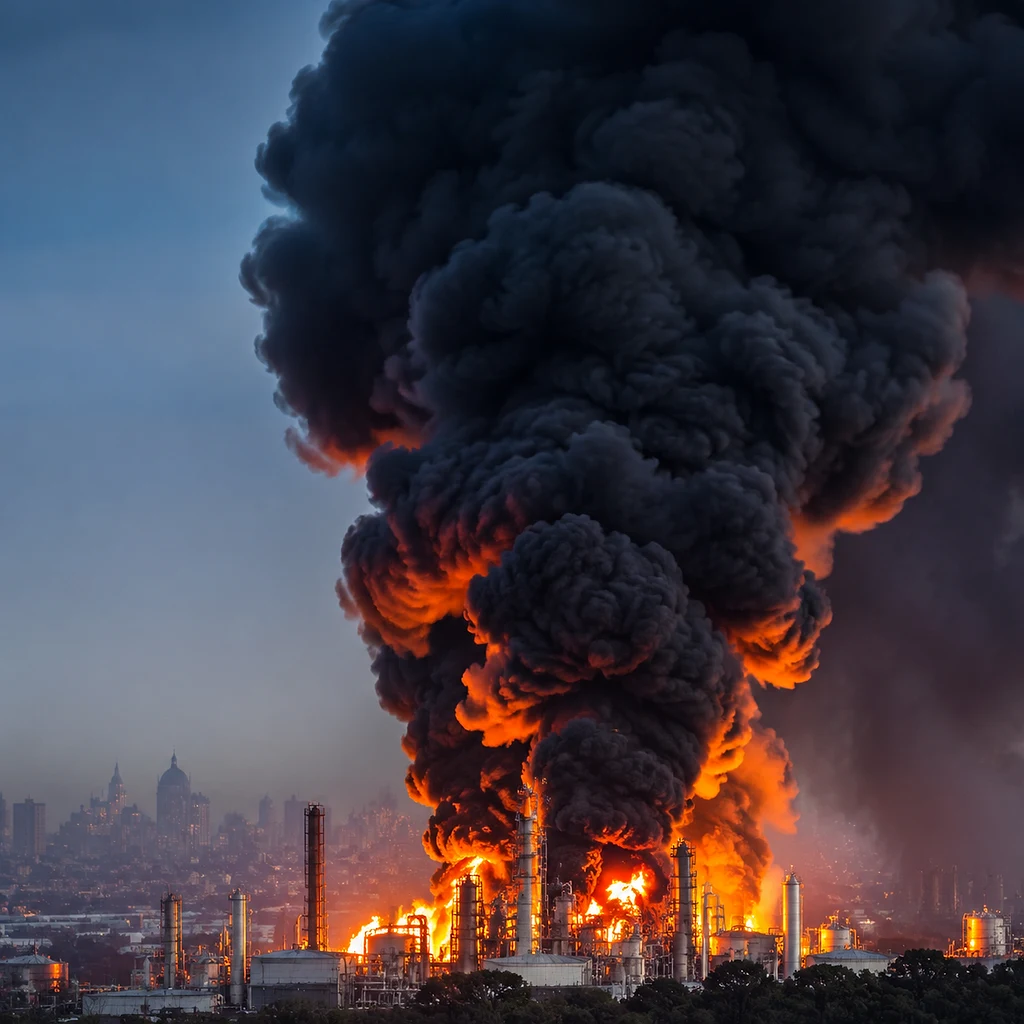
近两百架无人机扑向莫斯科:乌克兰为什么死磕俄罗斯的炼油厂?
Drone Strike Burns Moscow Oil Refinery
About this story
The June 18 2026 drone attack on Moscow: ~200 drones intercepted, the Kapotnya oil refinery ablaze for the second time in a week, the logic of striking an enemy's fuel, 17 wounded, shut airports and 170+ cancelled flights, and Zelensky's vow that Moscow will burn. HSK 3 Chinese listening practice.
This is an HSK 3-4 Chinese listening episode that runs about 4 minutes. The full Mandarin script is shown with tap-for-pinyin and a line-by-line English translation, so you can listen and read at once — comprehensible input in the sense of Stephen Krashen's i+1 theory. It teaches 14 key vocabulary words such as 城市、国家、地图 and walks through 7 grammar patterns, each explained in English with examples. The same news story is retold at 4 difficulty levels — use the level selector above to find the version that is challenging but still understandable for you.
Read at your level
原文Read the complete story in Chinese. Reveal pinyin and English only when you need them.
English transcript reference
Today we'll talk about a big event that just happened.
This Thursday,
that is, June 18th,
Ukraine,
against Russia's capital Moscow,
launched an especially large drone attack.
How large?
Let me give you a number first.
Russia itself said
that this time,
the drones they shot down
numbered nearly two hundred.
This was, in the four-plus years of this war,
the hardest Moscow has been hit —
the most ferocious single strike.
So,
all these drones —
what was their main target?
It was, inside the city of Moscow,
a large oil refinery.
This refinery
is run by Russia's gas-and-oil company,
on the southeastern edge of Moscow,
in a place called Kapotnya.
What's more,
this was already, within this one week,
the second time it had been hit.
That morning,
drone after drone
swooped toward the refinery.
Inside the plant,
at least five big fires broke out at once.
Thick black smoke
covered most of Moscow's sky.
Footage from the scene showed
that after a huge blast,
the roof of the plant building
was blown straight up into the air.
From the sky,
a 'black rain' mixed with soot even fell.
Here you might ask:
amid all this back-and-forth fighting,
why does Ukraine
insist on targeting the refinery?
The logic, in fact, isn't complicated.
Modern war,
in the end, is a war over oil.
Tanks burn oil,
warplanes burn oil,
the trucks hauling supplies
all rely on oil too.
An oil refinery
is the place that turns crude oil
into all this fuel.
So Ukraine's calculation is:
I can't take out your whole army,
so I'll hit your oil.
Once you have no oil,
the war can't go on.
It's a way of fighting
aimed straight at the enemy's 'wallet' and 'fuel tank'.
Of course,
what got hit this time
was not only the refinery.
According to the Russian side,
a total of seventeen people were injured,
two of them children.
Some apartment buildings
were damaged by falling debris.
And the whole city
was thrown into disorder that day.
Several airports around Moscow
all suspended takeoffs and landings.
One airline alone
cancelled more than a hundred and seventy flights,
and over a hundred more flights
were delayed.
Many travelers
were stranded at the airports,
unable to get home.
And in some places,
a fuel crunch began;
even with money, you couldn't be sure of filling up.
Ukraine, which did this,
also took a hard line.
Just before the attack,
Ukraine's president
had just spoken with the leaders of the US and France
by phone,
and at this week's G7 summit
had won more support.
He delivered a fierce line:
if Ukraine is to burn,
then your Moscow
will burn just the same.
Speaking of this,
I want to say one more thing to you.
This war
has gone on for four-plus years.
For many of us,
it has always been, in the news,
a somewhat distant word.
But when nearly two hundred drones
swoop toward a country's capital,
when black smoke covers an entire city,
when ordinary people are stuck at airports,
unable to fill their tanks,
war
is no longer an arrow on a map,
but something that, solidly and concretely,
slams into the daily lives of millions.
Finally,
I want to leave you with two questions.
First,
do you think
this way of fighting — striking refineries, striking energy —
can really make a war
end any faster?
Second,
when the fires of war,
again and again,
burn into the heart of a big city,
who, in the end,
truly bears all of it?
These two questions
have no standard answer.
But they're worth our
thinking about slowly.
Listen again
Try it without the transcript and notice what sounds clearer.
What vocabulary does this episode teach?
词汇HSK 1-3. city.
HSK 1-3. country.
HSK 1-3. map.
HSK 1-3. principle / sense / reason.
HSK 1-3. attitude / manner.
HSK 1-3. to support.
HSK 1-3. complex; complicated.
发动了一次特别大的无人机攻击 = launched an especially large drone attack.
无人机攻击 = drone attack. The central event.
一座大型炼油厂…归俄罗斯的天然气石油公司管 = a large refinery run by Russia's gas-oil company.
他们拦下来的无人机,差不多有两百架 = the drones they intercepted numbered nearly 200.
无人机一架接一架地,扑向炼油厂 = drone after drone swooped toward the refinery.
坦克要烧油 = tanks burn oil. Part of the energy-logic explanation.
乌克兰的算盘是 = Ukraine's calculation is. 打算盘 = to scheme.
* beyond level超纲词
What grammar patterns appear in this episode?
语法对 + Target + 发动 / 进行 + Action
Frames an action directed at a target.
对俄罗斯的首都莫斯科,发动了一次特别大的无人机攻击。
这是 ... 以来,最 + Adj 的一次
Superlative over a time span.
这是这场仗打了四年多以来,莫斯科挨打,最狠的一次。
一 + Measure + 接 + 一 + Measure (one after another)
Vivid repetition of a count.
无人机一架接一架地,扑向炼油厂。
把 + Object + Verb (disposal construction)
Foregrounds what is done to the object.
我把你的油,打掉。
就是把石油,变成这些油的地方。
据 + Source + 说 (according to...)
Attributes a claim to a source — news register.
据俄罗斯方面说,一共有十七个人受了伤。
光是 X,就 ... (X alone, already...)
Emphasizes scale via a single part.
光是一家航空公司,就取消了一百七十多个航班。
这两个问题,没有标准答案。但是值得 ... 慢慢去想
The channel's reflective close.
这两个问题,没有标准答案。但是值得我们,慢慢去想。
Proper Nouns
专有名词Free account
Keep learning from this story
Create a free account to keep saved words and your preferred level together.
- Keep words with their story context
- Remember your preferred level
- Build your vocabulary over time