
A Chinese podcast · Same story, 4 levels
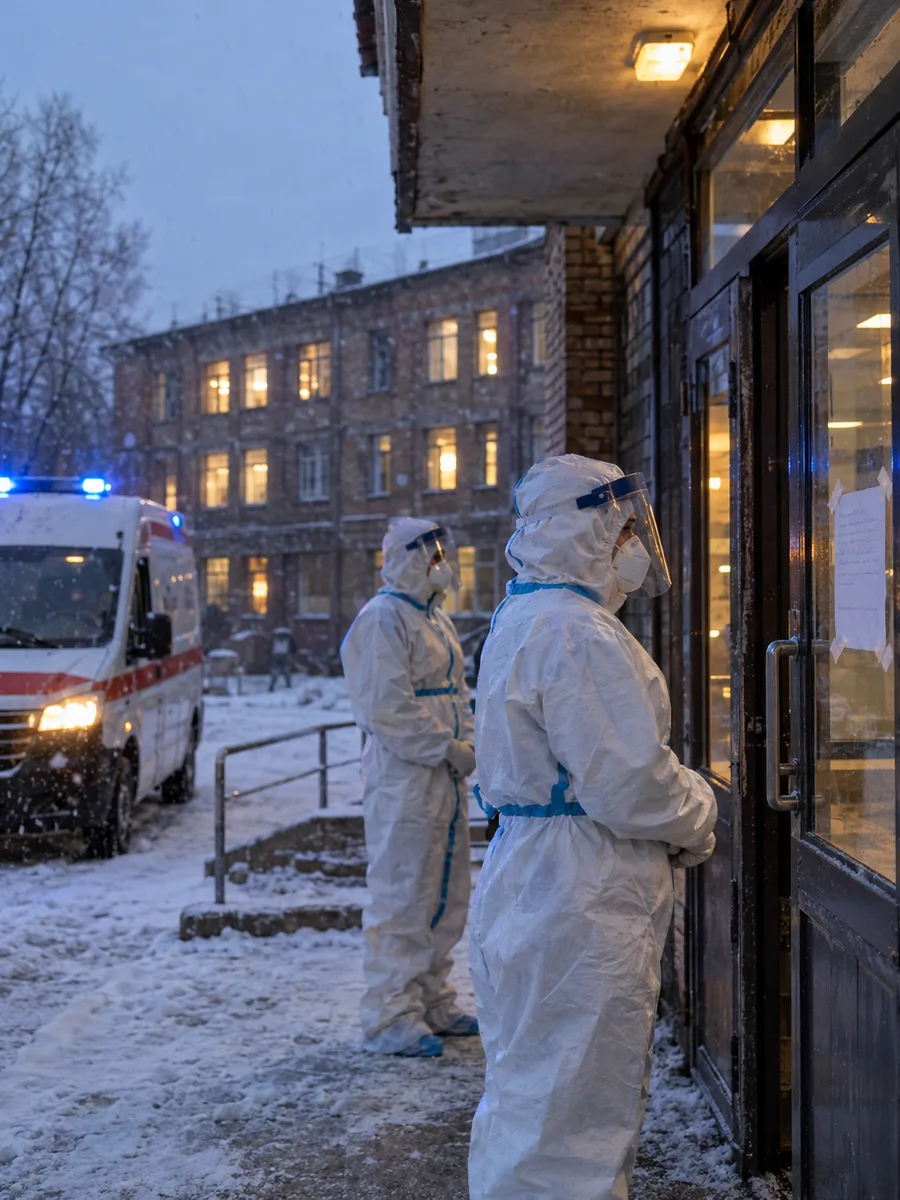
俄罗斯鼠疫研究所研究员实验事故后死亡,官方否认是鼠疫,却隔离了近两百人
A Russian Lab Worker Died After a Test Tube Broke at a Plague Institute. Russia Says It Wasn't Plague, but Quarantined 200 People.
About this story
A Russian plague-lab researcher died after a test tube broke; Russia says it wasn't plague but quarantined 200 people. HSK 2 Chinese listening practice.
This is an HSK 2 Chinese listening episode that runs about 3 minutes. The full Mandarin script is shown with tap-for-pinyin and a line-by-line English translation, so you can listen and read at once — comprehensible input in the sense of Stephen Krashen's i+1 theory. It teaches 17 key vocabulary words such as 工作、医院、知道 and walks through 6 grammar patterns, each explained in English with examples. The same news story is retold at 4 difficulty levels — use the level selector above to find the version that is challenging but still understandable for you.
Read at your level
原文Read the complete story in Chinese. Reveal pinyin and English only when you need them.
English transcript reference
A 28-year-old woman worked in a laboratory.
On September 25th, a test tube in her hand broke.
A week later, she died.
The lab where she worked is in Siberia, Russia, where it's extremely cold.
This lab studies a terrifying disease called plague.
To research means to keep looking and keep asking, wanting to know how something works.
You may have read about plague in history books.
Seven hundred years ago, many people in Europe got plague, and nearly one in every three people died.
Today, plague is not so frightening anymore, because we have antibiotics.
Antibiotics are a kind of medicine that can kill harmful things in your body.
If people with plague take antibiotics early, most of them can get better.
But without medicine, plague can kill many people.
One kind of plague is in the lungs; when people talk or cough, they can pass it to others.
This kind of plague is the most dangerous.
Now, back to that woman.
Her name was Darya; on September 25th, while she was working, a test tube broke.
Some Russian news reports said the tube held exactly this lung plague.
On September 29th, her lungs felt very bad and she went to the hospital.
On October 2nd, she died.
But the Russian government said: she did not have plague.
The government said she had pneumonia of unknown cause, unrelated to her work.
Pneumonia means the lungs are sick.
But what the government did made many people doubt it.
Nearly two hundred people who had contact with her were all quarantined.
Quarantine means you stay alone, can't see other people, and a doctor checks on you every day.
More than sixty colleagues at the lab were shut inside the building and could not go home.
Several hospitals stopped letting other people in, even a maternity hospital.
Many people asked: if it isn't plague, why do this?
America is also very concerned.
America asked Russia: what actually happened?
The WHO, the World Health Organization, also wants to know the answer.
Still, there is some good news.
So far, none of those two hundred people has caught plague.
Doctors say plague comes fast; you can tell within a day or two.
So many doctors think this may not grow bigger.
But whether it really was plague, Russia still hasn't given everyone a clear answer.
Think about it: if your colleague got sick and you were shut inside the building, what would you most want to know?
Listen again
Try it without the transcript and notice what sounds clearer.
What vocabulary does this episode teach?
词汇HSK 1. 她在实验室里工作.
HSK 1. 去了医院.
HSK 1. 想知道答案.
HSK 2. 那里非常冷.
HSK 2. 你可能在历史书里看过.
HSK 2. 已经不那么可怕了.
HSK 2. 因为我们有抗生素.
HSK 2. 所以,很多医生觉得…
HSK 2. 很多医生觉得…
The disease behind the Black Death.
一个试管破了.
在实验室里工作.
Medicine that kills bacteria.
肺 (lung) + 炎 (inflammation).
都被隔离了.
这个实验室研究鼠疫.
这种鼠疫最危险.
* beyond level超纲词
What grammar patterns appear in this episode?
语法被 + verb (passive)
The subject receives the action.
都被隔离了。
被关在大楼里,不能回家。
如果……,……
If…, then….
如果早一点吃抗生素,得了鼠疫的人,大部分都能好。
如果不是鼠疫,为什么要这样做?
X,就是 Y
Defines a word.
研究,就是一直看、一直问,想知道一个东西是怎么回事。
肺炎,就是肺生病了。
让 + someone + verb
To make someone do or feel something.
鼠疫会让很多人死。
政府做的事情,让很多人不太相信。
连……也……
Even….
连一家生孩子的医院也是。
到底
Presses for the real answer.
到底发生了什么?
Proper nouns
专有名词Free account
Keep learning from this story
Create a free account to keep saved words and your preferred level together.
- Keep words with their story context
- Remember your preferred level
- Build your vocabulary over time