
A Chinese podcast · Same story, 4 levels
法国高中生因缺老师罢课抗议:二十五万人上街,五百多所学校停课
French High-School Students Walk Out Over Missing Teachers: 250,000 March, Thousands Arrested and 500 Schools Shut
About this story
Why French high-schoolers walked out: no teachers, 35 to a class, crumbling schools; 250,000 marched and 500 schools shut. HSK 2 Chinese listening practice.
This is an HSK 2 Chinese listening episode that runs about 3 minutes. The full Mandarin script is shown with tap-for-pinyin and a line-by-line English translation, so you can listen and read at once — comprehensible input in the sense of Stephen Krashen's i+1 theory. It teaches 16 key vocabulary words such as 教室、已经、开始 and walks through 6 grammar patterns, each explained in English with examples. The same news story is retold at 4 difficulty levels — use the level selector above to find the version that is challenging but still understandable for you.
Read at your level
原文Read the complete story in Chinese. Reveal pinyin and English only when you need them.
English transcript reference
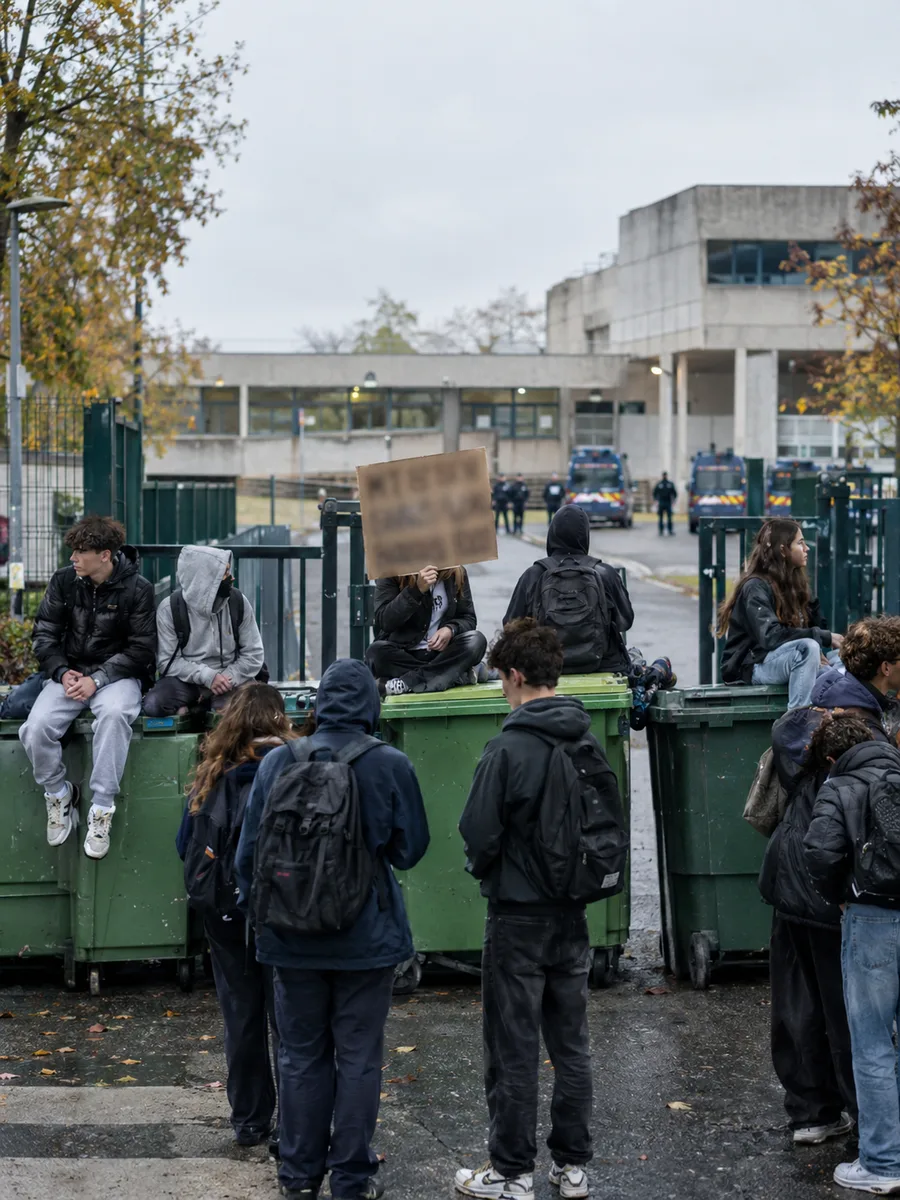
Three weeks ago, students at a high school next to Paris walked out of their classrooms.
Today, hundreds of high schools in France can't hold classes.
How did this start?
In late September, in a place next to Paris called Créteil, students at one high school began to protest.
To protest means many people stand up and say loudly: this is wrong, we want change.
High school is the school that students aged fifteen to eighteen attend.
What are these high-schoolers protesting about?
First, there aren't enough teachers.
Students say that many times, when it's time for class, the teacher doesn't come.
In France's public secondary schools, in nearly every ten lessons, one has no teacher.
Second, there are too many people in a class.
One student said: our class has thirty-five people, and there aren't even enough chairs in the classroom.
Third, the schools are too old.
Students said: the building is falling apart, the place we eat is too small, and the school has no money at all.
In summer, classrooms can get as hot as thirty-five degrees.
After students at one school protested, students at other schools came out too.
On September 30th, more than 250,000 people across France took to the streets, with 56,000 in Paris alone.
But the protests soon stopped being peaceful.
Some people set fires in schools, some hit teachers, and some fought with police.
Police took many people away; on one day, they took away nearly two thousand.
Most of those taken were minors.
Minors are people who aren't yet eighteen.
In northern France, a fifteen-year-old student lost a hand in an explosion during a clash with police.
Many people were very upset to hear this news.
By October 5th, more than five hundred schools in France were fully or partly closed.
France has 3,700 high schools in total.
France's education minister said schools will slowly, bit by bit, start classes again.
The government also said it will give schools more money, so every class has a teacher.
But there's a big problem behind all this: France is short of money, and the government keeps trying to spend less.
The students say: the money you save can't be taken from our classrooms.
Think about it: if your teacher often didn't come to class, what would you do?
Listen again
Try it without the transcript and notice what sounds clearer.
What vocabulary does this episode teach?
词汇HSK 2. 走出了教室.
HSK 2. 已经有几百所高中,上不了课了.
HSK 2. 学生开始抗议.
HSK 2. 第一,老师不够.
HSK 2. 都非常难过.
HSK 1. 这些高中生 / 学生开始抗议.
HSK 2. 还有一个大问题.
HSK 1. 夏天的时候.
HSK 2. 到了上课的时间.
学生开始抗议.
巴黎旁边一所高中.
和警察打了起来.
大部分是未成年人.
政府也说…
法国的教育部长说…
在和警察冲突的时候.
* beyond level超纲词
What grammar patterns appear in this episode?
语法verb + 不了
Unable to….
今天,法国已经有几百所高中,上不了课了。
第一……,第二……,第三……
Listing reasons.
第一,老师不够。
第二,班里的人太多。
……却……
Contrary to expectation.
到了上课的时间,老师却没有来。
光是……,就……
… alone, ….
光是在巴黎,就有五万六千人。
被 + verb
Passive.
被带走的人里,大部分是未成年人。
被炸掉了一只手。
让 + 每个……都……
Make every … have….
会给学校更多的钱,让每个班都有老师。
Proper nouns
专有名词Free account
Keep learning from this story
Create a free account to keep saved words and your preferred level together.
- Keep words with their story context
- Remember your preferred level
- Build your vocabulary over time