
A Chinese podcast · Same story, 4 levels
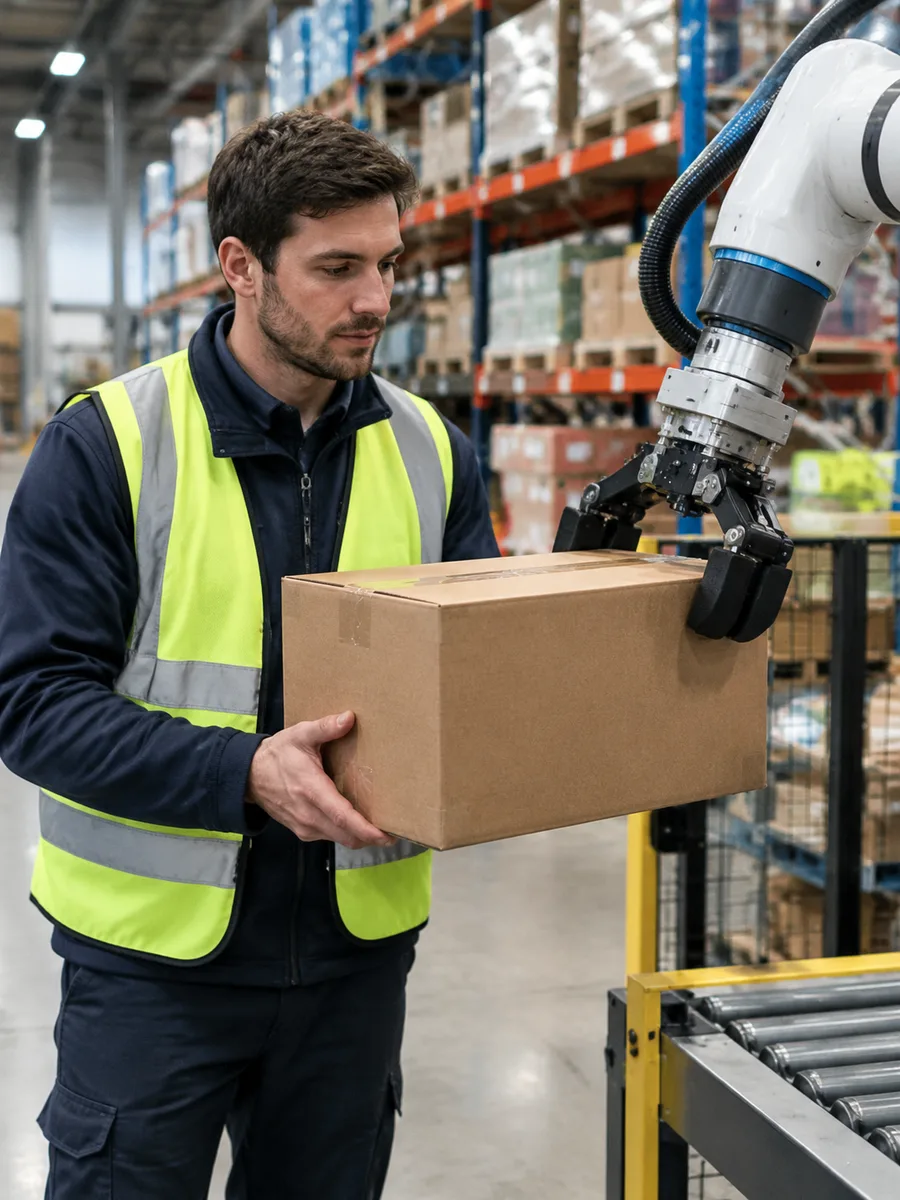
沃尔玛的机器人,为什么搬不好箱子?
Walmart Robots Struggle With Everyday Goods
About this story
Walmart uses robots in warehouses, but old boxes, frozen turkeys and repairs still need human workers. HSK 3 Chinese listening practice.
This is an HSK 3-4 Chinese listening episode that runs about 2 minutes. The full Mandarin script is shown with tap-for-pinyin and a line-by-line English translation, so you can listen and read at once — comprehensible input in the sense of Stephen Krashen's i+1 theory. It teaches 12 key vocabulary words such as 东西、搬、工作 and walks through 4 grammar patterns, each explained in English with examples. The same news story is retold at 4 difficulty levels — use the level selector above to find the version that is challenging but still understandable for you.
Read at your level
原文Read the complete story in Chinese. Reveal pinyin and English only when you need them.
English transcript reference
Walmart spent a lot of money to have robots move things, but even boxes caused problems.
Walmart is a big American store; goods are first put in warehouses, then sent to stores.
A warehouse is a big building for storing things.
Some workers may walk 20,000 steps in one shift, and moving things is very tiring.
Robots are machines that can help people work; Walmart hopes to use robots to move things in warehouses.
But the old boxes are too big, and the new boxes are a little smaller, so people still need to add tape.
Robots also cannot handle frozen turkey boxes well, so the company had to make the boxes sturdier.
Turkey is a big bird Americans often eat at holidays; this time what troubled the robots was the boxes holding turkeys.
When robots break, people still have to repair them, and some warehouses' electricity bills are also much higher than before.
However, robots are already doing a lot of work, so people did not spend this money for nothing.
In one warehouse, about eight out of ten items can be moved by an automated system.
Automation means letting machines do some work themselves; the other two large items still need people.
The warehouse is delivering goods while being converted into one that can use machines; this matter still needs time.
In the future, people will still unload goods and repair machines; the company says more people are buying things, so many workers may still be needed.
If you worked in this warehouse, would you want to learn to move things, or learn to repair machines?
Listen again
Try it without the transcript and notice what sounds clearer.
What vocabulary does this episode teach?
词汇HSK 3. A common noun meaning things or goods; in this script it refers to items in warehouses and stores.
HSK 3. Used for moving objects, often with 东西: 搬东西 means to move things.
HSK 3. Can be a noun or verb; here it appears in 帮人工作 and 做很多工作.
HSK 3. A place where goods are sold; the script contrasts warehouses with stores.
HSK 3. Refers to a business organization; here it is Walmart as the company making changes.
HSK 3. Used for problems or questions; in the script, boxes brought problems.
A large building for storing goods before they are sent to stores.
A machine that can do work; the main topic of the script.
A scheduled period of work; workers may walk many steps in one shift.
Used for sealing boxes; people still need to add tape to new boxes.
Letting machines do work by themselves; an automated system can move most items.
To remove goods from a vehicle or container; people will still need to unload goods in the future.
* beyond level超纲词
What grammar patterns appear in this episode?
语法让 + person/thing + verb phrase
The causative 让 means 'let' or 'make' someone/something do something.
沃尔玛花了很多钱,让机器人搬东西,可是连箱子也带来了问题。
自动化,就是让机器自己做一些工作,另外两件大东西,还是需要人。
先……再……
This pattern shows sequence: first do one thing, then do another.
沃尔玛是美国的大商店,东西先放在仓库,再送到商店。
一边……一边……
This pattern means doing two actions at the same time.
仓库一边送货,一边改成能用机器的仓库,这件事还需要时间。
Proper nouns
专有名词Sources
来源Free account
Keep learning from this story
Create a free account to keep saved words and your preferred level together.
- Keep words with their story context
- Remember your preferred level
- Build your vocabulary over time