
A Chinese podcast · Same story, 4 levels
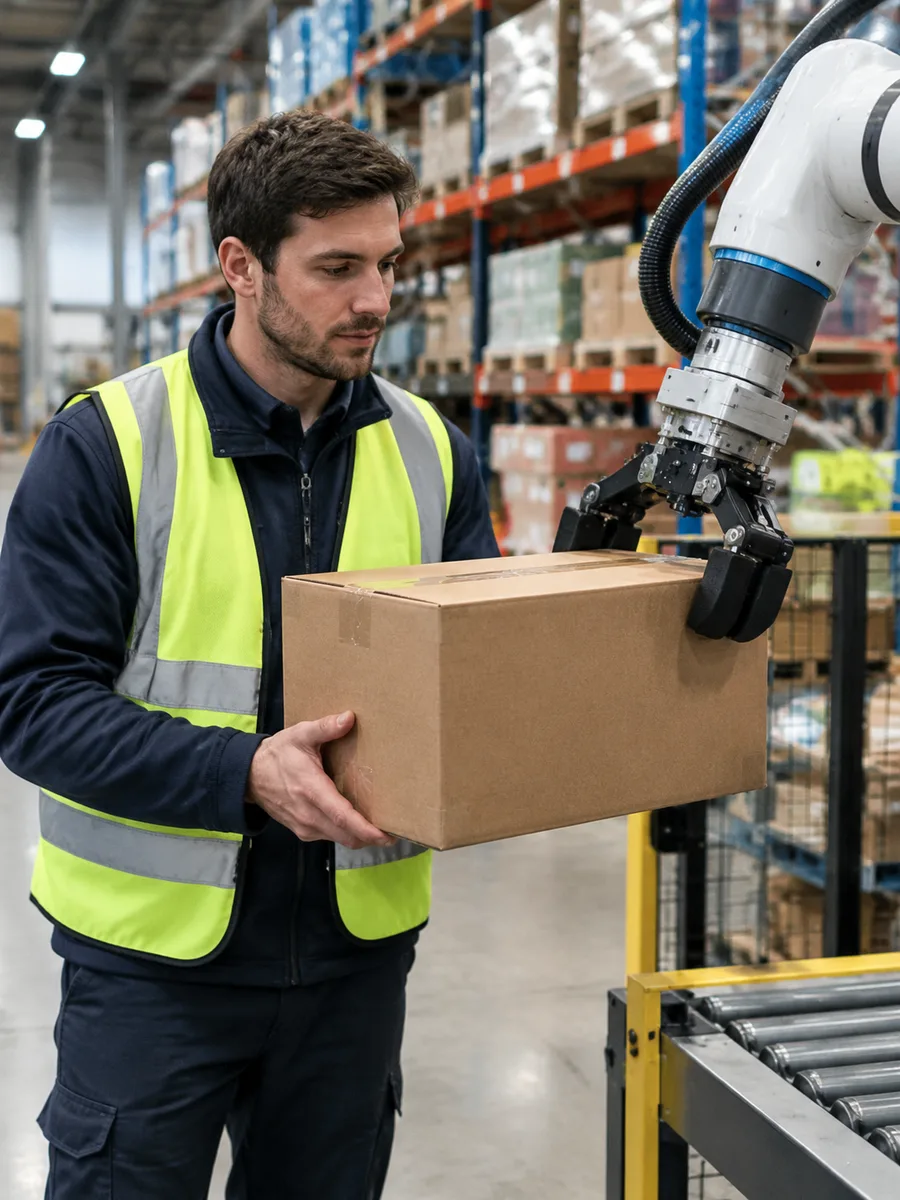
沃尔玛的机器人,为什么搬不好箱子?
Walmart Robots Struggle With Everyday Goods
About this story
HSK 5 Chinese listening. Walmart warehouse robots meet problems with boxes and frozen goods, while workers adapt packaging and keep goods moving.
This is an HSK 5-6 Chinese listening episode that runs about 2 minutes. The full Mandarin script is shown with tap-for-pinyin and a line-by-line English translation, so you can listen and read at once — comprehensible input in the sense of Stephen Krashen's i+1 theory. It teaches 12 key vocabulary words such as 自动、系统、搬 and walks through 4 grammar patterns, each explained in English with examples. The same news story is retold at 4 difficulty levels — use the level selector above to find the version that is challenging but still understandable for you.
Read at your level
原文Read the complete story in Chinese. Reveal pinyin and English only when you need them.
English transcript reference
Walmart is spending billions of dollars to renovate its warehouses, but the robots are running into problems with cardboard boxes and frozen turkeys.
Walmart workers unload goods, move boxes, and then send products out to stores; some may walk twenty thousand steps in a single shift.
People are very skilled at these movements, but machines must adapt to goods of different sizes.
Walmart's old cardboard boxes were too big for the automated system, so the new boxes are a little lower and require an extra strip of tape.
The boxes for frozen turkeys also give the robotic arms trouble, so suppliers reinforced the packaging.
The boxes that hold goods need to be changed, and the robots that move boxes need to be changed too; both sides have to move.
Some large bags of dog food and big televisions cannot be handled by the automated system, so people still have to move them.
Walmart cannot shut down a warehouse and then renovate it; daily shipping and equipment installation must happen at the same time.
Robots also break down, repairs require people, and maintaining automation also requires more electricity.
According to reports, in some automated food warehouses, electricity bills in peak months can reach 800,000 dollars, compared with about 250,000 dollars when labor was the main method.
But Walmart's automation can already handle a lot of goods, and difficulties do not mean there has been no progress.
At a warehouse in Florida, about 80 percent of goods go through the automated system, while the other 20 percent, larger goods, still need to be handled manually.
Automation means letting machines complete the work, while workers' jobs gradually shift toward managing and repairing equipment.
Walmart says warehouse staff turnover is relatively high, which can allow staffing to shrink naturally, while business growth may also increase demand for workers.
This is a transformation of renovating while working; it requires machines, and it also requires people to adjust packaging and processes.
If you were in charge of this warehouse, would you first replace the robots with better ones, or first change the boxes they have to move every day?
Listen again
Try it without the transcript and notice what sounds clearer.
What vocabulary does this episode teach?
词汇HSK 4. Used in 自动系统 (automated system) and 自动化 (automation).
HSK 5. Common in 自动系统 (automated system).
HSK 3. Used for moving boxes or heavy objects: 搬箱子.
HSK 3. Appears in 工人的工作 (workers' jobs).
HSK 5. Used in 设备安装 (equipment installation) and 维修设备 (repair equipment).
HSK 4. Appears in 困难并不等于没有进展 (difficulties do not mean there is no progress).
HSK 5. Used in 机器却必须适应大小不同的商品 (machines must adapt to goods of different sizes).
HSK 4. Appears in 增加用工需求 (increase demand for workers).
HSK 4. Used in 可以让人员自然减少 (can allow staffing to shrink naturally).
HSK 5. Appears in 管理和维修设备 (manage and repair equipment).
Beyond HSK 5. Central topic word: 改造仓库 (renovate warehouses).
Beyond HSK 5. Used in 纸箱和冷冻火鸡 (cardboard boxes and frozen turkeys).
* beyond level超纲词
What grammar patterns appear in this episode?
语法却 (contrast adverb)
Used to show a contrast or unexpected turn, often after a clause with 但 or implied contrast.
Walmart花数十亿美元改造仓库,机器人却在纸箱和冷冻火鸡上遇到了难题。
这些动作,人做起来很熟练,机器却必须适应大小不同的商品。
对……来说
Means 'for' or 'to' someone/something; introduces the perspective from which a statement is true.
Walmart以前的纸箱,对自动系统来说太大,新箱子低了一点,还得多加一道胶带。
让 + person/thing + verb phrase
Causative pattern meaning 'to let/make someone do something'.
冷冻火鸡的箱子,也让机器手臂犯难,供应商因此加固了包装。
Walmart说,仓库人员流动较多,可以让人员自然减少,业务增长也可能增加用工需求。
必须 + verb phrase
Expresses necessity: 'must' or 'have to' do something.
这些动作,人做起来很熟练,机器却必须适应大小不同的商品。
Walmart不能关掉仓库再改造,日常发货和设备安装,必须同时进行。
Proper nouns
专有名词Sources
来源Free account
Keep learning from this story
Create a free account to keep saved words and your preferred level together.
- Keep words with their story context
- Remember your preferred level
- Build your vocabulary over time