
A Chinese podcast · Same story, 4 levels
西安:出土十五秒
Xi'an City Wall and Its 2,000-Year History
About this story
A wall begun in 1370, a Tang capital several times bigger beneath it, and why the Terracotta Army we see is grey. HSK 2 Chinese listening practice.
This is an HSK 2 Chinese listening episode that runs about 5 minutes. The full Mandarin script is shown with tap-for-pinyin and a line-by-line English translation, so you can listen and read at once — comprehensible input in the sense of Stephen Krashen's i+1 theory. It teaches 8 key vocabulary words such as 城墙、生漆、村民 and walks through 3 grammar patterns, each explained in English with examples. The same news story is retold at 4 difficulty levels — use the level selector above to find the version that is challenging but still understandable for you.
Read at your level
原文Read the complete story in Chinese. Reveal pinyin and English only when you need them.
English transcript reference
A lot of people come to Xi'an and the first thing they do is go see the Terracotta Army.
I didn't go on my first day.
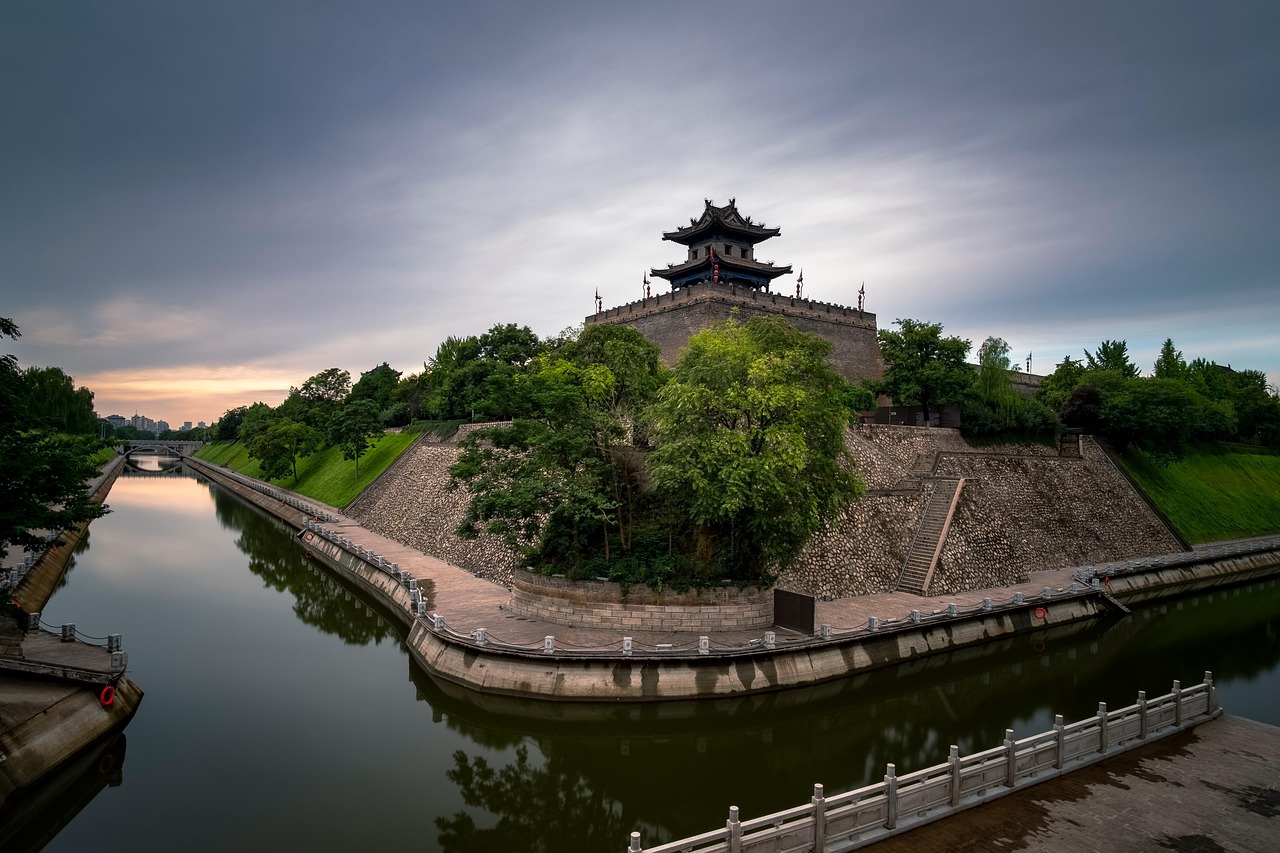
I went up on the city wall first.
My friend said: you should know how big this city is first, and then look at the rest.
We went up on the wall and rented bicycles.
The wall is very wide.
It's twelve to fourteen metres across on top — two people can ride side by side.
I asked: how long is this wall?
She said: thirteen point seven kilometres.
Riding all the way round takes over an hour.
We rode.
On the left was the inside of the wall; on the right, the outside.
Inside, the streets are narrow and the houses are low.
Outside are wide roads and tall towers.
I said: one wall, two cities.
She said: right.
I asked: how old is this wall?
She said: they started building in 1370 and finished in 1378.
I said: over six hundred years.
She said: yes, but Xi'an is much older than the wall.
She said: underneath this wall are the foundations of the Sui and Tang imperial city.
She said: more than a thousand years ago, this place was called Chang'an.
Back then, Chang'an was the capital of the Tang dynasty.
It was also one of the largest cities in the world at the time.
I said: was that Chang'an as big as the area inside the wall?
She said: much bigger.
She said: Tang Chang'an was several times bigger than what's inside the wall today.
I said: so the loop I rode today is only a small piece of that Chang'an.
She said: right.
Chang'an was also the eastern starting point of the Silk Road.
Heading west from here, there's desert and Central Asia.
In the Tang dynasty, there were a lot of foreigners on the streets of Chang'an.
They did business here, studied here, and settled here.
The next day, we went to the Terracotta Army.
It's outside the city of Xi'an.
I stood at the edge of the pit and looked down.
Below were a great many clay people, standing row after row.
There are more than eight thousand altogether.
Every single face is different.
They're over two thousand two hundred years old.
I said: who found them?
My friend said: on 29 March 1974, some villagers were digging a well here looking for water.
They dug up a clay head.
I said: they were only looking for water?
She said: yes.
One of China's most famous discoveries came out of a search for water.
I stood at the edge of the pit for a long time.
These clay people are all grey.
I said: were they always grey?
She said: no.
She said: they used to have colour — red, green, white.
I said: so where did the colour go?
She said: it was gone after they came out of the ground.
She said: first a layer of raw lacquer was brushed onto the figure, and the colour was painted on top of the lacquer.
The lacquer sat underground for over two thousand years; the moment it meets air it dries, curls up, and the colour comes off with it.
She said: at the fastest, fifteen seconds after it's unearthed, the colour starts to change.
I said: fifteen seconds?
She said: yes, fifteen seconds.
Two thousand two hundred years underground; fifteen seconds out.
I couldn't say anything for a while.
She said: so a lot of areas aren't being excavated now.
She said: once something is dug up, they spray it, then wrap it in a thin film so it dries slowly.
She said: when the technology isn't good enough, leaving things in the ground is better than digging them up.
In the afternoon, we went to the Muslim Quarter.
Lots of people on the street, lots of small shops.
There's lamb, noodles, and very sweet things.
My friend said: most people here are Hui.
Their families came from the west a very long time ago.
I saw a man making noodles.
He pulled the dough long, then longer.
In the evening, we went back to the foot of the wall.
There were lights on the wall.
I thought about riding that loop in the morning.
On top: a wall six hundred years old.
Below it: Chang'an, over a thousand years old.
Outside the city: clay people two thousand two hundred years old, still waiting for our technology to get better.
When you go to a very old city, do you want to see the most famous thing first, or ride around it once and see how big it is?
Listen again
Try it without the transcript and notice what sounds clearer.
What vocabulary does this episode teach?
词汇HSK 2. Two can ride side by side on top of the wall.
HSK 2. Tang Chang'an's streets were full of foreigners.
HSK 3. When it isn't good enough, you leave things buried.
HSK 2. A lot of areas are deliberately not being dug.
Begun 1370, finished 1378, 13.7 km around.
The ground layer under the paint; it dries and curls on contact with air.
Who dug the well on 29 March 1974.
What Chang'an was for the Tang dynasty.
* beyond level超纲词
What grammar patterns appear in this episode?
语法有多 + adjective
Asks or states a degree.
我问:这个城墙有多长?
比 + noun + adjective + 得多
A comparison intensified.
她说:对,可是西安比城墙老得多。
一 … 就 …
As soon as the first happens, the second follows.
生漆在地下两千多年,一见空气就干,就卷起来,颜色跟着掉。
Proper nouns
专有名词Free account
Keep learning from this story
Create a free account to keep saved words and your preferred level together.
- Keep words with their story context
- Remember your preferred level
- Build your vocabulary over time