
A Chinese podcast · Same story, 4 levels
西安:一支褪色的军队
Xi'an City Wall and Its 2,000-Year History
About this story
Reading Xi'an in strata: a Ming wall on Sui-Tang foundations, raw lacquer that fails in fifteen seconds, and a tomb left unopened on purpose. HSK 5-6 Chinese listening practice.
This is an HSK 5-6 Chinese listening episode that runs about 5 minutes. The full Mandarin script is shown with tap-for-pinyin and a line-by-line English translation, so you can listen and read at once — comprehensible input in the sense of Stephen Krashen's i+1 theory. It teaches 12 key vocabulary words such as 古都、叠压、敌台 and walks through 3 grammar patterns, each explained in English with examples. The same news story is retold at 4 difficulty levels — use the level selector above to find the version that is challenging but still understandable for you.
Read at your level
原文Read the complete story in Chinese. Reveal pinyin and English only when you need them.
English transcript reference
Xi'an is called an ancient capital, a phrase that trips off the tongue so easily it ends up blocking certain questions.
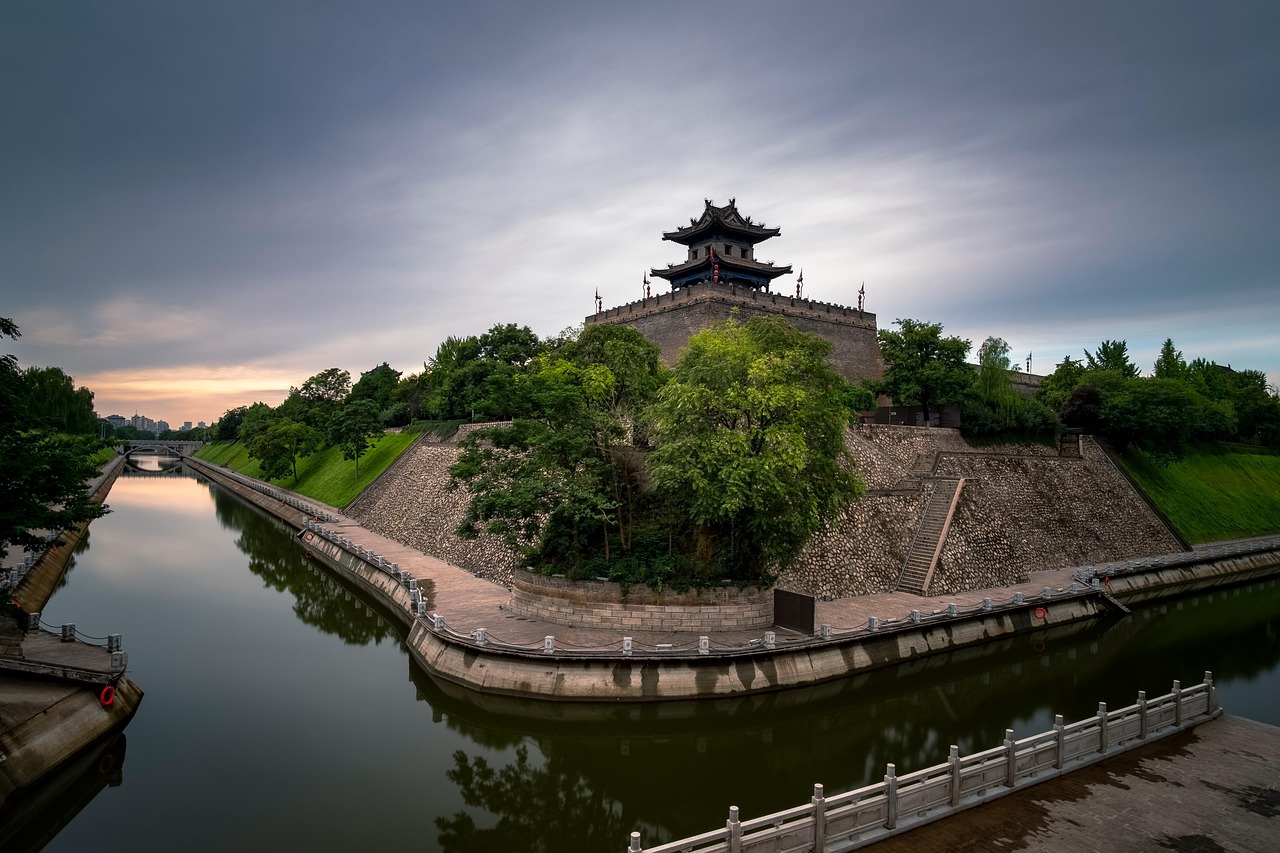
For instance: today's Xi'an city wall actually has very little to do with Tang-dynasty Chang'an.
The surviving wall was begun in 1370 and completed in 1378, early Ming, so a little over six hundred years old.
It runs thirteen point seven kilometres, twelve to fourteen metres wide on top, fifteen to eighteen metres thick at the base, with ninety-eight bastions along it.
The city's most brilliant period was the Tang, seven hundred years before this wall existed.
Tang Chang'an extended well beyond the area the wall now encloses, several times its size.
Put another way, once you finish a circuit on the wall, you have covered only a small part of Tang Chang'an.
More precisely: the Ming wall was built on the foundations of the Sui and Tang imperial city.
Once you grasp that layering, Xi'an stops being a vague ancient capital and becomes a city you can read in strata.
On the first day I set the Terracotta Army aside and went up on the wall.
The wall is wide enough to ride two abreast, and a circuit takes a bit over an hour.
Riding along it, left and right are two forms of city: inside, narrow streets and low buildings; outside, broad roads and high-rise housing.
A six-hundred-year-old wall still functioning as a structural dividing line is now rare in a large Chinese city.
Tang Chang'an had another identity as well: the eastern end of the Silk Road.
Heading west from here, caravans had to cross the Hexi Corridor, desert, and the oases of Central Asia.
What they carried was more than goods.
Foreign music, religion, dance and food all entered the city and became fashionable during the Tang.
Large numbers of foreigners lived long-term on the streets of Chang'an, trading, studying, holding office, even settling permanently.
Understanding Xi'an as a closed inland capital is in fact a fairly recent misreading.
The next day I went to the Terracotta Army; the pits lie east of Xi'an, part of the burial complex of the first Qin emperor.
Standing at the edge of Pit One looking down, the first sensation is the pressure of sheer quantity.
More than eight thousand figures stand in formation, no two faces alike, close to life size.
They were made more than two thousand two hundred years ago.
The way they surfaced had no drama at all: on 29 March 1974, several villagers digging a well here for water turned up pottery fragments and a clay head.
One of China's most significant archaeological discoveries came out of ordinary labour in search of water.
There is one thing in the exhibition halls that has long been overlooked.
These figures were originally painted all over — red, green and white all appeared on them.
The technique was to lay down a ground of raw lacquer on the ceramic body, and apply pigment over that lacquer.
Buried deep for more than two millennia, the lacquer holds a very high water content, in a fragile equilibrium.
The instant it is unearthed and meets air, the lacquer loses water and shrinks, lifting, curling and cracking, and the pigment adhering to it flakes away in sheets.
At the fastest, the colour begins to change fifteen seconds after excavation.
Two thousand two hundred years lying still underground; fifteen seconds of exposure.
The grey legions we see today are a faded army.
Once you understand this, the museum's subsequent decisions become clear.
Current practice is to spray a moisture retainer on painted figures the moment they emerge, apply a consolidating solution, then wrap them in film to control the rate of drying.
The more consequential decision is not to dig.
The main burial chamber under the mound of the first emperor's tomb has never been excavated, and large areas of the surrounding complex remain untouched.
When conservation technique is not adequate to receive them, leaving artefacts in the ground is the more responsible course.
That runs directly counter to the tourism industry, and to public curiosity.
A mature heritage system has to be able to tolerate that dissatisfaction.
In the afternoon I went to the Muslim Quarter.
It's usually written up as a street-food street, a description that isn't wrong, only thin.
This area is the core of Xi'an's Hui community, and the mosque nearby traces back to a very early period.
Among the Hui's forebears were merchants who arrived along the Silk Road, and soldiers and artisans who moved in over successive dynasties.
A thousand years of residence has produced a distinctive cuisine, a distinctive street fabric, and distinctive community ties.
Today's Muslim Quarter is intensely commercialized, densely crowded, and not cheap.
But turn into one of the side lanes and the rhythm changes at once: old men playing chess, children cutting through the alley on their way home.
Tourism has pushed one street to the front; the community itself continues living behind it.
At dusk I went back to the foot of the wall; the lights came on in sequence and the wall's outline emerged from the dark.
I thought about that circuit on the bicycle earlier in the day.
In a single day I had passed through a Ming wall, the memory of the Tang, a Hui community a thousand years old, and a clay army from twenty-two centuries ago still waiting underground.
They belong to different layers of time, yet they share the same piece of ground.
What "ancient capital" actually refers to is this stacking, rather than any one particular era.
If you only had one day, would you go and see that most famous army first, or ride around the city once and establish how large it really is?
Listen again
Try it without the transcript and notice what sounds clearer.
What vocabulary does this episode teach?
词汇HSK 3. Here it means declining to excavate.
HSK 3. The constraint that governs the decision.
HSK 5. Still living behind the food street.
HSK 4. The wall is still a structural dividing line.
A phrase smooth enough to hide which era you mean.
The Ming wall sits directly on Sui-Tang foundations.
Ninety-eight of them along the wall.
Holds high moisture; fails within seconds of exposure.
What the pigment does, in sheets.
The grey army is a faded one.
The pits are part of the first emperor's tomb complex.
Treating Xi'an as a closed inland city is a recent one.
* beyond level超纲词
What grammar patterns appear in this episode?
语法一旦 …,就 …
The instant the condition holds, the consequence follows.
一旦出土接触空气,生漆迅速失水收缩,起翘、卷曲、开裂,附着其上的颜料随之整片剥落。
更准确地说
Refines the previous statement.
更准确地说,明代的城墙就建在隋唐皇城的地基上。
所谓 A,指的是 B
Defines what a term actually names.
所谓古都,指的正是这种堆叠,而不是某一个具体的年代。
Proper nouns
专有名词Free account
Keep learning from this story
Create a free account to keep saved words and your preferred level together.
- Keep words with their story context
- Remember your preferred level
- Build your vocabulary over time