
A Chinese podcast · Same story, 4 levels
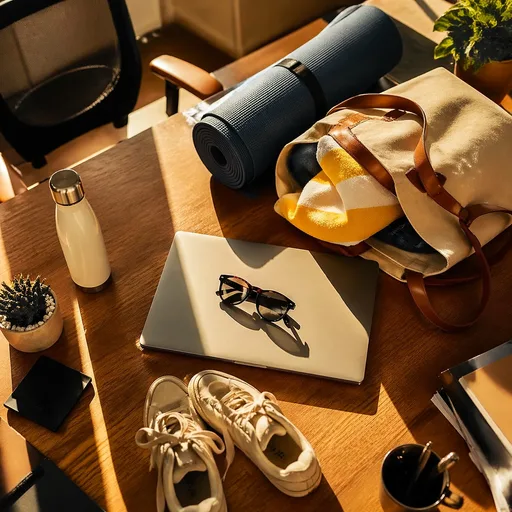
官方发话:下班后必须“狠狠地玩”
China Urges Workers to Relax After Work
About this story
CPPCC's Tang Xudong and economist Lu Ming urge exhausted Chinese workers to play hard after hours to fight burnout. HSK 5-6 Chinese listening practice.
This is an HSK 5-6 Chinese listening episode that runs about 11 minutes. The full Mandarin script is shown with tap-for-pinyin and a line-by-line English translation, so you can listen and read at once — comprehensible input in the sense of Stephen Krashen's i+1 theory. It teaches 18 key vocabulary words such as 疲惫、呼吁、隐蔽 and walks through 5 grammar patterns, each explained in English with examples. The same news story is retold at 4 difficulty levels — use the level selector above to find the version that is challenging but still understandable for you.
Read at your level
原文Read the complete story in Chinese. Reveal pinyin and English only when you need them.
English transcript reference
Speaking of the exhaustion and internal friction of modern professionals, a recent proposal by National Committee of the CPPCC member Tang Xudong might provide us with an unexpected breakthrough idea: spend half an hour 'playing hard' every day after work.
In this era that reveres efficiency and emphasizes hard work, a CPPCC member earnestly calling on young people to 'play' is in itself a highly tense socio-cultural cross-section.
We are too accustomed to equating 'getting off work' with 'resting', yet we ignore a deeply hidden modern workplace trap, which is 'pseudo-resting'.
The concept of time management since the Industrial Revolution has strictly divided our lives into two entirely different blocks: work and rest.
In the traditional factory assembly line era, the moment of clocking out meant the complete termination of physical labor, and workers could return to their family lives without any burden.
However, with the rapid iteration of information technology, this clear-cut boundary has been completely shattered.
In this 24/7 online digital age, the smartphone has become an invisible electronic chain, trapping us in a suffocating sense of being 'on call at all times'.
What is pseudo-resting?
Imagine your typical after-work scenario: you throw yourself heavily onto the sofa, feeling that your body is exhausted to the extreme, but your fingers are still mechanically swiping the phone screen.
Your brain has not truly stopped; WeChat work groups are still flashing, office software notifications could sound at any moment, your nerves are still tense, and subconsciously you are still anxious about tomorrow morning's presentation or unfinished spreadsheets.
Under this state, although your physical body has left the cubicle, your spirit is still firmly tied to the office desk.
Many people complain: having clearly lain at home all weekend doing nothing, why do they still feel exhausted when waking up on Monday morning?
The answer is simple: because your cognitive load has never truly been lifted.
In this long-term chronic depletion, occupational burnout acts like a silent virus, slowly swallowing our enthusiasm, creativity, and even our capacity to feel happiness.
We seem to have fallen into a vicious circle of getting more tired the more we rest, with our bodies limp on the sofa while our spirits continuously rush about in the virtual cyberspace.
We can further examine the social structural reasons behind this 'pseudo-resting'.
In the high-speed rhythm of the past few decades, society has formed a collective subconsciousness that highly praises striving.
The traditional concept of 'enduring the bitterest of hardships to become the best of men' has been packaged into various forms of 'wolf culture' and high-intensity work systems in the modern workplace.
Under the pressure of this grand narrative, the individual's right to rest has been compressed indefinitely and even stigmatized.
Stopping to rest is often equated with negative terms like 'unmotivated' or 'lying flat'.
Thus, we see a very absurd modern spectacle: people must show an upwardly striving posture even when they are resting.
This pathological pursuit of efficiency not only deprives us of our time to play, but also deprives us of our ability to play.
When many people actually have a large chunk of free time, they instead feel extreme panic and at a loss, because they have forgotten how to purely enjoy time and can only instinctively grab their phones,
using massive amounts of fragmented information to fill the void inside.
This passive consumer-style entertainment, such as endlessly scrolling through short videos, although it can bring brief sensory stimulation, is essentially still an exploitation of attention.
Not only can it not bring deep relaxation, but it will leave behind a deeper sense of emptiness and exhaustion after the stimulation fades.
It is exactly under such symptoms of the times that Committee Member Tang Xudong's suggestion appears particularly spot-on.
What he advocates is by no means that kind of brainless depletion done just to kill time, nor is it doomscrolling hijacked by social media algorithms.
What he emphasizes is taking out thirty minutes every day to engage in pure play unmixed with any utilitarian purpose.
Scholar Lu Ming has a very precise summary of this state, called 'purposeless immersion'.
The subtlety of this phrase lies in the word 'purposeless'.
Since who knows when, modern people's lives have been hijacked by a deep-rooted 'performativism'.
Everything we do seems to have to carry a clear purpose beneficial to self-improvement.
Sweating profusely at the gym is to burn calories, maintain one's figure, or even to check in on social media.
Reading a book is to acquire knowledge, pass a certificate exam, or add a bargaining chip in workplace competition.
Even going to an art exhibition on the weekend is sometimes just to curate a tasteful persona on WeChat Moments.
When all leisure activities are secretly tagged with key performance indicators, and when 'relaxing' itself becomes a task that needs to be completed, how can we possibly get a real breather?
And true play is precisely the best weapon against this utilitarianism.
In contrast, the purposeless immersion advocated by Committee Member Tang Xudong and Scholar Lu Ming is a kind of active leisure.
Active leisure requires us to invest certain cognitive resources to initiate, but this tiny investment can quickly pull our attention away from real-world anxiety, forming a closed-loop psychological space.
In this space, the rules are clear, the feedback is instant, and the sense of control you seek but cannot obtain in the real world is perfectly satisfied here.
It could be sitting on the carpet with your partner putting together Lego bricks, not to build some magnificent model, but just to enjoy the crisp sound of the bricks clicking together at your fingertips.
It could be immersing yourself in a completely unnutritious but extremely hilarious comic book, letting your thoughts roam in the absurd plot.
It could be jumping rope haphazardly in the neighborhood downstairs, feeling the brief disappearance of gravity every time your feet leave the ground.
It could even simply be putting on headphones and wholeheartedly slaying dragons in a virtual game world, shouting loudly for a virtual achievement.
In these activities, you do not need to prove your value to anyone, you do not need to calculate the return on investment; you simply exist to enjoy the process.
This psychological state, known as 'flow', can allow your brain to truly touch that crucial off button, forcibly cutting off the connection to work mode.
From the perspectives of psychology and neuroscience, this is an extremely scientific and highly efficient self-repair mechanism.
When we are deeply bogged down by work pressure, the brain's amygdala is in a continuously active state, secreting large amounts of stress hormones like cortisol, keeping people constantly in a fight-or-flight stress response.
But when we are fully concentrated on a pure entertainment activity, this stress state is instantly interrupted.
The brain begins to secrete dopamine and endorphins; these natural pleasure transmitters not only effectively relieve physical fatigue, but more fundamentally reshape our emotional immune system.
This seemingly insignificant half-hour every day actually artificially carves out a sacred and inviolable 'spiritual refuge' in our high-pressure, fast-paced lives.
In this refuge, you are no longer the employee who needs to be responsible to the boss, no longer the adult who needs to handle complex interpersonal relationships, no longer a parent, spouse, or subordinate.
You strip away all the heavy labels bestowed upon you by society and revert to being a child with curiosity and a desire to explore.
This is not only a comfort to an exhausted body and mind, but also a reaffirmation of your own subjectivity.
Many people might feel that carving out half an hour just to play in a daily schedule filled with work and life trivialities is an extremely luxurious thing, and might even generate a sense of guilt for wasting time.
This sense of guilt is precisely the result of modern society's deep discipline over us.
We are taught that time is money, instilled with the idea that every minute should be used to create value.
But in fact, true relaxation never requires expensive resorts, nor does it require gym memberships that cost tens of thousands of yuan.
What it needs is simply your firm defense of your own boundaries, and the confidence to dare to idle away time.
It is gratifying that there are now some forward-looking companies that have realized this and started to set up dedicated relaxation areas and game rooms in their office spaces.
This is not because corporate managers have suddenly shown great mercy, but because through countless trials and errors, they have gradually understood a simple truth: embracing leisure and maintaining focus are never mutually exclusive opposites.
On the contrary, at a deeper level, the two are mutually promoting and resonate at the same frequency.
An employee who knows how to play with high quality often has stronger psychological resilience and sharper intuition.
Because in true relaxation, the brain does not stop working; it just enters a background running mode called the 'default mode network'.
In this mode, the brain will spontaneously organize, restructure, and digest the information from the day.
Many flashes of creative insight and breakthroughs for solving complex problems are often born in these seemingly meaningless moments of play.
Dutch cultural historian Johan Huizinga once put forward a deafeningly profound viewpoint in his famous book 'Homo Ludens': he believed that play is not just a part of culture, but play itself is the essence of culture.
The reason humans are humans is not just because we can make tools, but even more so because we know how to experience freedom in play.
When we waste our youth day after day staring at spreadsheets in cubicles, when we are trapped in the system and alienated by various algorithms and reports into high-speed spinning gears,
'playing hard' is a gentle yet firm resistance for us to take back control of our lives.
It silently reminds us that work is merely a means to sustain survival, while feeling the richness and joy of life is the ultimate purpose of our existence.
This half-hour after work is like a glimmer of light in the long dark night; though faint, it is enough to illuminate our exhausted souls, giving us the courage to face this complex world when we wake up the next morning.
Even if it is just to clear an extremely difficult level in a game, even if it is just to see a Lego brick fit perfectly into place.
These seemingly insignificant moments constitute our most solid bulwark against nihilism and internal friction.
Listen again
Try it without the transcript and notice what sounds clearer.
What vocabulary does this episode teach?
词汇Adjective used to describe extreme physical or mental fatigue.
Verb used when formally asking or encouraging people to take action.
Adjective describing something that is not easily noticed or is deliberately hidden.
Can refer to machinery, but here used metaphorically as an adjective to mean acting without conscious thought.
Noun referring to the part of the mind of which one is not fully aware.
Verb often used metaphorically to describe something consuming one's energy, time, or emotions.
Adjective used to describe situations or ideas that are wildly unreasonable or illogical.
Verb meaning to take something away from someone forcefully, often rights or abstract concepts.
Noun or adjective relating to practical benefits, often with a negative connotation of being overly focused on personal gain.
Verb used to describe soothing someone's emotional pain or physical exhaustion.
Noun describing internal conflicts or psychological overthinking that drains one's energy.
Noun usually referring to medical symptoms, but here used metaphorically for societal issues.
A four-character idiom meaning to accurately point out the crux of a problem.
Noun referring to a societal or corporate culture that measures everything by performance and measurable outputs.
Noun. A specific neuroanatomical term referring to the part of the brain involved in experiencing emotions.
Noun. A medical/biological term for the primary stress hormone.
Noun/Verb used in a sociological context (often referencing Foucault) referring to the training of people to obey rules or a code of behavior.
Noun/Verb referring to the philosophical concept where individuals feel disconnected from the products of their labor or their own humanity.
* beyond level超纲词
What grammar patterns appear in this episode?
语法Expresses 'even if... still...'. Used to indicate a hypothetical or extreme concession that does not change the outcome.
人们即使在休息的时候,也要表现出一种努力向上的姿态。
Expresses 'absolutely not A, let alone B'. Used to strongly refute two related misconceptions, emphasizing the rejection of the second one.
他所倡导的,绝不是那种为了打发时间而进行的无脑消耗,更不是那种被社交媒体算法裹挟的末日刷屏。
Expresses 'not only does it fail to/not A, on the contrary, it B'. Used to emphasize that an action achieves the exact opposite of its intended positive effect.
它不仅无法带来深度的放松,反而会在刺激褪去后,留下更深的空虚感和疲惫感。
Expresses 'the reason why... is because...'. Used to state a result or phenomenon first, followed by its underlying cause.
人类之所以为人类,不仅仅是因为我们会制造工具,更是因为我们懂得在游戏中体验自由。
Expresses 'even if it is just for...'. Used to highlight that even the smallest, most seemingly insignificant goal is valid or sufficient.
哪怕只是为了在游戏里通关一个极难的关卡,哪怕只是为了看一块乐高积木严丝合缝地拼装到位。
Proper nouns
专有名词Sources
来源Free account
Keep learning from this story
Create a free account to keep saved words and your preferred level together.
- Keep words with their story context
- Remember your preferred level
- Build your vocabulary over time