
A Chinese podcast · Same story, 4 levels
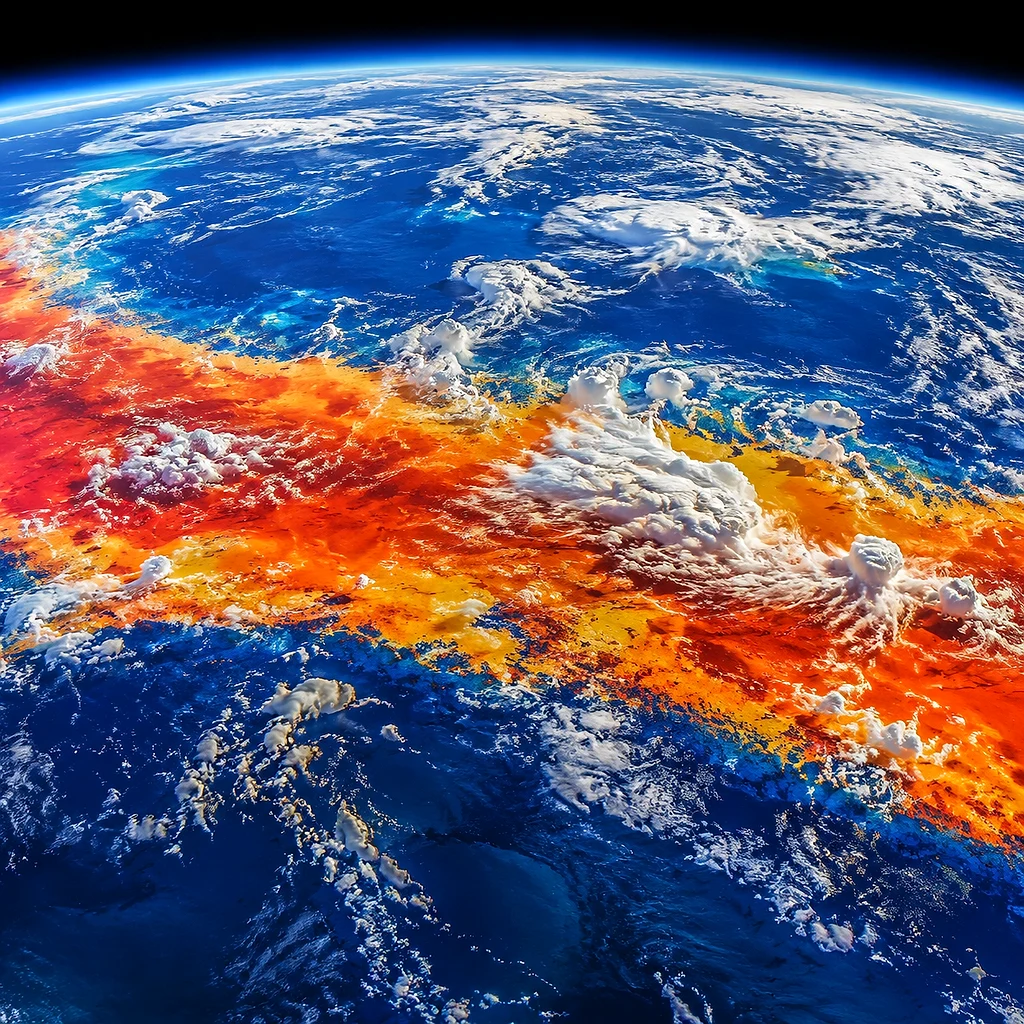
厄尔尼诺:太平洋的海水变热,如何搅乱全球的天气?
Super El Niño Forecast for 2026
About this story
Super El Niño Forecast for 2026. HSK 3 Chinese listening practice.
This is an HSK 3-4 Chinese listening episode that runs about 4 minutes. The full Mandarin script is shown with tap-for-pinyin and a line-by-line English translation, so you can listen and read at once — comprehensible input in the sense of Stephen Krashen's i+1 theory. It teaches 16 key vocabulary words such as 天气、原因、影响 and walks through 3 grammar patterns, each explained in English with examples. The same news story is retold at 4 difficulty levels — use the level selector above to find the version that is challenging but still understandable for you.
Read at your level
原文Read the complete story in Chinese. Reveal pinyin and English only when you need them.
English transcript reference
Today, a term that's been in the news a lot lately — El Niño.
Many have heard the name but can't quite explain what it actually is.
Simply put, El Niño is the Pacific's water warming abnormally.
Let's start with where the name comes from — it's rather interesting.
Long ago, fishermen in Peru, South America, noticed the sea grew unusually warm every few years.
And it often happened around Christmas.
So they named it "the Christ child" — El Niño.
So why does the sea water warm up?
For that, we have to talk about the wind.
Normally, a steady wind over the Pacific keeps pushing warm water westward.
But every few years, this wind suddenly weakens.
Once the wind weakens, the warm water piled up in the west flows back east.
As the eastern water warms, the entire Pacific weather system goes haywire.
There's a detail here that really illustrates it.
Normally, cold water wells up from the deep off Peru's coast, bringing lots of fish.
When El Niño comes, warm water caps the top, the cold water can't rise, and the fish suddenly vanish.
Fishermen head out and often come back empty-handed.
That's exactly how the fishermen first noticed El Niño back then.
This upheaval affects not just the coast, but weather worldwide.
Some places get extreme rainfall, even major floods.
California, for one, tends to get hit by downpours and floods during a strong El Niño winter.
But other places fall into severe drought.
The Amazon, Australia, and parts of Africa may turn dry and hot, with crops unable to survive.
Beyond floods and droughts, El Niño has a bigger effect: it briefly makes the whole Earth hotter.
The globe is already warming, temperatures rising year by year.
Stack a strong El Niño on top, and this year and next may set new heat records.
That's why scientists are especially nervous this time.
According to their forecasts, this year's El Niño is likely to be very strong.
The numbers are alarming: about a 90% chance of reaching "strong" this year, and a 60% chance of hitting "super" level.
There's a strong chance it reaches "super El Niño" status.
If so, it could be the strongest in decades.
The last time it was this strong dates back nearly thirty years.
Of course, El Niño isn't all bad news.
For instance, it suppresses Atlantic hurricanes, making that storm season quieter.
But on balance, a strong El Niño brings more trouble than benefit.
Fortunately, unlike in the past, scientists can now forecast its arrival months ahead.
Knowing it's coming, countries can prepare earlier.
Like shoring up water systems in advance, or storing extra food and water.
There's another important point many people overlook.
When weather goes haywire, harvests shrink and food prices may rise.
In the end, El Niño affects every ordinary person's livelihood.
Ultimately, El Niño is no monster — just a natural fluctuation of Earth's climate.
But when it acts, the whole world has to adjust.
Okay, we've roughly laid out El Niño today; let's chat again next time.
Listen again
Try it without the transcript and notice what sounds clearer.
What vocabulary does this episode teach?
词汇Weather. 全世界的天气 = weather worldwide.
A reason. 最早发现厄尔尼诺的原因 = the reason it was first noticed.
An effect. 一个更大的影响 = a bigger effect.
Severe. 陷入严重的干旱 = fall into severe drought.
The world. 全世界的天气 = the world’s weather.
A problem. 很能说明问题 = really illustrates the point.
To prepare. 各个国家就能早点做准备 = countries can prepare earlier.
Nervous. 科学家这次特别紧张 = scientists are especially nervous.
The topic — the Pacific warming abnormally.
The Pacific Ocean.
A phenomenon. 太平洋的海水反常地变热 = the Pacific warming abnormally.
A flood. 甚至发大洪水 = even major floods.
Drought. 陷入严重的干旱 = fall into severe drought.
Climate. 地球气候的一种自然变化 = a natural change in Earth’s climate.
Super. 冲到“超级”级别 = reach the “super” level.
Odds. 九成的概率 = a 90% chance.
* beyond level超纲词
What grammar patterns appear in this episode?
语法每隔...(就)...
"Every (so often)..." — a recurring interval.
每隔几年,这种风会突然变弱。
一 + 动词,就...
"Once... then..." — immediate cause and effect.
风一变弱,暖水就会往东边跑。
不(只)是...而是...
"Not (just)... but rather..." — corrects to the real point.
影响的可不只是海边,而是全世界的天气。
Proper nouns
专有名词Free account
Keep learning from this story
Create a free account to keep saved words and your preferred level together.
- Keep words with their story context
- Remember your preferred level
- Build your vocabulary over time