
A Chinese podcast · Same story, 4 levels
英国第一位国王,为什么没人记得?
England's First King Æthelstan: 1,100 Years of Near-Forgetting
About this story
Easy Chinese listening: England's forgotten first king Æthelstan, who united England in 927, and the 2027 efforts to finally celebrate him. HSK 3 Chinese listening practice.
This is an HSK 3 Chinese listening episode that runs about 3 minutes. The full Mandarin script is shown with tap-for-pinyin and a line-by-line English translation, so you can listen and read at once — comprehensible input in the sense of Stephen Krashen's i+1 theory. It teaches 12 key vocabulary words such as 国家、名字、大家 and walks through 7 grammar patterns, each explained in English with examples. The same news story is retold at 4 difficulty levels — use the level selector above to find the version that is challenging but still understandable for you.
Read at your level
原文Read the complete story in Chinese. Reveal pinyin and English only when you need them.
English transcript reference
There was a king in England.
He was the first to turn England into one country.
But today, few people know his name.
He is Æthelstan, a king from long ago.
Not long ago, someone asked everyone who the best king in their hearts was.
He wasn't on the list; the one everyone remembered was William.
In 927, he rode north and arrived at York.
In York there was still a small Viking kingdom.
He defeated the Vikings and took York.
In that same year, he became the first King of the English.
Other kings on the island also came to see him and recognized him as king of all.
Historians say that England started from here.
By 2027, this event will be 1,100 years old.
An Englishman wants the whole country to remember this year.
He is running a campaign called 'The Birth of England'.
He also wants a national holiday one day.
He is getting people to sign a petition to designate a day called 'England Day'.
But very few people have signed.
A small town in England wants to erect a statue for him.
People living nearby say the statue would damage the roots of several trees.
So to this day, the statue has not been put up.
In the same year, Europe will also commemorate another event.
The Normans from France also had a leader named William.
That year marks 1,000 years since William's birth.
Later the Normans crossed the sea and killed the English king.
This Englishman says that as long as these things are also explained clearly, then it's fine.
A historian also likes this king very much.
He says the story is very heroic and inspiring.
He also says he can't imagine the US or France telling it this way.
Their national stories wouldn't start with a massive defeat.
This king also fought a great battle, against the Scots and people from the north.
When his great deed turned 1,000 years old, no one commemorated it either.
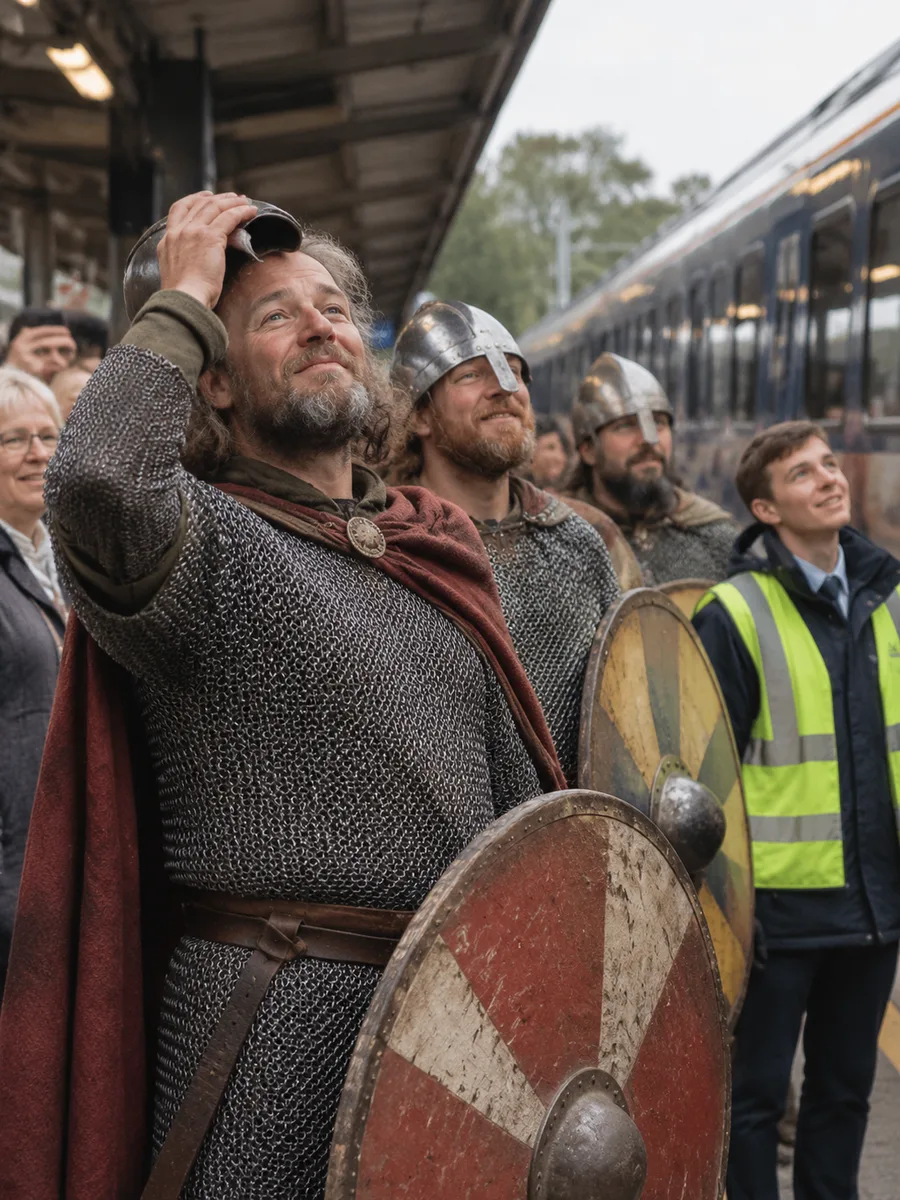
A station in London named a train after him.
The historian said that afterward this matter gradually cooled down.
At Irmont Bridge, locals are making a large painting together.
The local group will also hold a festival, and the local government is giving money to make a website.
These celebrations are all in 2027, and the Englishman says they should be done on a bigger scale.
Another historian says that at that time no one wrote articles saying he was good.
Listen again
Try it without the transcript and notice what sounds clearer.
What vocabulary does this episode teach?
词汇HSK 2. Used in '变成了一个国家' (became one country).
HSK 2. '他的名字' = his name.
HSK 2. '问大家' = ask everyone.
HSK 2. Resultative complement 住 indicates firmness; '记住的是威廉' = the one remembered is William.
HSK 2. '从这里开始的' = started from here.
HSK 2. Causative verb; '想让全国记住' = wants to make the whole country remember.
HSK 2. '做一个活动' = run a campaign.
HSK 2. '全国放假' = national holiday.
HSK 2. Common noun; appears throughout the script.
HSK 2. '研究历史的人' = historians.
HSK 3 (beyond easy level). '打败了维京人' = defeated the Vikings.
Beyond HSK 2. Measure word 座; '立一座雕像' = erect a statue.
* beyond level超纲词
What grammar patterns appear in this episode?
语法把 + Object + Verb + Complement
The 把 construction moves the object before the verb to show how it is handled or affected.
他第一次把英国变成了一个国家。
他打败了维京人,把约克拿了下来。
是……的 (emphasis on time/place/manner)
The 是……的 structure highlights a detail such as time, place, or manner of a past event.
大家记住的是威廉。
英国就是从这里开始的。
让 + somebody + verb
The causative verb 让 means 'to let' or 'to make' someone do something.
一个英国人想让全国记住这一年。
到 + time + 就 + verb
到……就…… indicates that by a certain time, something will have happened or reached a state.
到二零二七年,这件事就满一千一百年了。
给 + somebody + verb
The preposition 给 introduces the beneficiary or recipient of an action.
英国的一个小城想给他立一座雕像。
伦敦的一个车站给一列火车起了他的名字。
只要……就……
This pattern expresses a sufficient condition: 'as long as..., then...'.
只要也讲清楚这些,那就可以。
从……开始
从……开始 means 'to start from...' and marks the beginning point of an event or process.
它们的国家故事,不会从一场大败开始。
Proper nouns
专有名词Sources
来源Free account
Keep learning from this story
Create a free account to keep saved words and your preferred level together.
- Keep words with their story context
- Remember your preferred level
- Build your vocabulary over time