
A Chinese podcast · Same story, 4 levels
匈牙利明天选新领导:欧尔班对马扎尔
Orbán Faces Magyar in Hungarian Election
About this story
A simple story about Hungary voting tomorrow, where Viktor Orbán faces Péter Magyar and the new Tisza Party. HSK 1 Chinese listening practice.
This is an HSK 1 Chinese listening episode that runs about 6 minutes. The full Mandarin script is shown with tap-for-pinyin and a line-by-line English translation, so you can listen and read at once — comprehensible input in the sense of Stephen Krashen's i+1 theory. It teaches 12 key vocabulary words such as 欧洲、国家、希望 and walks through 4 grammar patterns, each explained in English with examples. The same news story is retold at 4 difficulty levels — use the level selector above to find the version that is challenging but still understandable for you.
Read at your level
原文Read the complete story in Chinese. Reveal pinyin and English only when you need them.
English transcript reference
Speaking of Europe, today let's talk about a small country.
This country is called Hungary.
Where is Hungary?
In the middle of Europe.
Not big.
About ten million people.
This country has a big event tomorrow.
What is it?
It's an "election."
What is an election?
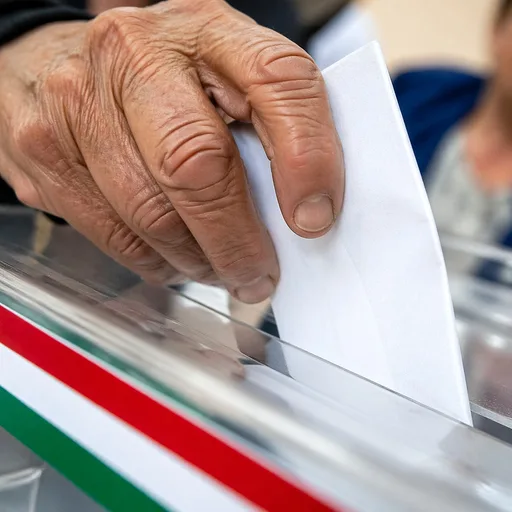
An election is when everyone chooses a leader together.
You cast one vote.
I cast one vote.
He also casts one vote.
Whoever gets the most votes becomes the leader.
What's Hungary's leader called?
His name is Orbán.
Orbán is a person's name.
He is a man.
He has been the leader for many years.
How many years?
Sixteen years.
Sixteen years.
A very long time.
Longer than you've been in school.
Why can Orbán be the leader for so long?
Because he always wins elections.
He wins every time.
He also changed the country's laws.
After changing them it's easier for him to win.
Some people say this isn't good.
They say one person shouldn't always be the leader.
Other people should also have a chance.
Now a new person has stood up.
He says: "I will challenge Orbán."
This new person is called Magyar.
Magyar is his name.
He is also a man.
He is younger than Orbán.
He used to be Orbán's friend.
Yes, they used to be friends.
He worked in Orbán's company.
But two years ago he left.
Why did he leave?
Because he thought Orbán did the wrong thing.
What did Orbán do?
This thing is a little hard to say.
Orbán forgave someone who did bad things.
That person did very bad things to children.
Magyar thought this was wrong.
So he was no longer friends with Orbán.
He started doing his own thing.
He founded a new political party.
A political party is a group of people who think alike.
They do politics together.
What's Magyar's party called?
It's called the "Tisza" party.
Tisza is a river in Hungary.
Magyar used the river's name to name the party.
He says: "I will make Hungary better."
He says: "I want everyone to not be afraid anymore."
"This country belongs to everyone."
"Not just to those in power."
These words move many people.
Many Hungarians are unhappy.
They feel the country has problems.
Prices are too expensive.
Finding a job is hard.
And some people in the government are stealing money.
So they want change.
They want new leadership.
Magyar represents this hope.
Tomorrow is election day.
Sunday.
Hungarians will go to vote.
This election is very important.
Why important?
Because if Orbán wins again.
He will be the leader for the fifth time.
Fifth time.
Twenty years.
Twenty years all under one person.
But if Magyar wins.
That's a big change.
A new era begins.
What's the current situation?
Some polls say Magyar will win.
Magyar's side has a few more votes.
But polls aren't always accurate.
When voting really starts tomorrow.
Who knows what will happen.
We all have to wait until tomorrow to know the result.
What does this story tell us?
Every country has elections.
Every country has politics.
Sometimes elections are very important.
They can decide a country's future.
Hungary's election tomorrow is like this.
No matter who wins.
The world is watching.
Why is the world watching?
Because Orbán is not just Hungary's leader.
He is also a symbol.
Europe has many political figures like him.
If Orbán wins again.
They will have more confidence.
They will learn his methods.
If Orbán loses.
They will be afraid.
They will think about whether their path is right.
So this small country's election.
Will influence many big countries.
Interesting, right?
The world is sometimes like this.
A small thing can have a big influence.
Finally I want to say one thing.
Whether you like Orbán or Magyar.
Let the people vote and decide.
That is a good thing.
Every person has one vote.
Every person's vote is equally important.
Your vote is not bigger than others.
Nor smaller than others.
This is democracy.
This is why elections are so important.
Tomorrow the people of Hungary will go to vote.
They will decide their own future.
We all wish them good luck.
Listen again
Try it without the transcript and notice what sounds clearer.
What vocabulary does this episode teach?
词汇The continent of Europe.
A nation-state.
A feeling of expectation for something good.
HSK 1. we; us.
HSK 1. they; them.
HSK 1. what.
The process of choosing a leader by voting.
To cast a ballot in an election.
The person in charge.
Rules set by a government.
To compete against a strong opponent.
A group with shared political views.
* beyond level超纲词
What grammar patterns appear in this episode?
语法Proper nouns
专有名词Sources
来源Free account
Keep learning from this story
Create a free account to keep saved words and your preferred level together.
- Keep words with their story context
- Remember your preferred level
- Build your vocabulary over time