
A Chinese podcast · Same story, 4 levels
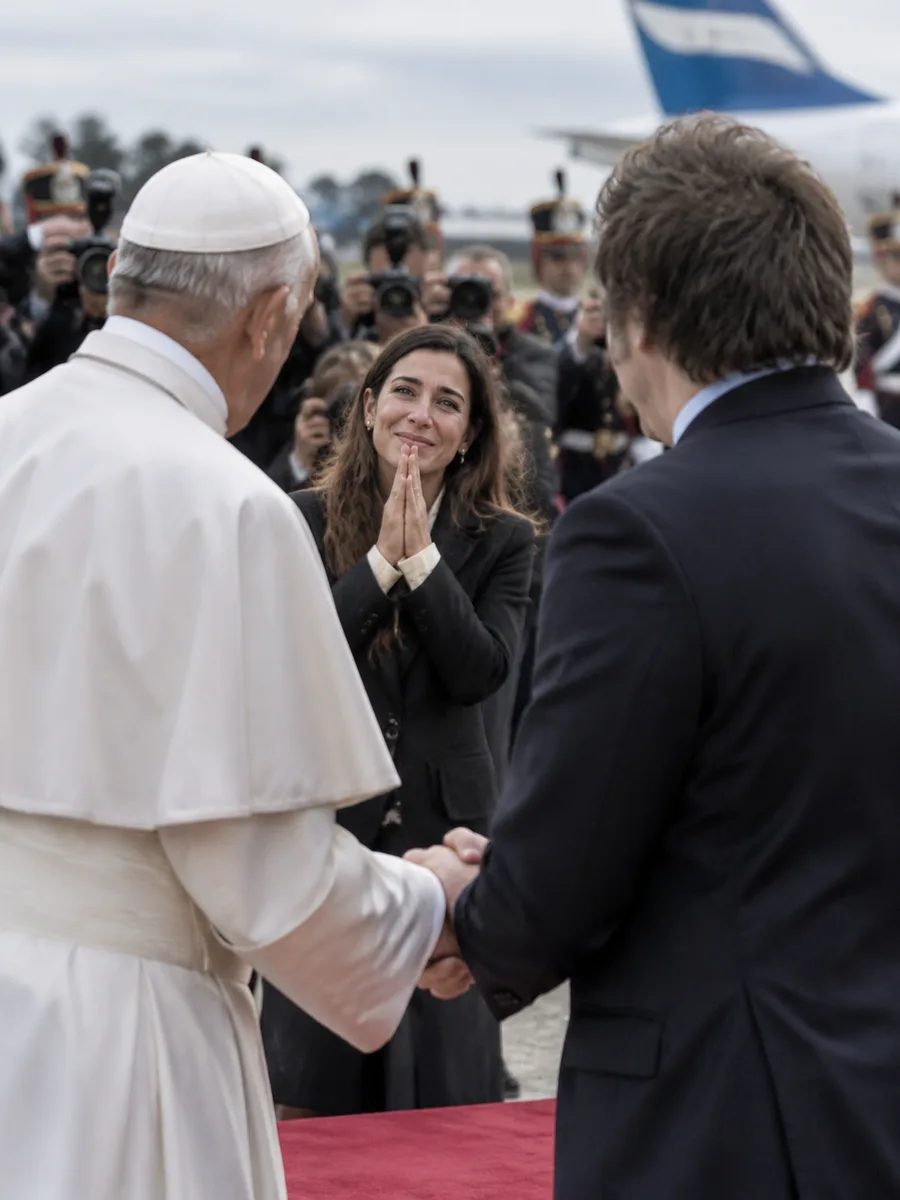
教皇利奥十四世访问阿根廷,与“电锯总统”米莱谈穷人与经济
Pope Leo XIV Visits Argentina, Meets 'Chainsaw President' Milei to Discuss the Poor and the Economy
About this story
HSK 1: Pope Leo XIV arrives in Argentina, meets President Milei, and speaks about the poor and the economy, while a priest named Toto feeds 200 people daily.
This is an HSK 2 Chinese listening episode that runs about 2 minutes. The full Mandarin script is shown with tap-for-pinyin and a line-by-line English translation, so you can listen and read at once — comprehensible input in the sense of Stephen Krashen's i+1 theory. It teaches 12 key vocabulary words such as 老人、飞机、国家 and walks through 6 grammar patterns, each explained in English with examples. The same news story is retold at 4 difficulty levels — use the level selector above to find the version that is challenging but still understandable for you.
Read at your level
原文Read the complete story in Chinese. Reveal pinyin and English only when you need them.
English transcript reference
An old man walks down from the airplane.
He is the Pope; many people believe in him.
The president of this country is named Milei.
The president comes to the airport to meet the Pope.
There is a red carpet on the ground; the two shake hands.
This is the Pope's first time coming to this country.
Nearly forty years ago, a Pope came here.
The Pope was born in the United States.
He lived in Peru for twenty years.
In Peru, he often rode a horse to see the poor.
The president is different; he is reducing the government's money.
The two enter the place where the president works.
They talk for half an hour.
Then, they go to a big house.
There are many people in the house; both of them give speeches.
The president says: Pope, thank you for coming here.
The president also says: Please ask God to help this country.
The Pope sits on the stage, behind the president.
The Pope says: The country's money should work for people.
He says: People should not work for money.
Many people clap for a long time.
The Pope also says: People who manage politics should let people speak.
They should also let the people choose who governs the country.
He also says: People who manage politics should speak carefully.
The president also says good things.
He says: The previous Pope was the most important person in this country.
But this president previously said the previous Pope was very bad.
In this country, there is a very poor place.
There is a priest there; everyone calls him Toto.
Father Toto believes in God and helps the people here every day.
The place where he works has eight kitchens.
Every day, these eight kitchens cook for two hundred people.
Father Toto says: More people are coming to eat.
He says: Here, the poor have not decreased; there are more.
The Pope also wants to see sick people and meet workers.
Listen again
Try it without the transcript and notice what sounds clearer.
What vocabulary does this episode teach?
词汇HSK 1. 一个老人 = an old person.
HSK 1. 从飞机上走下来 = walk down from the airplane.
HSK 1. 这个国家 = this country.
HSK 1. 来机场接教皇 = come to the airport to meet the Pope.
HSK 1. 握了手 = shook hands.
HSK 1. 住过二十年 = lived for twenty years.
HSK 1. 政府的钱 = the government's money.
HSK 1. 总统工作的地方 = the place where the president works.
HSK 1. 总统叫米莱 = the president is named Milei.
HSK 1. 第一次来 = come for the first time.
HSK 2. 人民自己选 = the people choose themselves.
Beyond HSK 1. 教皇 = the Pope.
* beyond level超纲词
What grammar patterns appear in this episode?
语法从……上/里 + Verb
Indicates the starting point or source of an action.
一个老人从飞机上走下来。
来 + Place + Verb
Expresses purpose: come to a place to do something.
总统来机场接教皇。
给 + Person + Verb
Indicates the recipient or beneficiary of an action.
这八个厨房给两百个人做饭。
要 + Verb
Expresses obligation or necessity: should, must.
国家的钱要为人工作。
管政治的人要让人说话。
让 + Person + Verb
Causative: to let or make someone do something.
也要让人民自己选谁管国家。
管政治的人要让人说话。
Proper nouns
专有名词Sources
来源Free account
Keep learning from this story
Create a free account to keep saved words and your preferred level together.
- Keep words with their story context
- Remember your preferred level
- Build your vocabulary over time