
A Chinese podcast · Same story, 4 levels
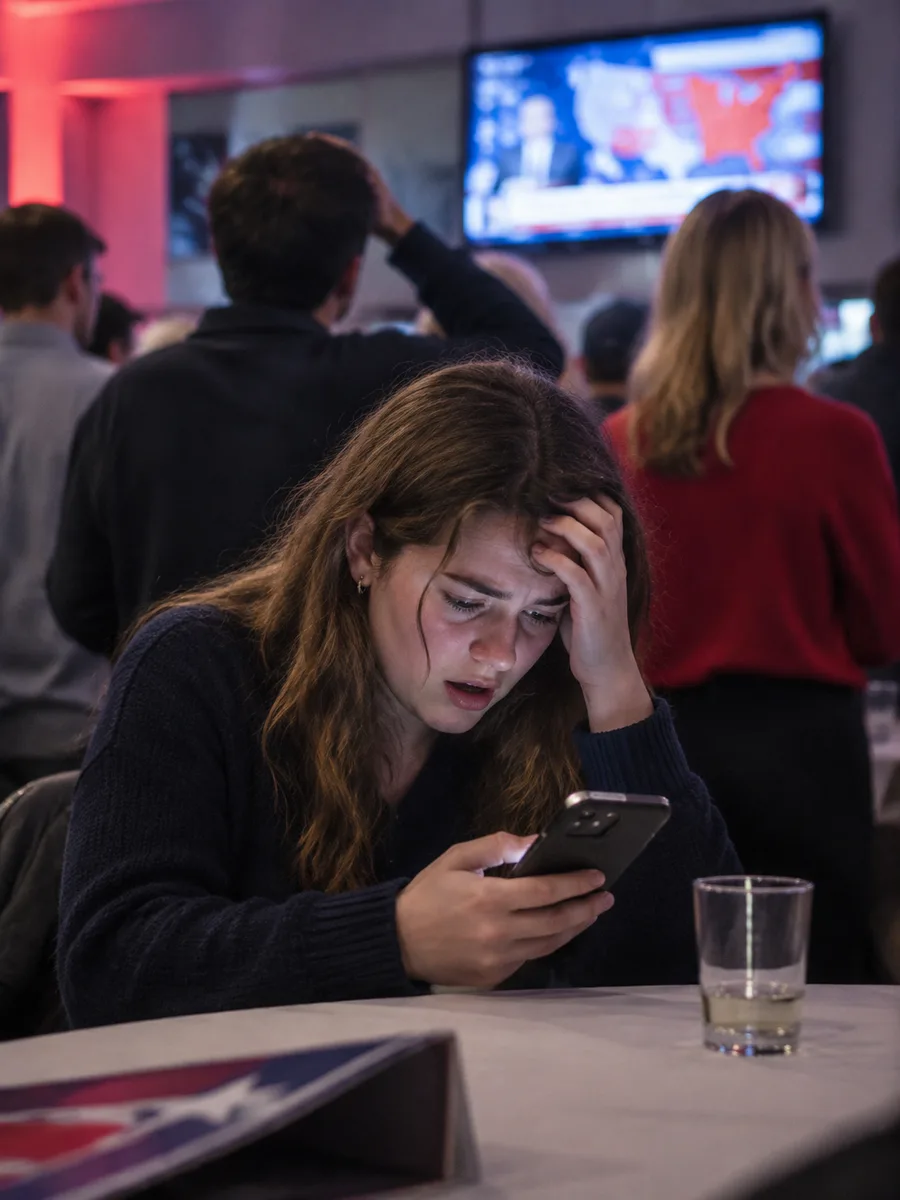
特朗普输掉中期选举
Trump Loses the Midterms: Iran War, Gas Prices and Immigration Cost Republicans Both Chambers
About this story
How Trump lost the 2026 midterms: the unpopular Iran war, a 40% gas price surge and immigration backlash handed Democrats both chambers of Congress. HSK 5+ Chinese listening practice.
This is an HSK 5+ Chinese listening episode that runs about 3 minutes. The full Mandarin script is shown with tap-for-pinyin and a line-by-line English translation, so you can listen and read at once — comprehensible input in the sense of Stephen Krashen's i+1 theory. It teaches 12 key vocabulary words such as 失败、战争、价格 and walks through 7 grammar patterns, each explained in English with examples. The same news story is retold at 4 difficulty levels — use the level selector above to find the version that is challenging but still understandable for you.
Read at your level
原文Read the complete story in Chinese. Reveal pinyin and English only when you need them.
English transcript reference
Republicans lost both chambers of Congress in the midterms, and for Trump this was a decisive defeat.
The post-mortem attributed the defeat to three things.
An unpopular war with Iran, steadily climbing gasoline prices, and the president's own obsession with his projects.
Rewind to mid-February: economic advisers walked into the Oval Office with charts showing employment, consumption and growth all looking up.
A few days later, Trump ordered the start of war with Iran.
The war killed more than twenty American service members and cost U.S. taxpayers over 47 billion dollars.
It also pushed domestic gasoline prices up by 40 percent.
This spring, when advisers warned that the war could drag down Republicans in the midterms, Trump's answer was that there was still plenty of time and they would deal with it later.
Conservative commentator Matt Walsh put it more bluntly, calling it "the greatest political blunder in the last two decades."
In Minneapolis, two Americans were shot dead that winter.
One of them was Alex Pretti, a 37-year-old nurse; the shooter was a Border Patrol agent.
Immigration enforcement had been a strength for the ruling party, but afterward it became a burden, and Trump replaced Homeland Security Secretary Kristi Noem over it.
The Senate races were concentrated in four states: Georgia, South Carolina, North Carolina and Texas.
Trump strongly backed his loyal allies in all four states, and all four seats were lost.
Leading the charge to retake the Senate was Democratic Senator Kirsten Gillibrand.
In one week in September, U.S. gasoline prices rose 16 cents in a single week, and diesel prices hit a record high.
Democratic strategists immediately poured money into seats long considered rock-solid, including open seats in Florida and Texas.
Advisers repeatedly urged Trump to address voters' affordability concerns head-on, but he accused the polls of being fake.
The day before the election, he spoke for nearly an hour by the Reflecting Pool in front of the Lincoln Memorial, much of it about his renovations in Washington.
In that speech, he proposed erecting a 250-foot triumphal arch in Washington.
By contrast, his earlier address to the nation about the war lasted only twenty minutes.
After voting ended, Trump told the media that the biggest problem was that he himself was not on the ballot.
Chris Winkelman, chairman of the Republican super PAC Congressional Leadership Fund, gave a completely different answer: this election was about the economy.
Two government shutdowns over health care and immigration were likewise blamed on the ruling party by voters.
In counties that are more than 80 percent Hispanic, Democrats led by 40 percentage points.
Trump campaigned at thirty rallies for Republican candidates, but he could not turn that curve around.
After both chambers of Congress changed hands, Trump's remaining term would have to face a legislature controlled by his opponents.
Listen again
Try it without the transcript and notice what sounds clearer.
What vocabulary does this episode teach?
词汇HSK 4. Used as both noun and verb: 这次失败 (this defeat), 失败了 (failed).
HSK 5. 对……开战 means "to declare war on"; 发动战争 is "to launch a war."
HSK 4. 汽油价格 (gasoline prices); 价格上涨 means "prices rise."
HSK 5. Often used with 经济: 经济增长 (economic growth).
HSK 4. 经济顾问 (economic adviser); 经济问题 (economic issues).
HSK 5. 移民执法 (immigration enforcement); 移民政策 (immigration policy).
HSK 5. 对媒体说 means "told the media"; 社交媒体 is "social media."
HSK 5. 总统本人 means "the president himself."
HSK 5. 中期 means "mid-term"; 选举 is "election." Common collocation: 举行中期选举 (hold midterm elections).
HSK 5. 总统选举 (presidential election); 选举结果 (election results).
HSK 5. 投票结束 means "voting ended"; 投票站 is a polling station.
HSK 5. 参议员 is "senator"; 众议院 is the House of Representatives.
* beyond level超纲词
What grammar patterns appear in this episode?
语法The 把 construction moves the object before the verb to emphasize the result or disposal of the action.
它同时把国内的汽油价格推高了百分之四十。
让 + Person + Verb Phrase
The causative 让 means "to make/let someone do something."
这场战争让二十多名美国军人丧生,让美国纳税人付出超过四百七十亿美元的代价。
The passive marker 被 indicates that the subject receives the action, often with the agent introduced.
那个冬天被开枪打死的美国人有两位。
两场围绕医保和移民的政府停摆,同样被选民记在了执政党头上。
对……而言
A formal way to say "as for…" or "from the perspective of…," placed at the start of a clause.
对特朗普而言,这是一次决定性的失败。
把……归结为……
Means "to attribute/summarize something as…," used to state the cause or essence of something.
事后的复盘把这场失败归结为三样东西。
在……中 / 在……上
Prepositional phrases indicating scope or location: "in/among…" or "on (an issue)."
最大的问题在于他本人不在选票上。
由 + Agent + Verb
Marks the agent performing an action in a passive-like structure: "by (someone)."
特朗普余下的任期要面对一个由对手把持的立法机构。
Proper nouns
专有名词Sources
来源Free account
Keep learning from this story
Create a free account to keep saved words and your preferred level together.
- Keep words with their story context
- Remember your preferred level
- Build your vocabulary over time