
A Chinese podcast · Same story, 4 levels
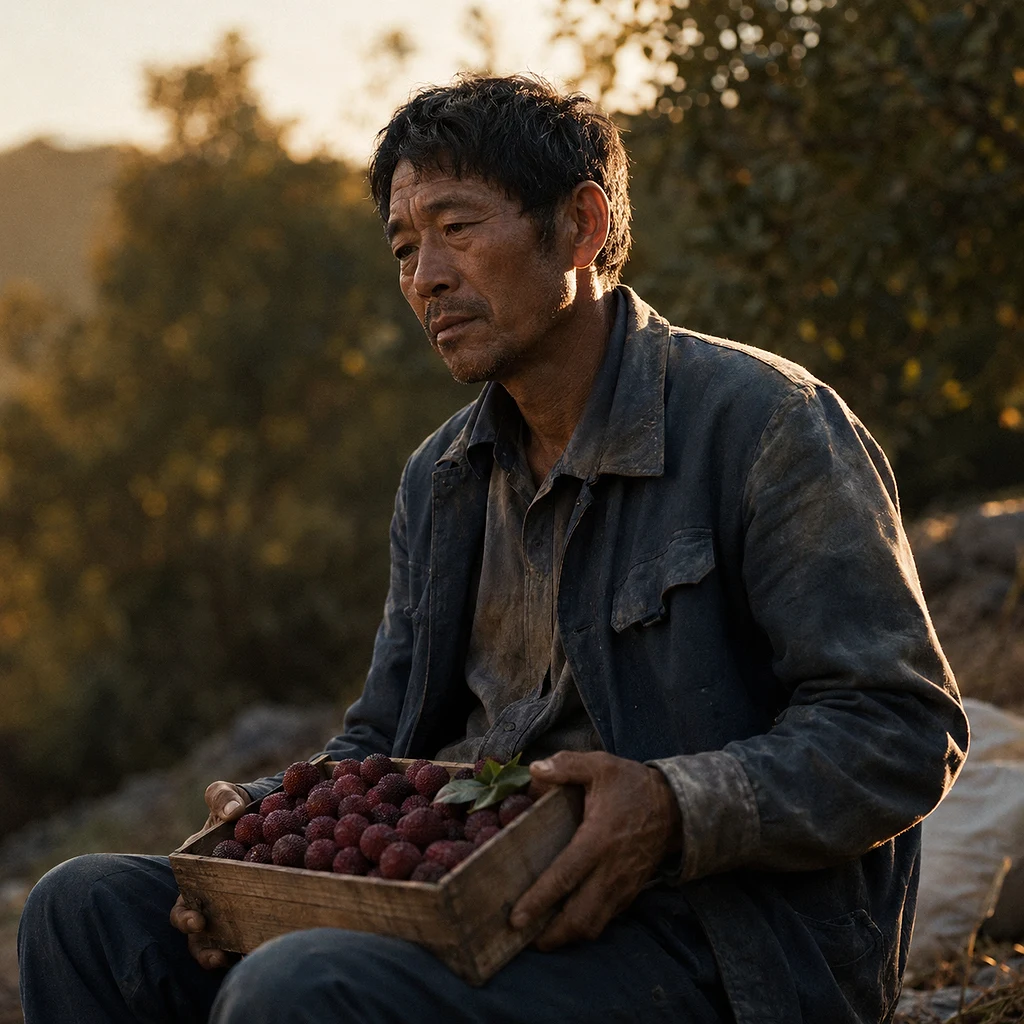
杨梅泡药风波:一个果农在哭
Trouble With the Bayberries: A Farmer in Tears
About this story
Trouble With the Bayberries: A Farmer in Tears. HSK 2 Chinese listening practice.
This is an HSK 2 Chinese listening episode that runs about 3 minutes. The full Mandarin script is shown with tap-for-pinyin and a line-by-line English translation, so you can listen and read at once — comprehensible input in the sense of Stephen Krashen's i+1 theory. It teaches 12 key vocabulary words such as 今天、吃、喜欢 and walks through 4 grammar patterns, each explained in English with examples. The same news story is retold at 4 difficulty levels — use the level selector above to find the version that is challenging but still understandable for you.
Read at your level
原文Read the complete story in Chinese. Reveal pinyin and English only when you need them.
English transcript reference
Today I'll tell you a story.
This story
is about a kind of fruit.
Have you eaten this kind of fruit?
It's called "yangmei" (bayberry).
Yangmei
is a small red fruit.
It's very sweet,
and a little sour.
Every May
and June,
many people love to eat it.
In China
there are many farmers
who grow yangmei.
They work all year long
just for these few weeks
in May and June.
Today's story
is the story of one farmer.
On May 23,
this farmer
was selling yangmei online.
He was talking to his phone,
asking people to buy.
But
no one was buying.
As he spoke,
he started to cry.
Why was no one buying?
It was not that his yangmei was bad.
It was because
there was a recent piece of news.
The news said:
in a place in southern China,
a few people
had done something wrong.
They used some
things that should not be used
to soak yangmei.
They wanted to make the yangmei
look better
and taste sweeter.
But these things
are bad for people.
The state has rules:
in fruit,
these things may not be used.
As soon as the news came out,
many people were afraid.
"Yangmei has a problem.
"We won't buy it.
So
no one was buying yangmei.
But
the ones who did wrong
were only a few people.
There are many other farmers
who grow yangmei honestly.
They did not use
those things that should not be used.
Their yangmei
is good.
But
their yangmei
also could not be sold.
That is why
that farmer
cried to his phone.
He had done nothing wrong.
But
his yangmei,
no one would buy it either.
I read this news,
and I thought of one thing.
Sometimes
a few people do something wrong,
and many good people
also together
get affected.
This is not fair.
But
this kind of thing
really does happen.
Finally I ask you:
Around you,
has this kind of thing ever happened?
A few people did wrong,
and many good people
also together
had a hard time?
Think about it.
Okay.
That's all for today.
Talk tomorrow.
Listen again
Try it without the transcript and notice what sounds clearer.
What vocabulary does this episode teach?
词汇Today. The narrator opens with 今天我给你说一个故事 — 'today I'll tell you a story.'
To eat. 你吃过这种水果吗 — 'have you eaten this kind of fruit?' Also 喜欢吃 — 'love to eat.'
To like. 很多人都喜欢吃 — 'many people love to eat it' (yangmei).
To work. The farmer's whole year: 他们一年到头都在工作 — 'they work all year long.'
To buy. The story's painful turn: 没有人来买 — 'no one came to buy.'
Fruit. The episode is about a 水果 — a fruit — called yangmei.
A small, dark-red, sweet-and-sour Chinese fruit. Beyond HSK1. The episode glosses it: 一种红色的小水果 — 'a small red fruit.'
Farmer. Beyond HSK1. The story's hero: a 种杨梅的农民 — 'a farmer who grows yangmei.'
News. Beyond HSK1. The trigger of the whole story: 最近有一个新闻 — 'there was a recent piece of news.'
To cry. Beyond HSK1. The emotional center: 他说着说着,就哭了 — 'as he spoke, he started to cry.'
To fear, to be afraid. Beyond HSK1. After the news, 很多人都怕了 — 'many people were afraid' to buy yangmei.
To sell. Beyond HSK1. The farmer's struggle: 他们的杨梅,也卖不出去 — 'their yangmei also can't be sold.'
* beyond level超纲词
What grammar patterns appear in this episode?
语法不是 A,是 B
不是…是… replaces a wrong reason with the right one. The episode uses it to clarify why no one is buying.
不是他的杨梅不好。
是因为最近有一个新闻。
可是 / 但是
可是 and 但是 mark a contrast — usually that things should go one way but go the other. The episode uses it again and again to show the unfairness.
可是,没有人来买。
但是这些东西,对人不好。
X 一出来,Y
一 + verb introduces a quick result: once one thing happens, another immediately follows. The episode uses it for how fast the news changed everything.
新闻一出来,很多人都怕了。
也 (parallel inclusion)
也 marks that the same thing happens to another person or group. The episode's quiet sadness: the bad people did wrong, but good people 也 get hurt.
很多好人,也会一起受到影响。
他们的杨梅,也卖不出去。
Proper nouns
专有名词Free account
Keep learning from this story
Create a free account to keep saved words and your preferred level together.
- Keep words with their story context
- Remember your preferred level
- Build your vocabulary over time