
A Chinese podcast · Same story, 4 levels
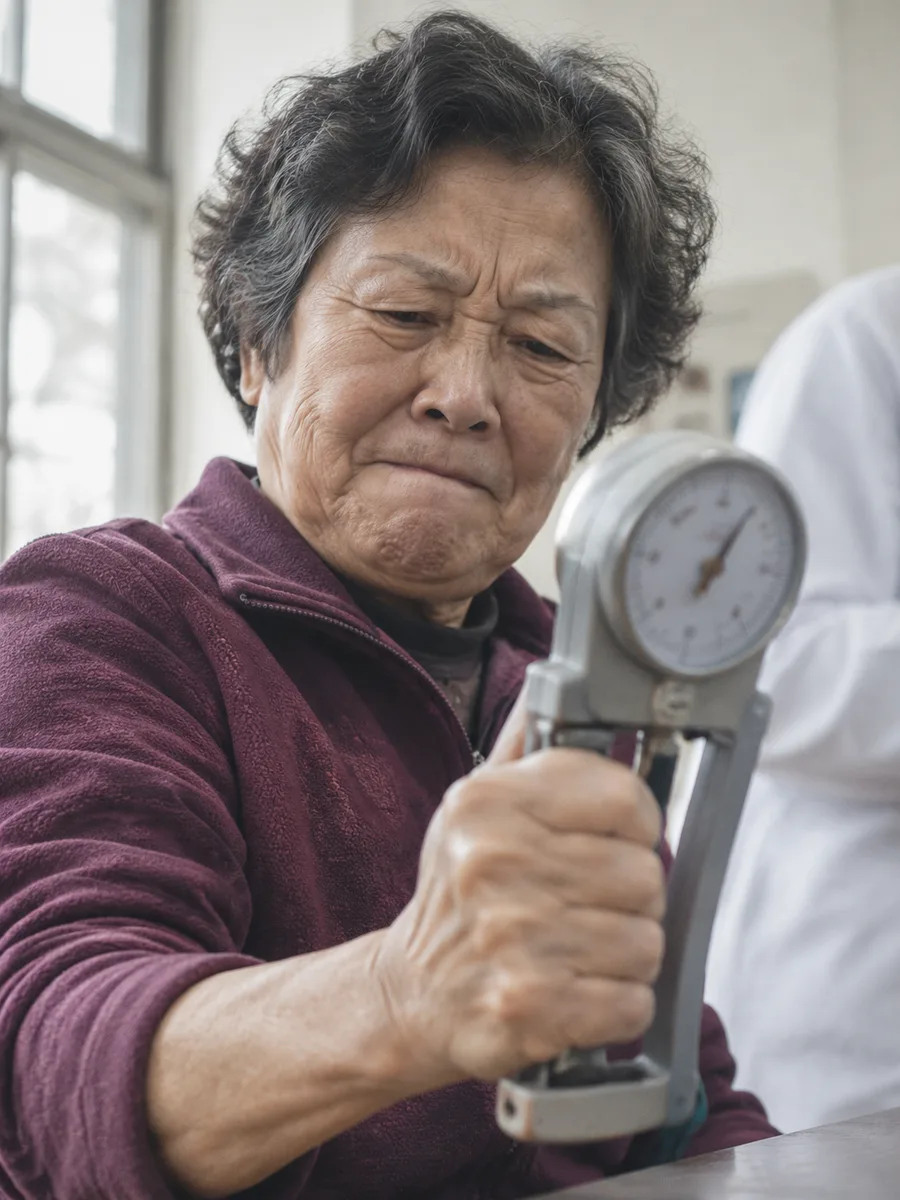
《柳叶刀》研究:握力是健康的信号
Grip Strength and Health: Lancet Study Links Weak Grip to Higher Death Risk and Cognitive Decline
About this story
HSK 1: A 2015 Lancet study of 139,691 people in 17 countries found each 5kg drop in grip strength linked to 16% higher death risk. Brian Clark and Ivan Bautmans explain why grip matters.
This is an HSK 2 Chinese listening episode that runs about 2 minutes. The full Mandarin script is shown with tap-for-pinyin and a line-by-line English translation, so you can listen and read at once — comprehensible input in the sense of Stephen Krashen's i+1 theory. It teaches 12 key vocabulary words such as 科学家、国家、机会 and walks through 8 grammar patterns, each explained in English with examples. The same news story is retold at 4 difficulty levels — use the level selector above to find the version that is challenging but still understandable for you.
Read at your level
原文Read the complete story in Chinese. Reveal pinyin and English only when you need them.
English transcript reference
A person with weak hand strength may be more likely to die.
This is what scientists have found.
In 2015, they measured hand strength in 17 countries.
They measured more than 139,000 people in total.
Four years later, they found one thing.
For every 5 kilograms less hand strength, the chance of death is 16% higher.
There is a scientist in the United States named Brian Clark.
He studies the human body at Ohio University.
He says the flesh on the body is called muscle.
Muscles do not move by themselves.
It is the brain that gives the order, and then the muscles move.
To grip something with the hand, 39 muscles are used.
These 39 muscles must work together.
In 2024, some elderly people were invited.
They measured the elderly people's hand strength.
Elderly people who think slowly also have weak hand strength.
There is also a scientist in Belgium named Ivan Bautmans.
He studies what happens to the body as people age.
He says that weaker hand strength is not a good thing.
It may be that the brain is going to have problems.
Measuring hands is cheap and fast.
So measuring hands can remind people early to go see a doctor.
There is one more thing: the two hands are different.
Most people have one hand stronger than the other.
About 10% stronger — this is normal.
If the difference between the two hands is too big, there is a problem.
He says if one hand has only half the strength of the other hand.
This may mean the body is deteriorating faster.
Weak hand strength does not mean you are definitely sick.
It just reminds people to go to the hospital early and get checked.
This June, Bautmans looked at 60 studies.
These studies included 380,000 people.
People with strong hands had a 19% lower chance of later cognitive decline.
There are also studies saying that strength training is also good for the brain.
Listen again
Try it without the transcript and notice what sounds clearer.
What vocabulary does this episode teach?
词汇HSK 4. From 科学 (science) + 家 (specialist).
HSK 3. Measure word: 个.
HSK 3. Often in patterns like 有机会 (have a chance).
HSK 3. Common in phrases about health: 身体健康 (healthy body).
HSK 3. Plural often implied: 一些老人 (some elderly people).
HSK 2. Used in 量手很便宜 (measuring hands is cheap).
HSK 1. Common in 看医生 (see a doctor).
HSK 2. Used in 有问题 (have a problem).
HSK 4. Often used with 手 (hand): 手的力气 (hand strength).
HSK 4. Used in 肌肉自己不会动 (muscles don't move by themselves).
HSK 4. Colloquial for brain; also 大脑 (cerebrum).
HSK 4. Used as verb: 下命令 (give an order).
* beyond level超纲词
What grammar patterns appear in this episode?
语法每 + Measure + Noun + 就 + Verb
Expresses 'for every... then...'.
手的力气少五公斤,死的机会就多百分之十六。
是...,才...
Emphasizes that only after a condition is met does the result happen.
是脑子下命令,肌肉才动。
要 + Verb
Expresses necessity or requirement ('need to', 'must').
手握东西,要用三十九块肌肉。
这三十九块肌肉,要一起用力。
比 + Noun + Adjective
Comparison: 'A is more ... than B'.
大多数人的一只手比另一只手有力。
只有...一半...
Expresses 'only half of...'.
一只手只有另一只手一半的力气。
对...有好处
Expresses 'is good for...'.
练力气,对脑子也有好处。
Proper nouns
专有名词Sources
来源Free account
Keep learning from this story
Create a free account to keep saved words and your preferred level together.
- Keep words with their story context
- Remember your preferred level
- Build your vocabulary over time