
A Chinese podcast · Same story, 4 levels
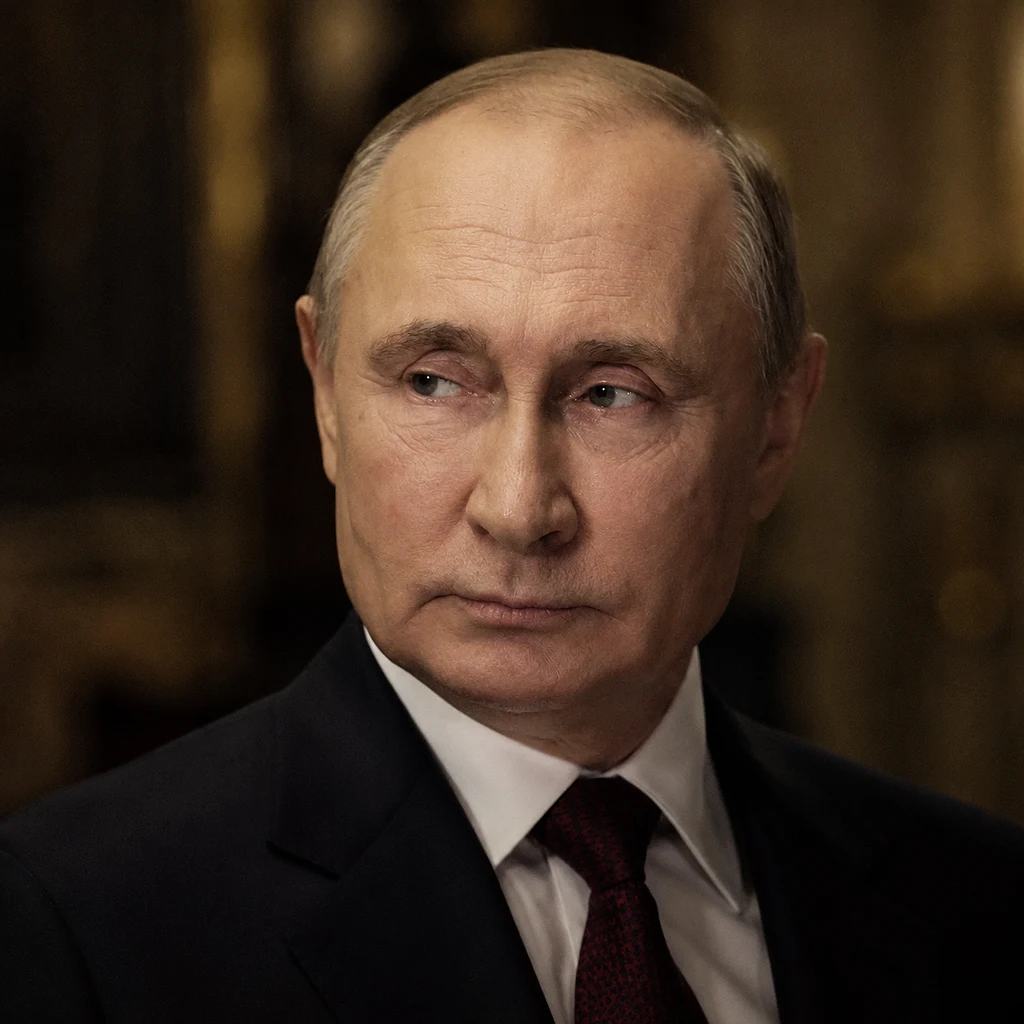
俄罗斯总统,来中国了
Russia's President Came to China
About this story
Russia's President Came to China. HSK 1 Chinese listening practice.
This is an HSK 1 Chinese listening episode that runs about 4 minutes. The full Mandarin script is shown with tap-for-pinyin and a line-by-line English translation, so you can listen and read at once — comprehensible input in the sense of Stephen Krashen's i+1 theory. It teaches 12 key vocabulary words such as 今天、朋友、高兴 and walks through 4 grammar patterns, each explained in English with examples. The same news story is retold at 4 difficulty levels — use the level selector above to find the version that is challenging but still understandable for you.
Read at your level
原文Read the complete story in Chinese. Reveal pinyin and English only when you need them.
English transcript reference
Today I'll tell you a news story.
It's a big deal.
The president of a big country
came to China.
This country is called Russia.
Have you heard of Russia?
Russia is to the north of China.
Russia is very big.
It's the biggest country in the world.
Russia's president
is called Putin.
What is a president?
A president is the top person of a country.
Putin is the top person of Russia.
He has done this job
for many years already.
On May 19,
Putin flew to Beijing.
What did he come to do?
He came to see China's top person.
China's top person
is called Xi Jinping.
Putin and Xi Jinping
are old friends.
Putin has come to China
many, many times.
This time
was the 25th.
On May 20,
the two of them met in Beijing.
They talked in a very large building.
This building is called the Great Hall of the People.
What did they say?
They said:
China and Russia
should be good friends.
Not good friends for just a year or two.
This year,
China and Russia being friends
is already 30 years old.
30 years is a long time.
They said:
"We were good friends in the past.
"We are good friends now too.
"We want to be good friends in the future too.
They also wrote things together.
They wrote a lot.
More than 20 of them.
These writings say:
China and Russia
will do business together.
Will do school things together.
Will make new things together.
In the evening,
Xi Jinping and Putin
also drank tea together.
The top people of two countries,
drinking tea together,
talking slowly.
It's a nice picture.
But,
not everyone in the world is happy.
Some countries say:
"China and Russia
"are too close.
"We're not very happy.
Why?
Because in recent years Russia
has had big problems with other countries.
Some countries don't like Russia.
They also don't want China and Russia to be too close.
So this meeting,
the whole world was watching it.
I read this news,
and I thought:
country and country
are like person and person.
Some countries are friends.
Some countries are not.
Friends can change too.
A friend today
might not be one tomorrow.
Not a friend today,
might be one tomorrow.
China and Russia
are good friends now.
And later?
We'll see, slowly.
Finally I'll ask you:
Is your country
friends with China?
And with Russia?
Think about it.
Okay.
That's all for today.
Talk tomorrow.
Listen again
Try it without the transcript and notice what sounds clearer.
What vocabulary does this episode teach?
词汇Today. The narrator opens with 今天我给你说一个新闻 — 'today I'll tell you a news story.'
Friend. The whole episode rests on this word: China and Russia 做好朋友 — 'being good friends.'
Happy, glad. Not everyone in the world is 高兴 about the summit — a gentle way to introduce disagreement.
Airplane. 普京坐飞机来了北京 — 'Putin took a plane to Beijing.' 坐飞机 = to fly / take a plane.
Tea. The two leaders 一起喝茶 — 'drank tea together,' the episode's image of a warm, slow meeting.
To watch, look, read. 全世界都在看 — 'the whole world is watching.' Also 我看了这个新闻 — 'I read this news.'
News (新 new + 闻 to hear). Beyond HSK1, but the episode teaches it from the first line: 我给你说一个新闻.
Country, nation (国 country + 家 home). Beyond HSK1. The episode repeats it constantly: 一个大国家, 中国和俄罗斯两个国家.
President. Beyond HSK1. The episode defines it inline: 总统就是一个国家的最大的人 — 'a president is the top person of a country.'
The world. Beyond HSK1. 俄罗斯是世界上最大的国家 — 'Russia is the biggest country in the world.'
Business. Beyond HSK1. 一起做生意 — 'do business together.' 做生意 = to do business / trade.
To change. Beyond HSK1. The episode's quiet lesson: 朋友也会变 — 'friends can change too.'
* beyond level超纲词
What grammar patterns appear in this episode?
语法已经 + duration + 了
已经 (already) plus 了 marks a state that has continued up to now. The episode uses it for time spans: he's been doing the job for many years; the friendship is already 30 years old.
他做这个工作,已经很多年了。
中国和俄罗斯做朋友,已经 30 年了。
第 + number + 次
第 turns a number into an ordinal; 次 counts occurrences. 第 25 次 = 'the 25th time.' A simple, high-frequency way to count repeated events.
这一次,是第 25 次。
普京来中国,已经很多很多次。
有的…有的…
有的 means 'some (of them).' Repeating it splits a group into parts. The episode uses it to show that countries are not all the same.
有的国家是朋友。
有的国家不是。
可能
可能 marks something as uncertain, not a fact. The episode uses it to talk about the future: things might change, or might not.
明天可能不是。
明天也可能是。
Proper nouns
专有名词Free account
Keep learning from this story
Create a free account to keep saved words and your preferred level together.
- Keep words with their story context
- Remember your preferred level
- Build your vocabulary over time