
A Chinese podcast · Same story, 4 levels
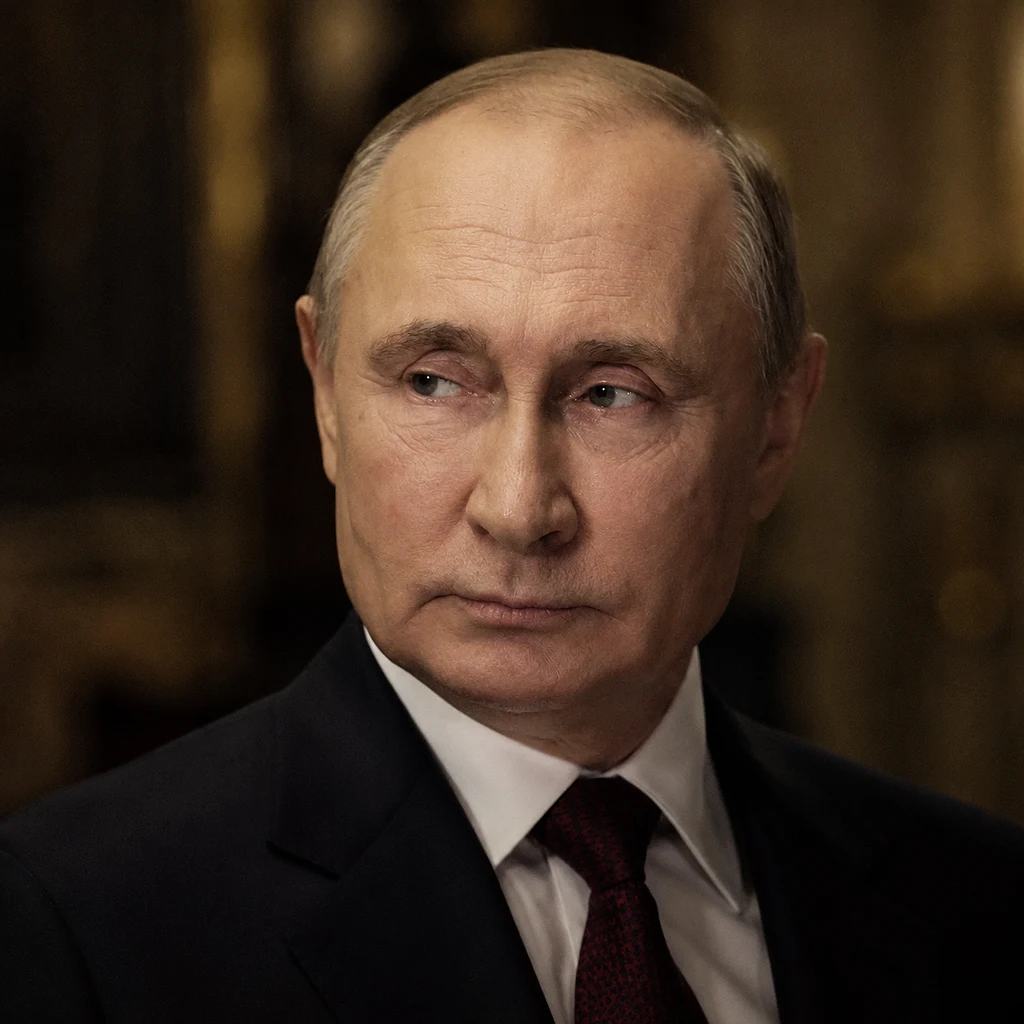
普京来中国了:中俄又见面了
Putin Visits China: The Two Countries Meet Again
About this story
Putin Visits China: The Two Countries Meet Again. HSK 2 Chinese listening practice.
This is an HSK 2 Chinese listening episode that runs about 4 minutes. The full Mandarin script is shown with tap-for-pinyin and a line-by-line English translation, so you can listen and read at once — comprehensible input in the sense of Stephen Krashen's i+1 theory. It teaches 12 key vocabulary words such as 意思、旅游、一样 and walks through 4 grammar patterns, each explained in English with examples. The same news story is retold at 4 difficulty levels — use the level selector above to find the version that is challenging but still understandable for you.
Read at your level
原文Read the complete story in Chinese. Reveal pinyin and English only when you need them.
English transcript reference
Today we'll talk about a piece of world news.
It's about China and Russia.
From May 19 to 20,
Russia's president, Putin,
made an official visit to China.
What does "official visit" mean?
It means the top person of a country
goes to another country officially.
This is a very big deal.
It's not ordinary tourism.
Putin is Russia's president.
He has been president
for many years already.
Xi Jinping is China's president.
That is, China's top person.
These two people
have actually met many times.
This time
was Putin's 25th visit to China.
25 times.
You can think about
how close the two countries are.
On May 20,
Putin and Xi Jinping
met and talked at Beijing's Great Hall of the People.
What did they talk about?
First, they talked about "friends."
This year is a special year.
China and Russia being "strategic partners"
is exactly 30 years this year.
30 years ago,
the two countries said:
we want to be very close friends.
25 years ago,
the two countries also wrote an important treaty together.
A treaty is, between country and country,
things written down that they'll do together.
This time,
the two of them said:
this treaty,
we want to continue it.
Second, they talked about "doing things together."
After the meeting,
the two countries wrote more than 20 documents together.
These documents say:
China and Russia
will do business together,
do education together,
do science and technology together.
This year is also the "China-Russia Education Year."
That is to say,
the two countries' schools and students
will have a lot of exchange this year.
Third, they talked about "the world."
The two countries also said together:
the world should not have only one biggest country.
The world should have many centers.
This sentence
is actually said for America to hear.
In the evening,
Xi Jinping and Putin
also drank tea together.
The top people of the two countries
sat down,
drinking tea slowly, talking slowly.
But,
this meeting —
not every country is happy about it.
In recent years,
Russia and Western countries
have very bad relations.
Russia and Ukraine also have a war.
Many Western countries say:
"China should not be so close to Russia.
China says:
"China and Russia being friends
"is our own business.
"We are not targeting other countries.
So this meeting,
the whole world is watching it.
Some people are happy,
some people are not happy.
I read this news,
and I thought:
the relationship between country and country
is a lot like the relationship between person and person.
Some friends
are friends because they live close.
Some friends
are friends because they have the same ideas.
And some friends
are friends because they have the same "rival."
China and Russia —
all three of these reasons
might be a little bit true.
This kind of friendship,
will it be very stable,
or will it change?
Nobody knows.
Finally,
I'll ask you a question:
What do you think,
when two countries become friends,
the most important reason
should be?
Think about it.
Okay.
That's all for today.
Talk tomorrow.
Listen again
Try it without the transcript and notice what sounds clearer.
What vocabulary does this episode teach?
词汇Meaning. The episode pauses to teach: '正式的访问'是什么意思 — 'what does "official visit" mean?'
Travel, tourism. The episode contrasts a state visit with it: 不是普通的旅游 — 'it's not ordinary tourism.'
The same. 有一样的想法 — 'have the same ideas'; 有一样的对手 — 'have the same rival.'
To think, to feel (an opinion). The closing question: 你觉得,两个国家做朋友,最重要的原因,应该是什么?
To know (a fact). The episode ends its reflection with 没有人知道 — 'nobody knows' whether the friendship will last.
Important. The treaty is 一个很重要的条约; the closing asks for the 最重要的原因 — 'the most important reason.'
President. Beyond HSK2. The head of state of Russia: 普京是俄罗斯的总统.
To pay an official visit. Beyond HSK2. 正式的访问 = a formal state visit, the episode's key term.
Partner. Beyond HSK2. 战略伙伴 = 'strategic partner,' the official label for the China-Russia relationship.
Treaty. Beyond HSK2. The episode defines it inline: 国家和国家之间,写下来的、要一起做的事.
War. Beyond HSK2. 俄罗斯和乌克兰还有战争 — 'Russia and Ukraine still have a war.'
To target, to be aimed at. Beyond HSK2. China's careful wording: 我们不针对别的国家 — 'we are not targeting other countries.'
* beyond level超纲词
What grammar patterns appear in this episode?
语法…是什么意思?
A natural way to flag and explain a new term: state the word, then ask 是什么意思, then answer. The episode models this teaching move directly.
'正式的访问'是什么意思?
就是一个国家的最大的人,正式地去另一个国家。
第一…第二…第三…
Ordinals used to organize a list of points. The episode structures the summit's results into three numbered topics, making a long explanation easy to follow.
第一,他们谈了"朋友"。
第二,他们谈了"一起做事"。
应该 / 不应该
应该 expresses what ought to be the case. The episode uses it for opinions and norms: the world 不应该 have only one biggest country.
世界不应该只有一个最大的国家。
中国不应该和俄罗斯这么好。
因为 introduces a cause. The closing section stacks several 因为 clauses to compare different reasons people become friends.
有的朋友,是因为住得近。
有的朋友,是因为有一样的想法。
Proper nouns
专有名词Free account
Keep learning from this story
Create a free account to keep saved words and your preferred level together.
- Keep words with their story context
- Remember your preferred level
- Build your vocabulary over time