
A Chinese podcast · Same story, 4 levels
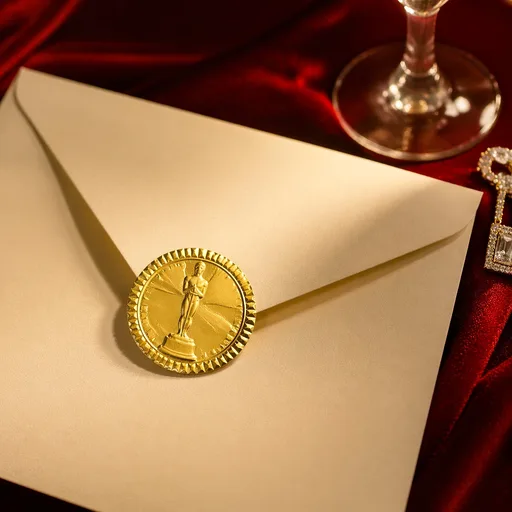
奥斯卡匿名选票背后的博弈:在《罪人》与《一场接一场的战斗》之间
Sinners Faces One Battle After Another at Oscars
About this story
Inside Oscar anonymous ballots — Coogler's Sinners vs Anderson's One Battle After Another, with DiCaprio in play. HSK 5-6 Chinese listening practice.
This is an HSK 5-6 Chinese listening episode that runs about 8 minutes. The full Mandarin script is shown with tap-for-pinyin and a line-by-line English translation, so you can listen and read at once — comprehensible input in the sense of Stephen Krashen's i+1 theory. It teaches 15 key vocabulary words such as 尘埃落定、沉默、仪式 and walks through 5 grammar patterns, each explained in English with examples. The same news story is retold at 4 difficulty levels — use the level selector above to find the version that is challenging but still understandable for you.
Read at your level
原文Read the complete story in Chinese. Reveal pinyin and English only when you need them.
English transcript reference
As the final voting window for the Oscars slowly closes, anyone telling you the dust has settled is probably lying.
At this most clamorous moment in the vanity fair, what truly determines fate are often those silent moments—envelopes sealed, ballots cast. And this season's anonymous ballots have once again become the best window into Hollywood's collective subconscious.
At this time of year, the anonymous ballot is not just a ritual, but more like a truth-telling session; it strips away the red carpet pleasantries and PR jargon, nakedly revealing the judges' true mindset of distinct love and hate.
This year's battle is particularly deadlocked, even presenting a near-suffocating sense of oppression. All focus has converged on two distinct works: Ryan Coogler's vampire drama "Sinners",
and Paul Thomas Anderson's cool and restrained political thriller "Battle After Battle".
The dominance of these two films on the ballots is so strong that in the Best Picture race, we can hardly find a third viable competitor; they are like black holes, swallowing the discussion space of the entire season.
However, what is most intriguing is not the merits of the films themselves, but the subtle psychology displayed by the judges when facing them.
In multiple exposed anonymous ballots, a peculiar "split voting" pattern is spreading: many judges are convinced that "Battle After Battle" will win Best Picture, so they cast their votes for "Sinners".
This mindset is very much like the 2021 season, when everyone thought Chadwick Boseman would win without suspense, but the votes quietly flowed to Anthony Hopkins.
This is a choice based on "instinct" and "purity." The judges seem to be using their votes to balance their presupposed "consensus," and this psychological game,
is highly likely to allow Ryan Coogler to pull off an upset in the Best Director race against Paul Thomas Anderson, who swept the precursor awards.
Speaking of the Best Actor race, the situation appears even more confusing, arguably the most elusive battlefield this year.
Michael B. Jordan, relying on his explosive performance in "Sinners", is experiencing a massive surge in support, highly likely to make a run for his first gold statue.
But he is not sitting pretty; Leonardo DiCaprio's performance in "Battle After Battle" remains steady, and Ethan Hawke's interpretation in "Blue Moon" has also become a key variable stirring up the situation.
Interestingly, although Timothée Chalamet and Wagner Moura are still within the scope of discussion, in the sample of anonymous ballots, their support does not seem as firm as expected,
instead, those veteran actors viewed as "spoilers" are secretly carving up the votes.
Let's turn our gaze to the supporting categories, where a "last-minute rescue" drama is playing out.
In the final 48 hours before voting closed, Sean Penn's support suddenly skyrocketed thanks to his performance in "Battle After Battle", breaking the situation where Delroy Lindo had once been leading.
This phenomenon of exertion in the final stretch is often closely related to the judges' viewing habits.
The new rules implemented by the Academy this year require judges to watch all nominated films in a category before voting. While this mechanism delayed the voting time to some extent, it also forced many judges to binge-watch those overlooked masterpieces at the last minute.
This is also why films like "Hamlet" suddenly gained attention at the tail end of voting, and Jessie Buckley's acclaim in the Best Actress category rose with the tide.
Meanwhile, the Best Supporting Actress category presents a distribution trend of great sociological significance.
Amy Madigan, relying on geographical advantage and the backing of guild awards, possesses a solid base among local Los Angeles judges.
But Wunmi Mosaku's performance in "Sinners" has demonstrated astonishing cross-demographic appeal.
She has not only locked in the die-hard supporters of "Sinners" but has even absorbed a large number of votes from the "Battle After Battle" camp—this kind of performance that can simultaneously move judges from two opposing camps is often a precursor to winning.
Of course, the Oscars are never just a contest of actors, but a peak duel of film industrial craftsmanship.
In the technical categories, "Frankenstein" relies on its unique visual aesthetics and seems to have locked up three awards: Best Production Design, Costume Design, and Makeup and Hairstyling,
as the Gothic aesthetic it created left an indelible impression on the judges.
In the cinematography category, the competition appears even more white-hot.
"The Train's Dream" represents pure cinematographic skill, with Adolpho Veloso's visual language being breathtaking; but "Sinners" cinematographer Autumn Durald Arkapaw is equally hopeful to create history, becoming the first female winner of this award.
It is worth noting that although "Battle After Battle" gained some ground at the BAFTAs and the ASC Awards, it did not show absolute dominance in the early anonymous ballots, only showing signs of a rebound at the very last moment,
which foreshadows that the answer to this award will highly likely not be revealed until the night of the ceremony.
Through these anonymous ballots, we can also read a deeper emotion: the definition of "what is a good movie" within Hollywood is tearing apart.
Some judges revere "Sinners", believing it gives people a reason to return to the cinema, viewing it as a dual feast of emotion and senses.
As for "Battle After Battle", evaluations present an extreme polarization: some hail it as the only masterwork worth remembering in the next twenty years,
while others unceremoniously criticize it as "the most offensive film to the Black community since 'Green Book',"
and even bluntly express aesthetic fatigue regarding Paul Thomas Anderson's works.
This attitude of distinct love and hate is precisely the most charming and cruel part of the Oscars.
One judge even wrote in the ballot comments: "Hollywood people are too afraid to tell the truth. Whether reporters or critics, no one dares to stand up and say Anderson's movie actually isn't that great—just because he made 'Boogie Nights'?"
This venting of emotion is perhaps the greatest value of the anonymous ballots' existence—it tears open the industry's facade of harmony, revealing the real game surging in the undercurrents.
Finally, when we examine the film "Sinners", a startling possibility is surfacing.
In all anonymous ballot samples, this film has almost never fallen out of the top two in every category it is nominated in.
This astonishing stability is often more lethal than leading in a single category.
Although many think this is just emotional bias, data doesn't lie. If this trend is representative among the entire Academy membership, then we are highly likely to witness history.
There exists such a script: "Sinners" will not only win, but win thoroughly, possibly even surpassing the record of 11 awards held by "The Lord of the Rings: The Return of the King", "Titanic", and "Ben-Hur", becoming the most awarded film in Oscar history.
Of course, this sounds like a crazy prediction, but before the envelopes are opened, in this dream-making machine of Hollywood, nothing is impossible.
After all, when all rational analysis is exhausted, what remains is luck, timing, and that little bit of unspeakable zeitgeist.
Listen again
Try it without the transcript and notice what sounds clearer.
What vocabulary does this episode teach?
词汇Idiom meaning a situation has been finalized or concluded.
Common adjective/noun for silence or being uncommunicative.
Noun referring to a formal ceremony or rite.
Adjective describing something ruthless or harsh.
Refers to rationality or reason, as opposed to emotion.
Common noun for luck or fortune.
HSK 1-4. society.
HSK 1-4. politics.
Describes a noisy and restless environment, often used in literary contexts.
Psychological term referring to the subconscious mind.
Often used to describe a competition or battle where neither side is winning (stuck together like glue).
Idiom describing a situation that is intricate and hard to figure out.
Someone who disrupts a situation or game; specifically in elections/competitions, a candidate who ruins the chances of a frontrunner.
Used to describe a competition or conflict reaching its most intense stage.
Idiom meaning to speak one's mind without holding back.
* beyond level超纲词
What grammar patterns appear in this episode?
语法A structure used to negate one statement and affirm another (Not... but rather...).
最耐人寻味的并非这两部电影本身的优劣,而是评委们在面对它们时展现出的微妙心理。
但他并非高枕无忧,莱昂纳多·迪卡普里奥在《一场接一场的战斗》中的表现依然稳健。
Correlative conjunctions meaning 'so... that...' indicating a result or extent.
这两部电影在选票上的统治力是如此之强,以至于在最佳影片的角逐中,我们甚至很难找到第三个有力的竞争者。
Progressive relationship meaning 'not only... but even more...'.
匿名选票不仅是一种仪式,更像是一场坦白局。
奥斯卡从来不仅仅是演员的较量,更是电影工业技艺的巅峰对决。
The 'Ba' construction used to indicate shifting focus or direction (Let us turn [object] to [direction]).
让我们把目光转向配角单元。
Used to express 'even' to emphasize an extreme case.
甚至可以说呈现出一种近乎窒息的压迫感。
甚至有评委在选票评语中写道……
Proper nouns
专有名词Sources
来源Free account
Keep learning from this story
Create a free account to keep saved words and your preferred level together.
- Keep words with their story context
- Remember your preferred level
- Build your vocabulary over time