
A Chinese podcast · Same story, 4 levels
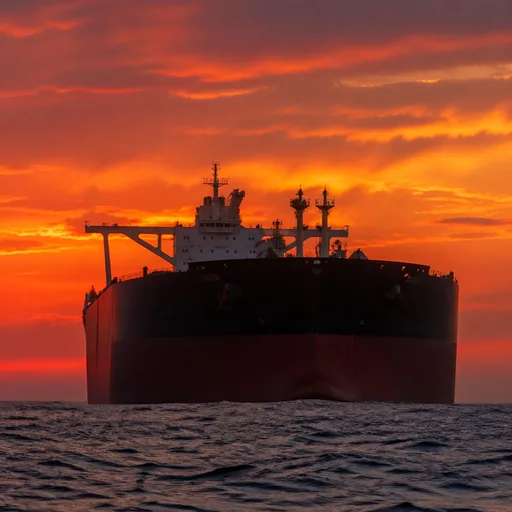
霍尔木兹海峡关了以后:一场蔓延中的经济冲击
Iran–Israel War Shakes Global Markets
About this story
Iran closes the Strait of Hormuz amid war with Israel — S&P 500 drops, inflation fears and US recession risk spike. HSK 5-6 Chinese listening practice.
This is an HSK 5-6 Chinese listening episode that runs about 8 minutes. The full Mandarin script is shown with tap-for-pinyin and a line-by-line English translation, so you can listen and read at once — comprehensible input in the sense of Stephen Krashen's i+1 theory. It teaches 13 key vocabulary words such as 恐慌、基础设施、通胀 and walks through 6 grammar patterns, each explained in English with examples. The same news story is retold at 4 difficulty levels — use the level selector above to find the version that is challenging but still understandable for you.
Read at your level
原文Read the complete story in Chinese. Reveal pinyin and English only when you need them.
English transcript reference
The global financial markets of March 2026 are pervaded by a sense of panic not felt in a long time.
The S&P 500 fell nearly seven percent in a single month, marking the largest monthly decline since 2022.
The Dow Jones plunged nearly eight hundred points in a single trading day, officially entering technical correction territory.
Brent crude surged from eighty-one dollars per barrel to one hundred and six dollars, a one-month increase of over thirty percent.
The source of all this points to one geographic coordinate: the Strait of Hormuz.
The starting point was February twenty-eighth.
The United States and Israel launched military strikes against Iran's energy infrastructure.
Targets included refining facilities, oil pipelines, and critical port infrastructure.
Iran's response was swift and firm.
On March fourth, Iran's Revolutionary Guard announced the closure of the Strait of Hormuz.
The statement left no room for ambiguity: any vessel attempting to pass through the waterway would face a severe response.
The weight of this decision is measured not by language, but by numbers.
Approximately twenty percent of the world's oil supply and significant volumes of LNG transportation pass through this strait.
Overnight, these supply chains were severed.
For markets, this was the equivalent of cutting into the main artery of global energy supply.
The market's reaction was immediate and violent.
Oil prices broke through one hundred twenty dollars per barrel within days of the strait's closure.
Although they pulled back somewhat afterward, prices remained above one hundred dollars through the end of March.
Strategists at Macquarie ran a scenario analysis.
If the military conflict continues through the end of June, Brent crude could reach two hundred dollars per barrel.
What does two hundred dollars a barrel mean?
It means the global economy would face the most severe energy shock since the oil crisis of the 1970s.
That crisis directly rewrote the landscape of the world economy.
The scale of this shock could be comparable.
The transmission chain of high oil prices is clear and nearly impossible to escape.
Rising transportation costs directly push up prices of consumer goods at the endpoint.
From food on supermarket shelves to gasoline at the pump, price increases are across the board.
The aviation industry bears the brunt, with fuel accounting for roughly thirty percent of airline operating costs.
When oil prices rise thirty percent, ticket prices inevitably follow.
Logistics and manufacturing are similarly under pressure, with profit margins drastically compressed.
For economies heavily dependent on oil imports, the situation is even more severe.
China, Japan, South Korea, India — the world's largest oil importers are all directly exposed to this shock.
Trade deficits widen, currency depreciation pressures rise, and imported inflation risk intensifies.
This is an economic pain felt simultaneously across the globe.
Inflationary pressure is rising in sync worldwide, and central banks face nearly identical dilemmas.
The Federal Reserve's position is particularly awkward.
Cutting rates could boost economic growth, but against a backdrop of high oil prices, rate cuts would add fuel to inflation.
Raising rates could suppress prices, but with the US economy already showing signs of slowing, further hikes could push the economy into recession.
In economics, this situation of simultaneous stagnation and inflation is called stagflation.
Stagflation is every central banker's nightmare, because conventional monetary policy tools are rendered almost entirely ineffective.
The domestic political situation in the US is injecting additional uncertainty into markets.
The federal government remains shut down, with hundreds of thousands of federal employees going weeks without pay.
TSA security officers report to work every day, but their bank accounts show no deposits.
The absurdity of this picture needs no rhetorical embellishment.
A government that cannot pay its own employees naturally has its governing capacity questioned by markets.
Trump's deadline is April sixth, demanding Iran reopen the strait before then.
But from the current state of affairs, Iran shows no signs of concession.
The Revolutionary Guard's position is explicit: the strait closure is a direct response to the military strikes, and unless the threat is removed, it will not reopen.
From a game theory perspective, both sides believe that yielding first equals showing weakness.
This means the deadlock will very likely persist beyond April sixth.
At that point, Trump faces two options: either escalate military action to force the strait open, or accept the status quo and seek diplomatic mediation.
Neither option is good news for markets in the short term.
For ordinary people, the most important thing right now is understanding a fundamental reality.
This is not a routine market adjustment, nor is it cyclical economic fluctuation.
This is a textbook case of geopolitical risk directly converting into economic shock.
The trajectory of oil prices depends on when the strait reopens.
And when the strait reopens depends on the military and diplomatic standoff between Washington and Tehran.
This core variable is not in any company's earnings report, nor in any central bank's policy statement.
It's on the waters of the Middle East, within missile range, within the political calculations of two nations' leaders.
And its impact has already tangibly seeped into every person's daily life.
The number you see every time you visit the gas station, the total on your supermarket receipt.
Both silently record the impact of this distant Middle Eastern war on your life.
From a historical perspective, energy crises have never been merely economic events.
The 1973 oil embargo directly altered the trajectory of the global automotive industry.
Japan's small-displacement cars rose to prominence as a result, while America's muscle cars gradually exited the mainstream.
The 1979 Iranian Revolution's oil price spike became the final straw that broke the American economy.
Every energy shock reshapes industrial landscapes, and this time will be no exception.
For the new energy and electric vehicle industries, high oil prices could actually become a catalyst for accelerated development.
As conventional fuel becomes increasingly expensive, the economic appeal of alternatives grows stronger.
But this structural transformation takes time, while the pain right now is immediate.
For most people, all they can do now is follow how events unfold.
The direction of this crisis is determined not by economic principles, but by geopolitical maneuvering.
And geopolitics never plays by the textbook.
It's worth noting that this crisis has exposed more than just the fragility of energy supply.
It has also revealed the severe inadequacy of global financial systems in pricing geopolitical risk.
In peacetime, markets tend to discount geopolitical factors.
Analysts focus on earnings, interest rates, and inflation data — few seriously model the scenario of a strait being closed.
But reality has taught everyone a lesson.
When political risk transforms from hypothesis to reality, market reactions come faster and harder than anyone expected.
For China, this crisis carries equally profound warnings.
China is the world's largest oil importer.
A significant proportion of daily crude imports pass through the Strait of Hormuz.
If the strait remains closed long-term, China's energy security will face a severe test.
This is precisely why China has been pushing for diversification of its energy structure.
Developing new energy, expanding strategic petroleum reserves, opening alternative transportation routes.
These preparations may have seemed overly cautious during peacetime.
But under today's circumstances, their strategic value has become extraordinarily clear.
Listen again
Try it without the transcript and notice what sounds clearer.
What vocabulary does this episode teach?
词汇Widespread fear causing irrational behavior in markets.
Basic physical systems like roads, pipelines, and ports.
Rising prices that reduce purchasing power.
A period of economic decline.
HSK 1-4. percent.
HSK 1-4. economy.
HSK 1-4. politics.
To rise sharply and quickly. Oil prices surged.
The network of production and delivery of goods.
Simultaneous economic stagnation and inflation.
A situation where neither side can make progress.
Strategic interaction between competing parties.
Efforts to resolve a conflict through negotiation.
* beyond level超纲词
What grammar patterns appear in this episode?
语法Proper nouns
专有名词Sources
来源Free account
Keep learning from this story
Create a free account to keep saved words and your preferred level together.
- Keep words with their story context
- Remember your preferred level
- Build your vocabulary over time