
A Chinese podcast · Same story, 4 levels
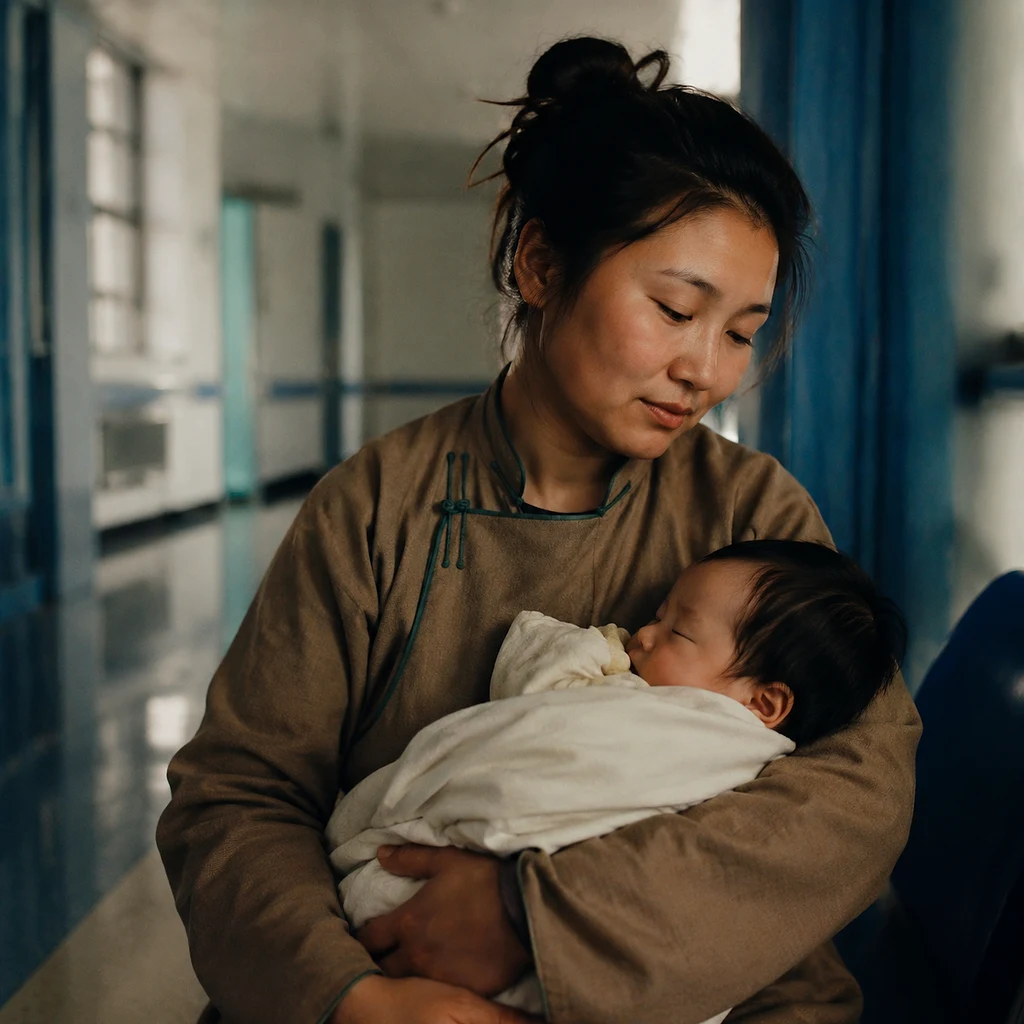
小宝宝去中国看病
Mongolian Baby Saved at Shanghai Renji Hospital
About this story
A simple story — Mongolian baby Shaba, the family's trip to Shanghai's Renji Hospital, and the kind doctors. HSK 1 Chinese listening practice.
This is an HSK 1 Chinese listening episode that runs about 5 minutes. The full Mandarin script is shown with tap-for-pinyin and a line-by-line English translation, so you can listen and read at once — comprehensible input in the sense of Stephen Krashen's i+1 theory. It teaches 16 key vocabulary words such as 医院、医生、身体 and walks through 6 grammar patterns, each explained in English with examples. The same news story is retold at 4 difficulty levels — use the level selector above to find the version that is challenging but still understandable for you.
Read at your level
原文Read the complete story in Chinese. Reveal pinyin and English only when you need them.
English transcript reference
Next, I will tell a story about a little baby.
This story is true.
There is a little baby in the story.
He is a boy.
His name is Shaba.
Shaba was just born.
He is only a few days old.
He is very small.
His hands are very small.
His feet are also very small.
Dad and Mom love him very much.
Seeing the baby, Dad is very happy.
Seeing the baby, Mom is also very happy.
However, there is a big problem.
The baby is sick.
The baby's health is not good.
He does not eat things.
He does not drink milk.
He is always sleeping.
His face is yellow.
His eyes are also yellow.
His belly is very big.
This is a very bad illness.
Dad and Mom are very anxious.
They do not want the baby to be sick.
They want the baby to get better.
They take the baby to the hospital.
This is a hospital in their country.
The doctor looked at the baby.
The doctor looked at the baby's belly.
The doctor looked at the baby's face.
The doctor was not happy.
The doctor said: "I am sorry."
The doctor said: "This illness is very serious."
The doctor said: "The baby is too small."
The doctor said: "We cannot do it."
Dad and Mom heard this and were very sad.
Mom cried.
Dad also wanted to cry.
What should be done?
The doctor said: "You go to China."
The doctor said: "China has big hospitals."
The doctor said: "China's doctors are very good."
The doctor said: "Go to Shanghai."
Shanghai is a big city.
Shanghai has many good doctors.
Dad and Mom said: "Okay."
Dad and Mom said: "We will go to China."
They quickly bought tickets.
They took a plane to China.
The plane flew very fast.
The plane flew in the sky.
They arrived in Shanghai.
Shanghai is very big.
Shanghai is very beautiful.
They went to Renji Hospital.
This is a very big hospital.
There are many people in the hospital.
There are many doctors in the hospital.
The doctor saw the baby.
The doctor examined the baby's illness.
The doctor said: "We can do it."
The doctor said: "We can save the baby."
Dad and Mom were very happy.
The doctor said: "But, the baby needs a new liver."
The liver is a part inside the body.
The liver is in the belly.
The baby's liver is broken.
The baby needs a good liver.
Who has a good liver?
The doctor looked at Dad.
The doctor looked at Mom.
The doctor said: "Dad can."
Dad is an adult.
Dad's health is very good.
Dad said: "I can."
Dad said: "I love my son."
Dad said: "I want to save him."
The doctor said: "Good."
The doctor started doing the surgery.
Surgery is the doctor doing work.
The doctor needs to give Dad's liver to the baby.
This is a little bit of liver.
This is something inside Dad's body.
The surgery took a long time.
The surgery lasted for six hours.
These six hours were very slow.
Mom waited outside.
Mom did not eat.
Mom did not drink water.
Mom was thinking about the baby.
Mom was thinking about Dad.
Six hours passed.
The doctor came out.
The doctor was very happy.
The doctor said: "It is done."
The doctor said: "The surgery is finished."
The doctor said: "The baby is fine now."
Everyone was very happy.
A few days passed.
The baby woke up.
The baby's face was not yellow anymore.
The baby's eyes were not yellow anymore.
The baby's belly was not big anymore.
The baby started drinking milk.
The baby looked at Mom and smiled.
Mom said: "The baby is really beautiful."
Dad also got better.
Dad's health is also very good.
This matter cost a lot of money.
This cost two hundred thousand yuan.
This is a lot of money.
Dad and Mom did not have this much money.
But, they have friends.
Friends gave money.
Many people helped.
Now, the baby is very healthy.
The baby went home.
What is this story about?
This story is about "seeing a doctor".
The baby in this story is Mongolian.
He is not Chinese.
But he came to China to see a doctor.
This is called "medical tourism".
Many foreigners come to China.
They come to China to see doctors.
Because China's hospitals are good.
Because China's doctors are fast.
Because China's medicine is not expensive.
Now, more and more foreigners come to China to see doctors.
Listen again
Try it without the transcript and notice what sounds clearer.
What vocabulary does this episode teach?
词汇A medical facility. Common pattern: 去医院 (go to the hospital).
A medical professional. Measure word is usually 个 (gè) or 位 (wèi) for respect.
Can refer to the physical body or one's general health condition (e.g., 身体很好).
Verb-object compound meaning to fall ill.
Substance for treating illness. Common verb: 吃药 (to take medicine).
Body part. Measure word is 双 (shuāng) for a pair or 只 (zhī) for one.
To travel for pleasure.
Opposite of 哭 (kū - to cry).
Common body part word, often used when talking about hunger or stomach aches.
Body part. Measure word is 张 (zhāng).
Opposite of 笑 (xiào - to smile/laugh).
Medical procedure. Common verb: 做手术 (to perform/undergo surgery).
An internal organ. Specific medical vocabulary.
To help someone out of danger or a life-threatening situation.
To regain consciousness or wake from sleep.
Formal term for medical care, used in phrases like 医疗旅游 (medical tourism).
* beyond level超纲词
What grammar patterns appear in this episode?
语法Expresses existence (there is/are). It indicates that something exists in a specific location.
故事里有一个小宝宝 (There is a little baby in the story)
中国有大医院 (China has big hospitals)
医院里有很多人 (There are many people in the hospital)
The particle 'le' indicates a completed action or a change of state (something has happened or become the case).
宝宝生病了 (The baby got sick)
妈妈哭了 (Mom cried)
宝宝醒了 (The baby woke up)
The 'Ba' construction is used to emphasize how the subject handles or disposes of the object.
医生要把爸爸的肝给宝宝 (The doctor needs to take Dad's liver and give it to the baby)
Used to introduce a cause or reason (Because...).
因为中国的医院好 (Because China's hospitals are good)
因为中国的医生快 (Because China's doctors are fast)
Indicates how long an action lasted. The time phrase comes after the verb.
手术做了六个小时 (The surgery lasted for six hours)
Proper nouns
专有名词Sources
来源Free account
Keep learning from this story
Create a free account to keep saved words and your preferred level together.
- Keep words with their story context
- Remember your preferred level
- Build your vocabulary over time