Dali Travel Guide: Erhai Lake, Old Town, Cangshan
Updated
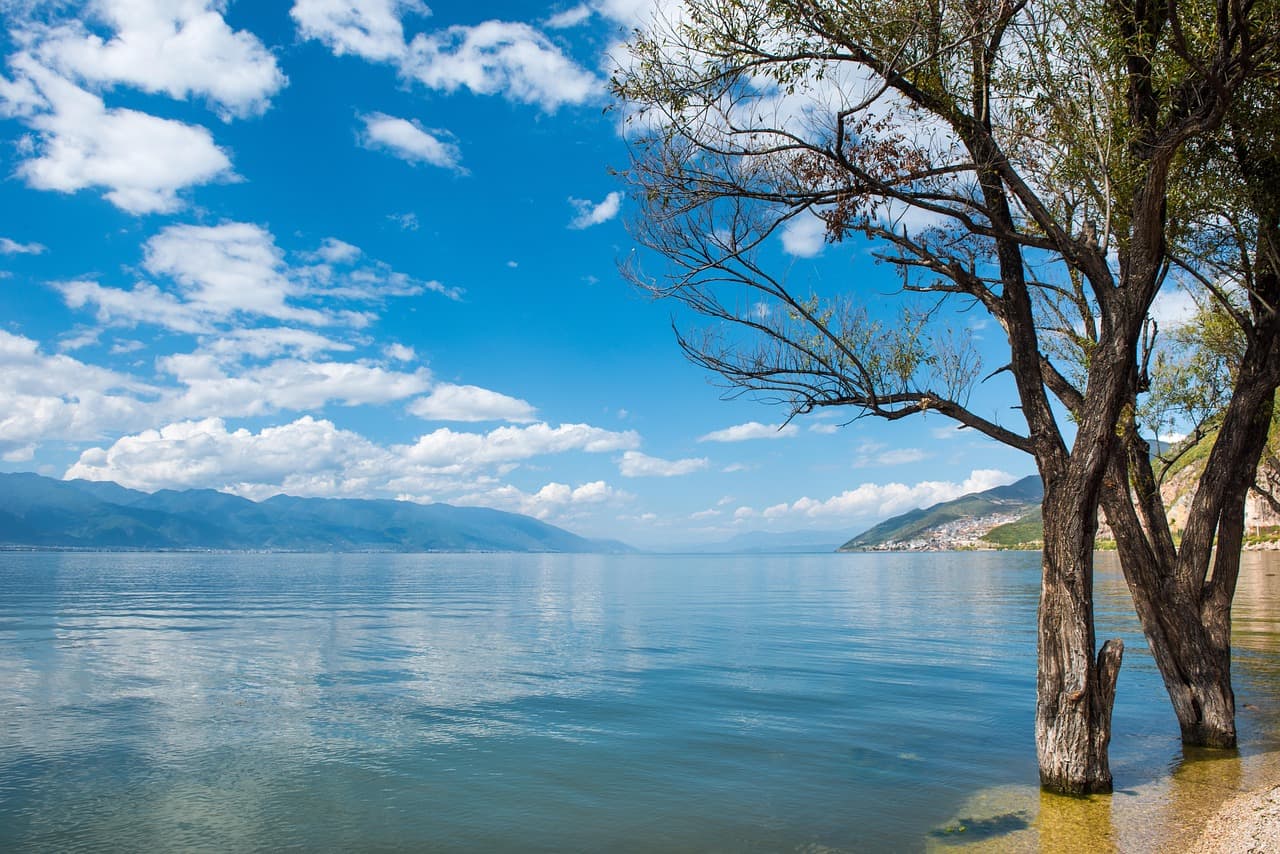
Dali is a strip of flat land in Yunnan province between a 4,000-metre mountain range and a lake 40 km long. Day one, you rent an electric scooter and ride the car-free path along the shore.
There is a short audio story about Dali in Mandarin, with English alongside. No Chinese needed for the beginner version. Jump to the storyA short history of Dali
For five hundred years Dali was a capital. The Nanzhao kingdom ruled much of Yunnan from here in the 700s and 800s, strong enough to fight the Tang, the Chinese empire of the day, to a standstill. The Dali kingdom followed until the Mongols took it in 1253. The Three Pagodas are what is left of that time.
The Bai, the people who have farmed around the lake for over a thousand years, still make up most of the countryside. Their houses have white walls, grey tiles and a painted screen wall facing the gate. In 2017 the government shut about 2,400 lakeside guesthouses and restaurants for over a year while it built sewers, because algae had choked the lake. The water is clearer now.
Erhai Lake
洱海 Ěrhǎi
Erhai is an ear-shaped lake 40 km long, the second largest in Yunnan, and the whole of Dali is arranged along its western shore. A paved path runs along that shore for about 46 km, closed to cars, with the mountains on one side, the water on the other and fishing villages in between.
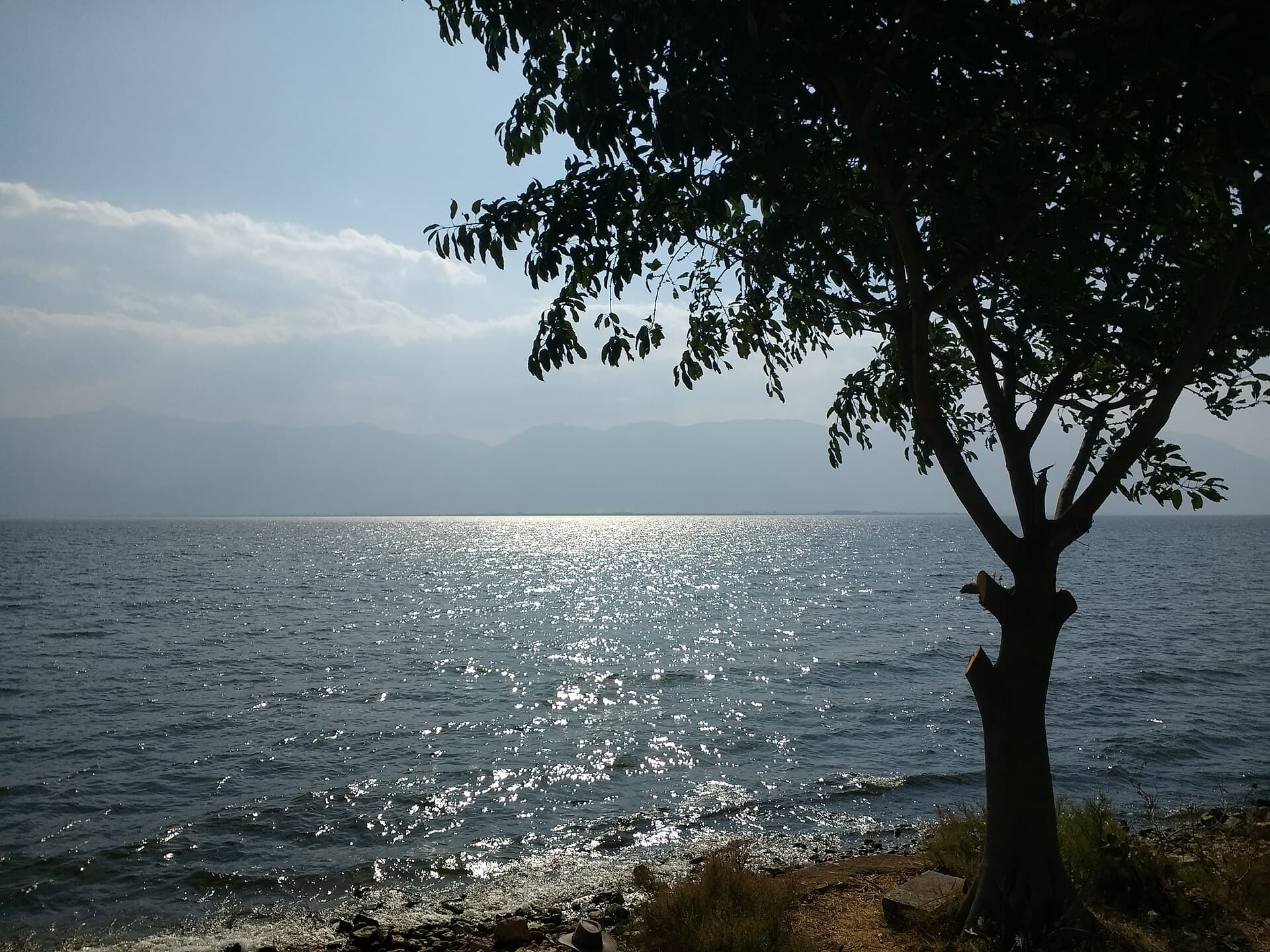
The way to see it is on two wheels. Ride north through the villages to Xizhou, about 20 km, or on round to Shuanglang on the far side. The full loop is around 120 km: a long day on a scooter, two days on a bike.
How to visit Erhai Lake
- 1
Rent a scooter in the old town
The lake path is free; there is nothing to book. Scooter shops in the old town and at Caicun rent on the spot for a passport or a cash deposit (leave cash; hotels need the passport). They rarely ask for a licence.
- 2
Check the battery, then ride the path
Ask for two batteries if you want the whole loop. Stay on the lakeside path, not the highway. Bring sunscreen; the light at 2,000 metres is strong.
- 3
Stop in Xizhou
Twenty kilometres up the shore, lunch in Xizhou: a baba flatbread from the square, a walk through the Bai courtyards, three-course tea if you find a house doing it.
- 4
Sunset from the east
From Shuanglang, on the east shore, the sun sets behind Cangshan across the whole lake. Sleep there or come by car; don’t ride back round the lake in the dark.
Swimming is not allowed, which is part of why the lake is clean again.
Things to do in Dali beyond the lake
The old town and the pagodas sit at the foot of the mountain. The cable cars go up it.
Dali Old Town 大理古城
Dàlǐ Gǔchéng

A walled Ming town from 1382, laid out on a grid, with the mountain at the west end of every street. Foreigner Street and Renmin Road are the busy ones, with cafés and live-music bars. The side streets still have vegetable markets. Walk the south gate and the wall in the morning; come back at night for the noise.
The Three Pagodas 崇圣寺三塔
Chóngshèng Sì Sāntǎ
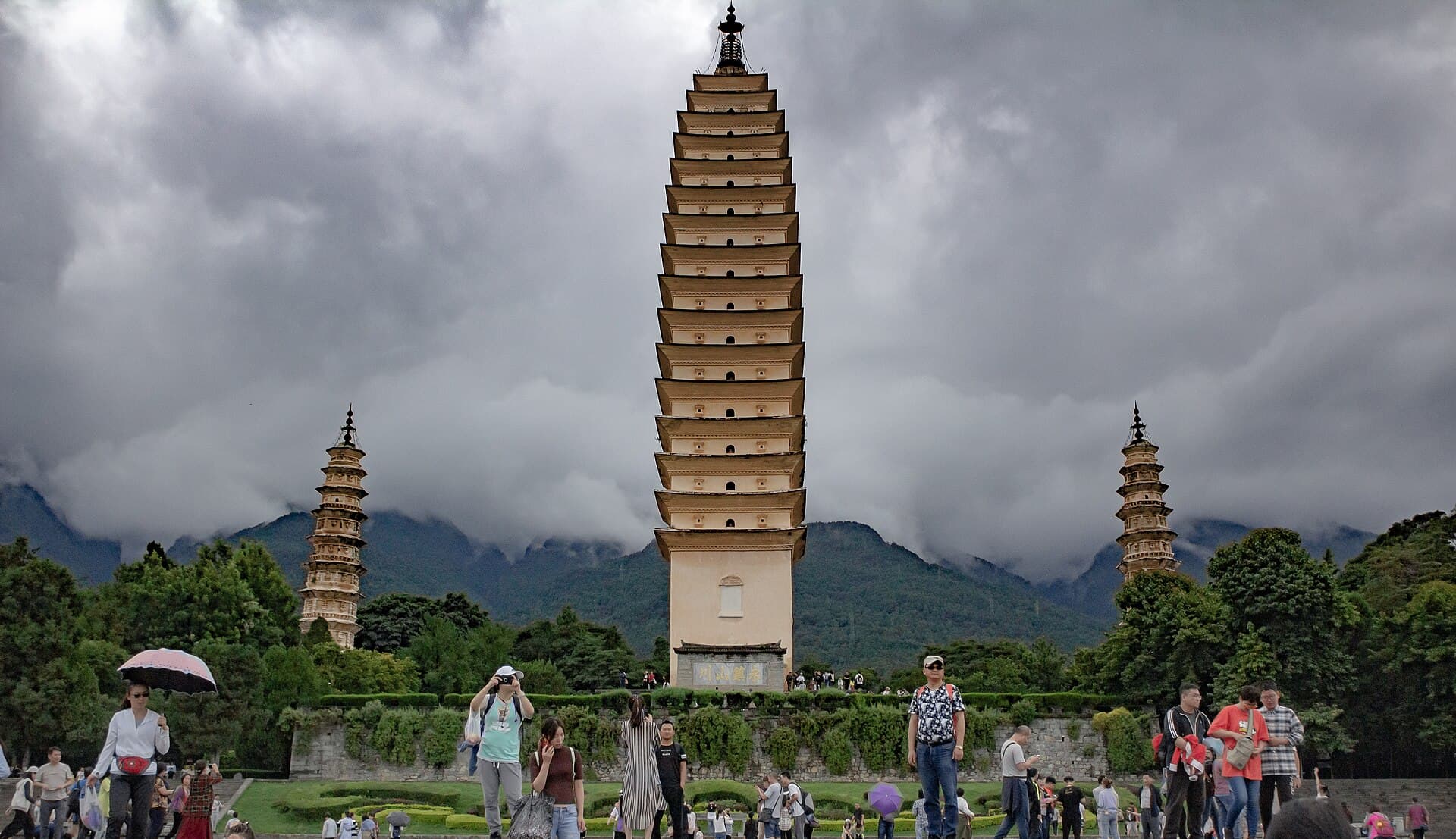
Just north of the old town. The big one, Qianxun, is 69 metres and about 1,200 years old, from the Nanzhao kingdom; the two smaller ones came some three centuries later, under the Dali kingdom. The temple behind them is a 2005 rebuild. The photo everyone takes is the reflection in the pool by the entrance, with the mountain behind.
Xizhou 喜洲
Xǐzhōu
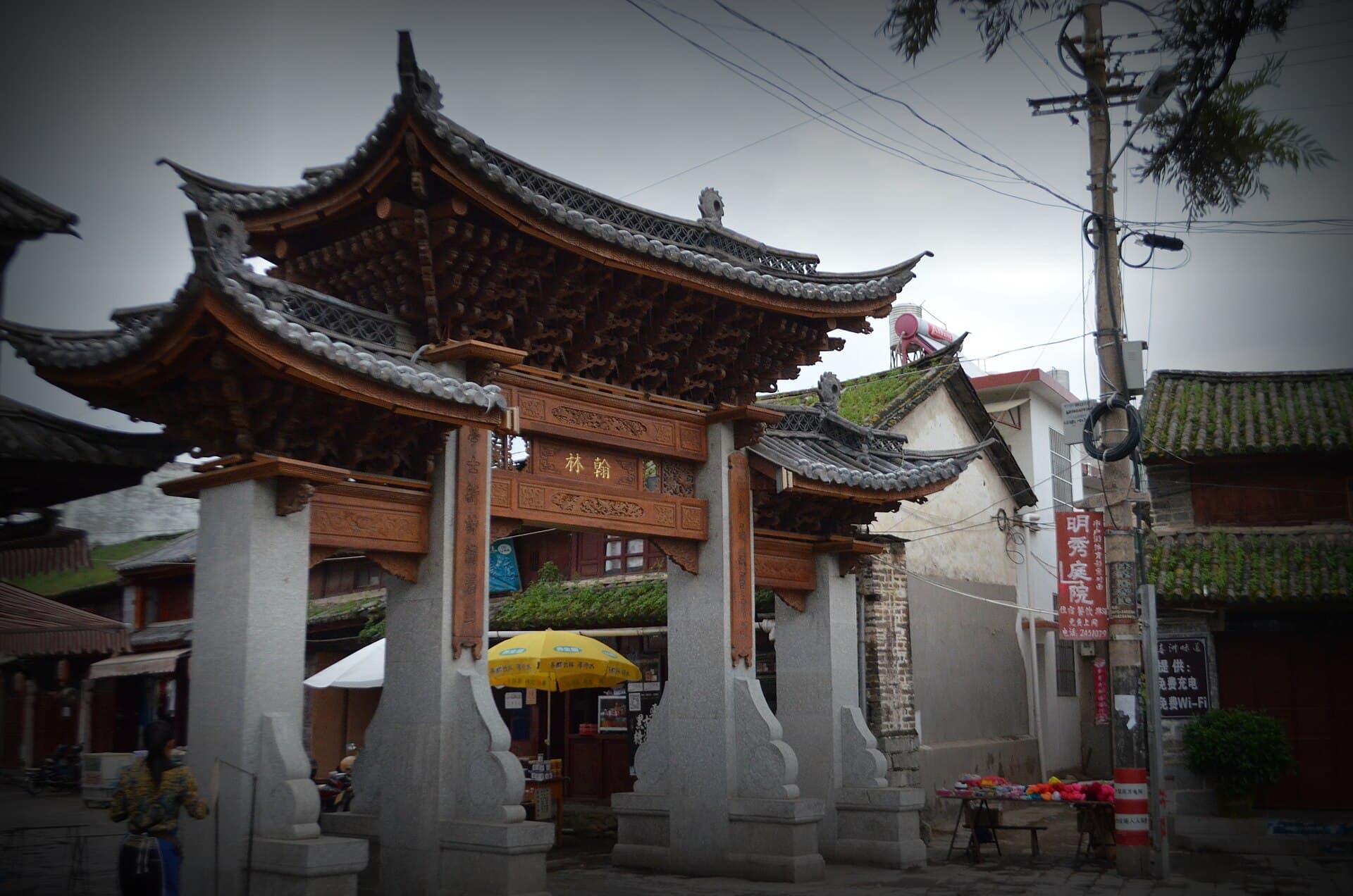
The best-preserved Bai town on the lake, 20 km north: painted gateways, courtyard mansions built by tea and cloth merchants, and a square where the baba flatbread is made on the spot. The Yan family compound is open to visit. Go in the morning, before the tour buses, or stay the night.
Cangshan 苍山
Cāngshān
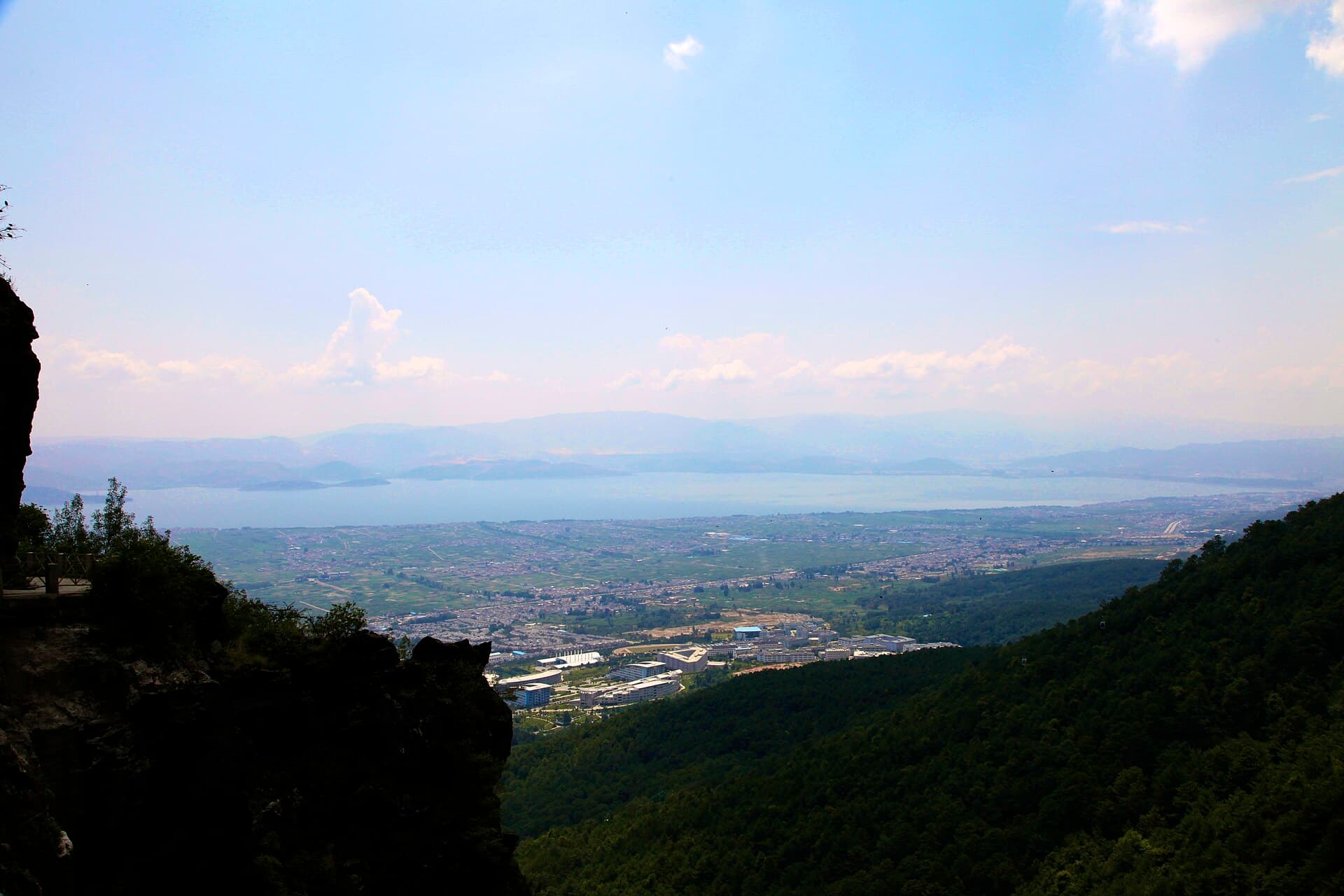
Nineteen peaks in a row above the town, the highest over 4,000 metres. Three cable cars go up; the Ximatan one goes highest, to about 3,900 metres near a small lake. From the middle station the Cloud Traveller’s Path runs level along the mountainside for about 11 km with the lake below the whole way. Take a jacket: at the top it can be ten degrees colder than town, and cloud rolls in fast.
What to eat in Dali
Xizhou baba 喜洲粑粑
Xǐzhōu bābā
A flatbread baked between two pans of charcoal, sweet with rose sugar or savoury with pork and spring onion. Eat it hot in Xizhou’s square.
Rushan 乳扇
rǔshàn
Bai cow’s-milk cheese stretched into thin fans and dried. Grilled on a stick with rose jam, or crumbled into three-course tea.
Three-course tea 三道茶
sāndàochá
A Bai welcome in three cups: a bitter roasted tea, a sweet one with brown sugar, walnuts and rushan, and a third with ginger, Sichuan pepper and honey. Bitter first, then sweet, then the aftertaste. UNESCO listed it in 2022, as part of China’s tea customs.
Plan your trip to Dali
Best time to visit Dali
March to May is dry and green; October and November are clear after the rains. June to September brings short afternoon showers. Winter days are sunny, nights cold.
The Third Month Fair, a Bai market festival, falls in April or May; the Torch Festival in July or August.
Getting to Dali
Fast trains from Kunming take about two hours to Dali Station. The station is in Xiaguan, the modern city at the south end of the lake, and "Dali" on a ticket means Xiaguan. The old town is 18 km north: about an hour on bus 8, 40 minutes by taxi or Didi. When booking, check for 大理, not 大荔, a town in Shaanxi province.
Dali airport is about 30 km from the old town, 40 minutes to an hour by taxi. Direct flights from Chengdu take about an hour and a half.
Getting around Dali
You walk the old town and ride the lake. Didi works here, in English, with foreign cards. Taxis at the station and airport rarely use the meter; agree a price first.
Alipay and WeChat Pay, both linked to a foreign card, are taken almost everywhere; carry small notes for baba stalls. Village menus in Xizhou are usually Chinese only, so point.
Where to stay in Dali
The old town has the most guesthouses, food and scooter shops, but Renmin Road is loud at night; pick a side street. Caicun, on the shore below, is quieter and on the path. Xizhou gets you the Bai town before the buses. Shuanglang, across the lake, is for the sunset.
Dali in three days
- Day 1. The old town wall and south gate in the morning, the Three Pagodas in the afternoon, Renmin Road at night.
- Day 2. Scooter north along the lake to Xizhou for baba and the Yan family compound, back before dark or stay the night.
- Day 3. Cable car up Cangshan and walk the Cloud Traveller’s Path, with a jacket.
Questions about visiting Dali
How do you get around Erhai Lake?
Rent an electric scooter or a bike; the western shore path is closed to cars. Old town to Xizhou is the easiest ride. Buses and taxis link the towns if you don’t want to ride back.
Is Dali high altitude?
About 2,000 metres, which most people don’t feel. The sun is stronger than you expect, and the Cangshan cable cars take you above 3,000 metres, where you will feel it.
Can you visit Dali without speaking Chinese?
Yes. The old town has seen foreign backpackers for decades, Didi and Alipay work in English, and scooter hire works by pointing. Beyond it, keep place names in Chinese on your phone.
How far is Dali from Lijiang?
About two hours by train, from Dali Station in Xiaguan. Most people do both, and Shangri-La beyond. Dali is the lower, warmer, more relaxed of the two.
When is the Third Month Fair in Dali?
It starts on the 15th day of the third lunar month and runs about a week, on the fairground west of the old town. In 2027 that is 21 April.
Chinese you’ll see in Dali
On tickets, bus fronts, rental shops and guesthouse doors.
The line under each word is pinyin, the Chinese sounds written in our alphabet. The marks over the vowels are tones; people will understand you without them at first.
- 大理Dàlǐ
- Dali
- 下关Xiàguān
- Xiaguan, the new city where the train stops
- 古城gǔchéng
- old town
- 洱海Ěrhǎi
- Erhai, "ear sea"; it is a lake
- 苍山Cāngshān
- Cangshan, the mountains
- 喜洲Xǐzhōu
- Xizhou, the Bai town
- 三塔sāntǎ
- the Three Pagodas
- 客栈kèzhàn
- guesthouse
- 电动车diàndòngchē
- electric scooter
- 索道suǒdào
- cable car
Want more? Browse Chinese vocabulary by level.
Hear Dali in Mandarin
Our audio story cycles round Erhai, drinks three-course tea in a Bai courtyard and asks who pays for a clean lake.
The story is Dali: A Thousand-Year Tea and Ten Days' Notice. It is told four ways, one for each level. Every version has a transcript with pinyin and English, so start with Beginner if you have no Chinese yet.