Guilin Travel Guide: Li River, Yangshuo, Longji Terraces
Updated
Four hours on a boat, 60 km of limestone hills either side, and at Xingping the exact view printed on the back of the 20-yuan note. You have seen Guilin before you arrive. The trick is to see it anyway.
There is a short audio story about Guilin in Mandarin, with English alongside. No Chinese needed for the beginner version. Jump to the storyA short history of Guilin
Three hundred million years ago this was a shallow sea. Its floor became limestone, the sea drained away, and rain, which is slightly acid, has been dissolving the rock ever since. What dissolved became the plains and the caves. What didn’t is the hills: hundreds of them standing alone, the landscape geologists call karst.
The line everyone quotes, “Guilin’s scenery is the finest under heaven”, was written in 1201 by an official at a banquet for eleven exam graduates. It was carved into a cliff, covered over by the same limestone dripping down it, and only cleaned off again in 1983.
The Li River
漓江 Lí Jiāng
The Li River runs 83 km from Guilin south to Yangshuo, and the stretch between is why the city is famous: hills on both banks one after another, water buffalo in the shallows, villages, bamboo, and now and then a fisherman with cormorants. The cruise boats board at piers outside the city and cover about 60 km of it in four hours, ending in Yangshuo. The best part, Yangdi to Xingping, is also done by motorised “bamboo” raft.
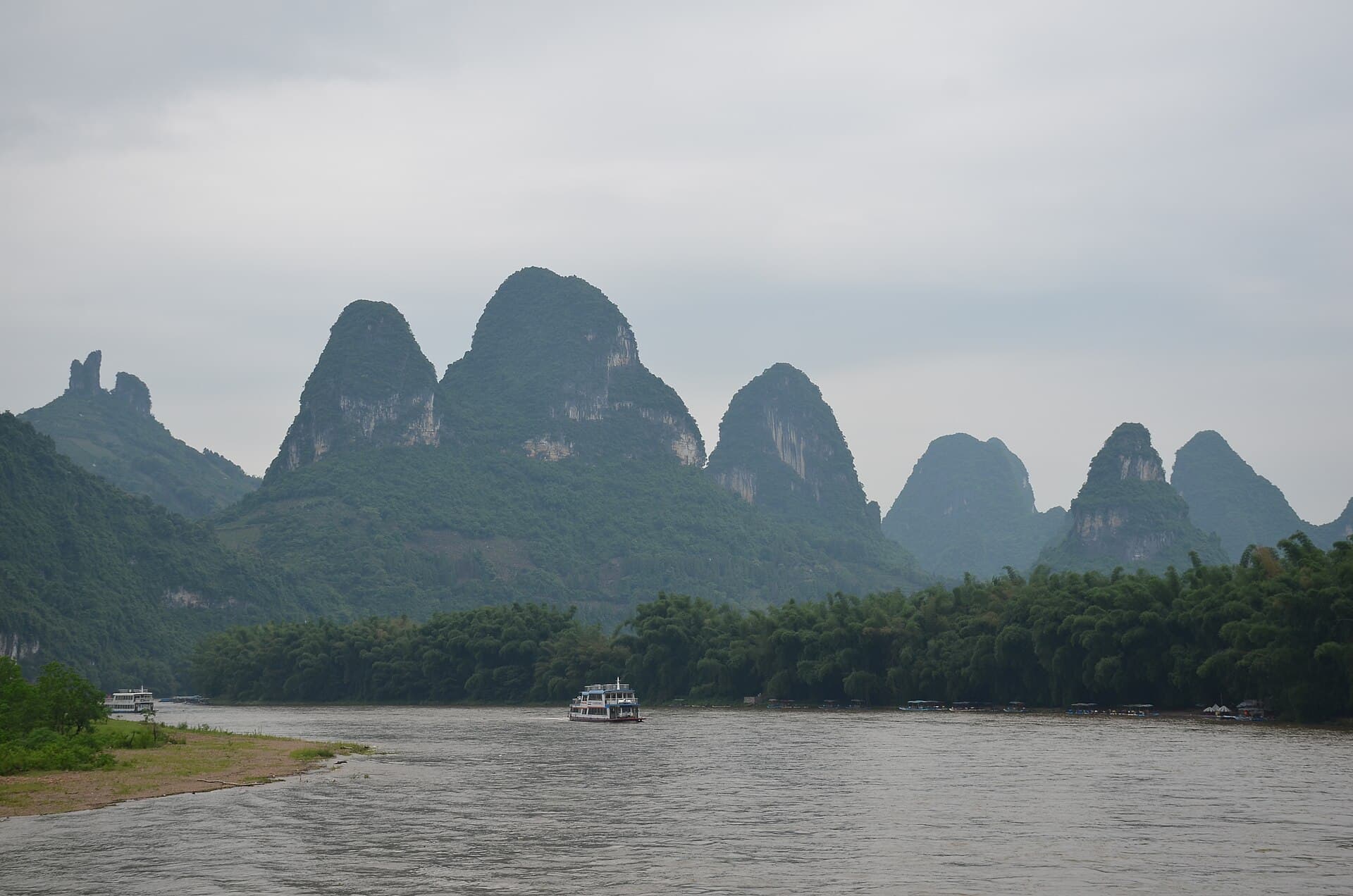
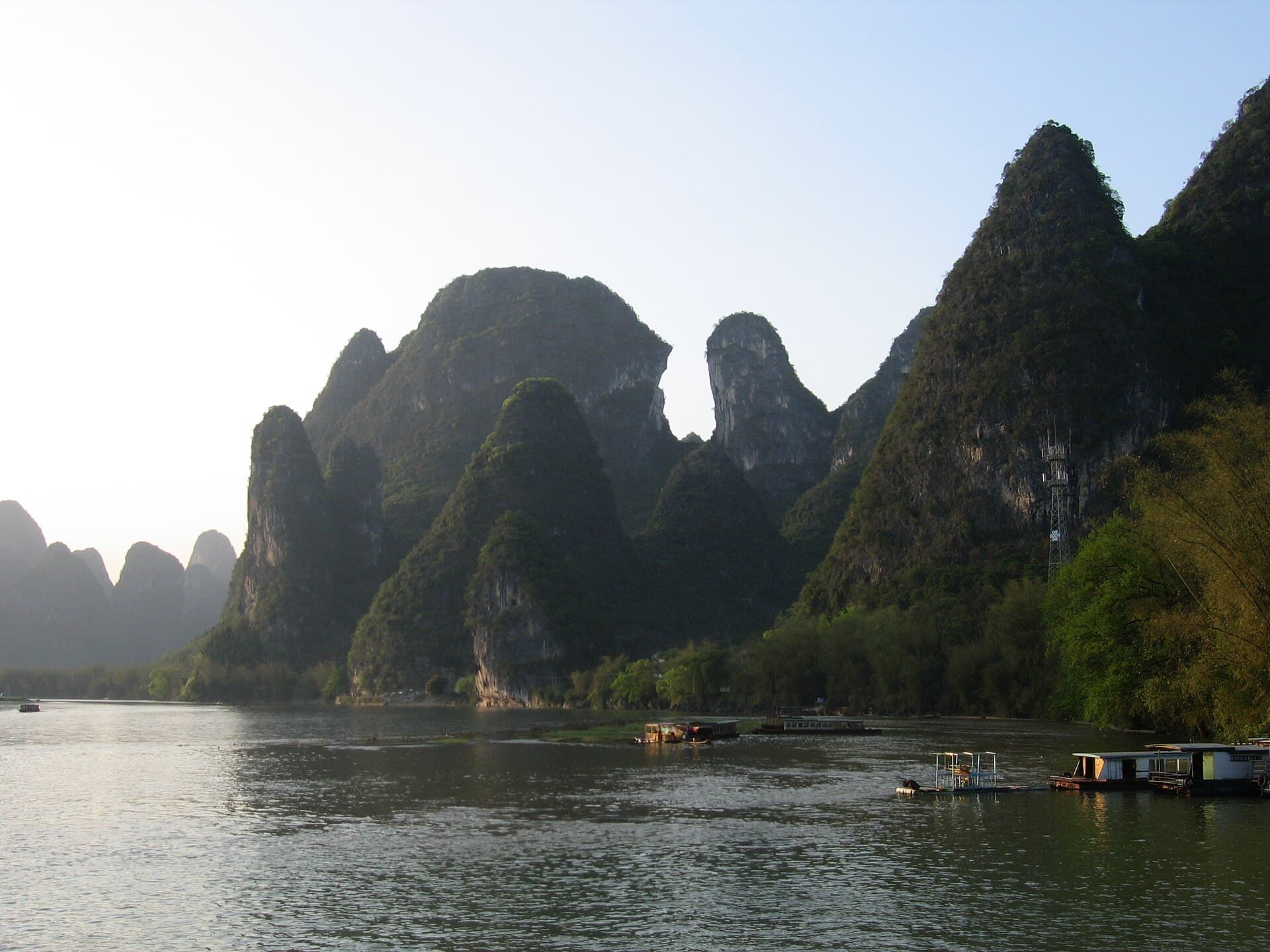
Xingping is where the view on the back of the 20-yuan note is. Everyone on the boat gets out a note and holds it up against the hills. Do it too. In mist the hills fade into each other in layers, which is when it looks most like the paintings.
How to visit the Li River
- 1
Book with your passport
Tickets are sold in your name. Trip.com sells the cruise and the Yangdi raft in English and takes a foreign card; the official WeChat ticket office is Chinese-only; your hotel can book too. Book a few days ahead, more around holidays, and bring the passport: it is checked at the pier.
- 2
Check your pier
Three-star boats leave from Mopanshan. Four-star boats, with a better lunch included, leave from Zhujiang. The piers are 6.5 km apart, both outside the city, so read the ticket. Morning departures mean better light.
- 3
Be on deck for the middle hour
The best hills, including Nine Horses Fresco Hill and the 20-yuan view, come in the second half. Don’t be inside for them.
- 4
Stay in Yangshuo
The boats end in Yangshuo. Don’t take the bus straight back. Sleep there and spend the next day on the Yulong River and in the fields.
Water levels change the trip. In a dry winter the big boats sometimes run a shorter route; the rafts run all year.
Things to do in Guilin beyond the river
Yangshuo is at the end of the cruise. Elephant Trunk Hill is in Guilin itself. Longji is a day to the north.
Yangshuo and the Yulong River 阳朔 · 遇龙河
Yángshuò · Yùlóng Hé
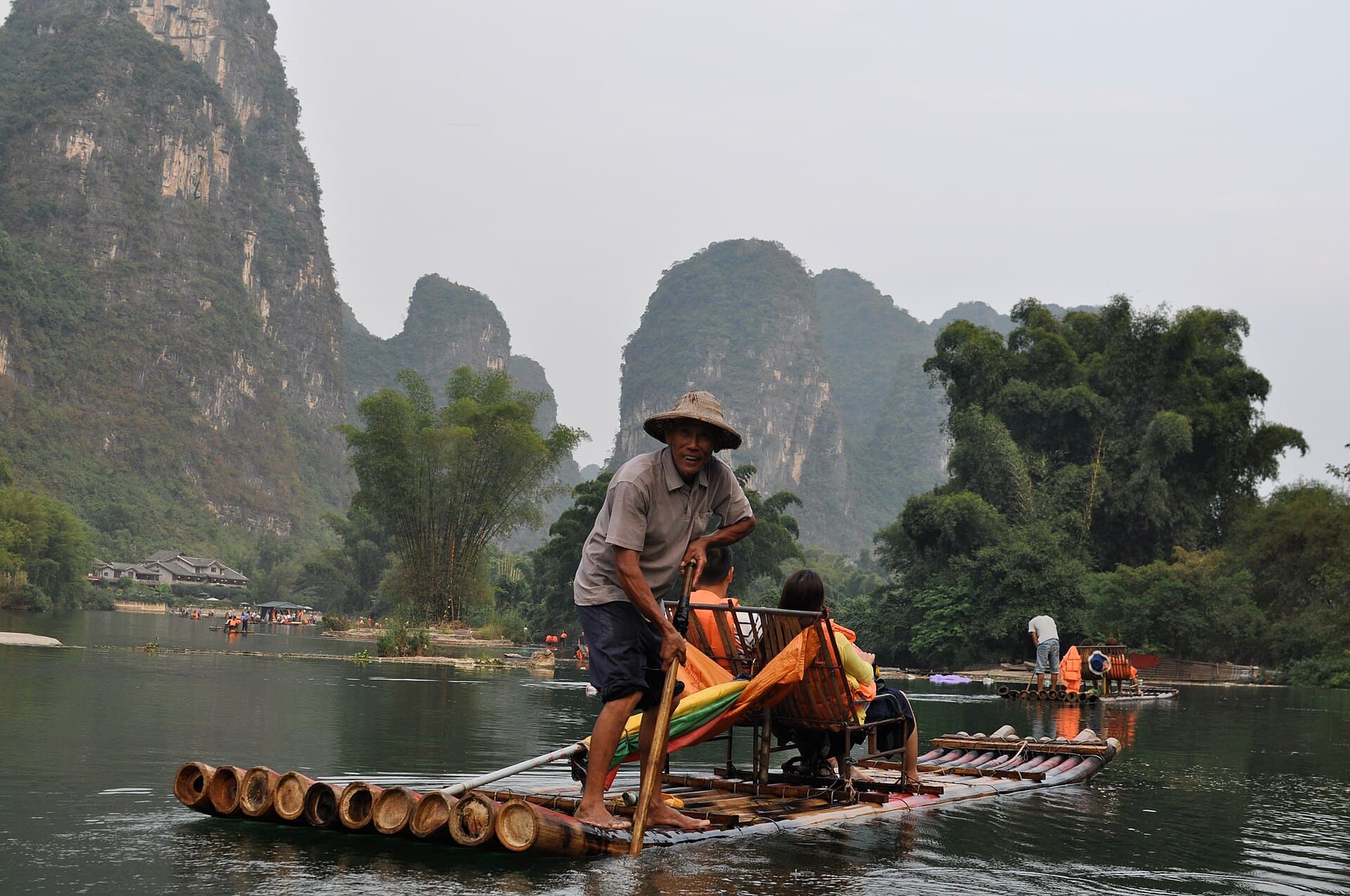
A small town with hills in every street, a West Street full of bars and travellers, and countryside starting at the edge of town. Rent a bike and ride along the Yulong River, a quieter tributary where the rafts are poled by hand, not motorised. In the evening, the Impression Sanjie Liu show puts hundreds of performers on the river with the hills lit behind them.
Elephant Trunk Hill 象鼻山
Xiàngbí Shān
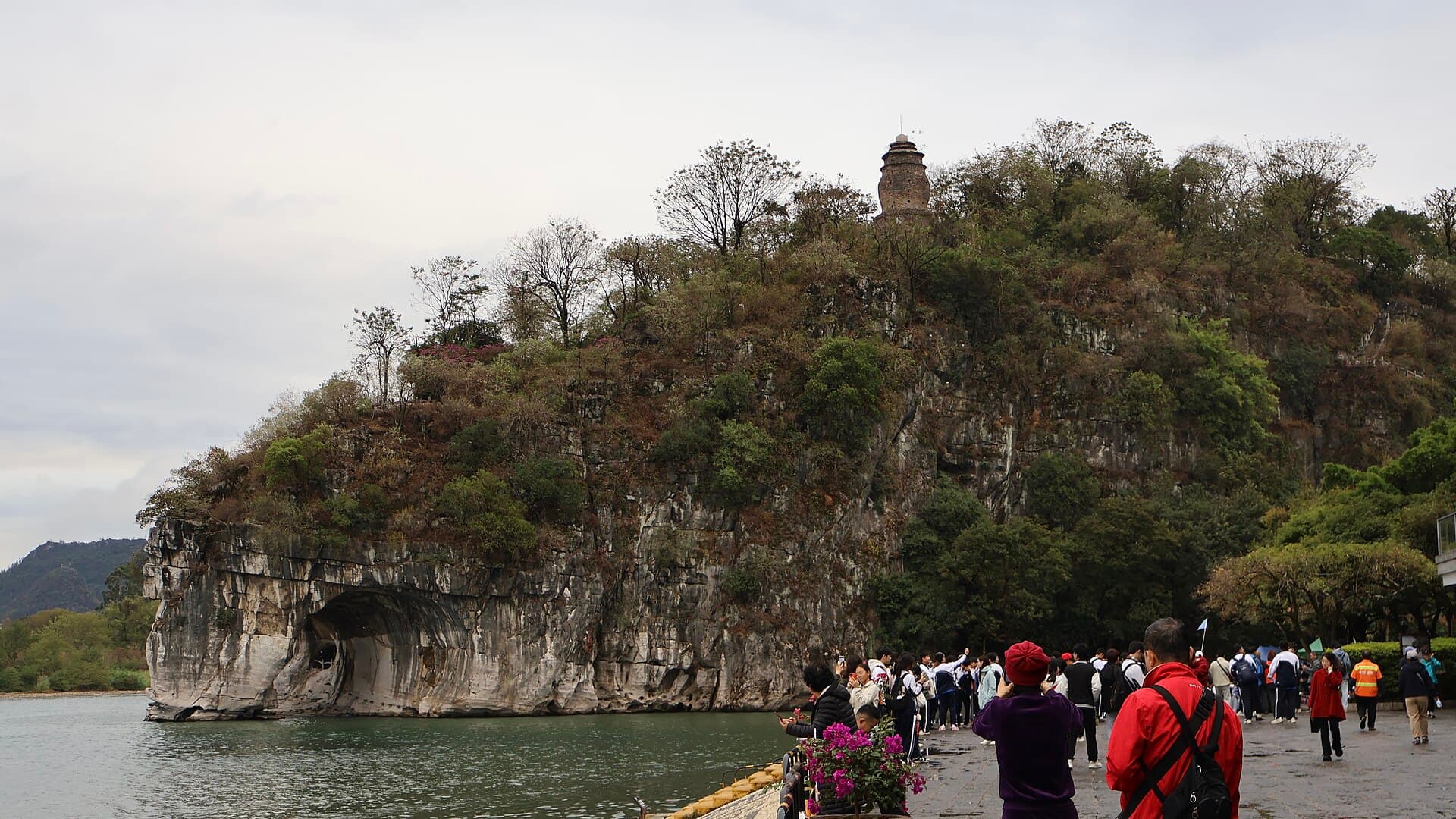
Guilin’s symbol: a hill in the river at the centre of town with an arch where the trunk dips into the water. It is a park. Walk round it, then along the lakes and rivers that thread the city centre, with the Sun and Moon Pagodas lit at night.
The Longji Rice Terraces 龙脊梯田
Lóngjǐ Tītián
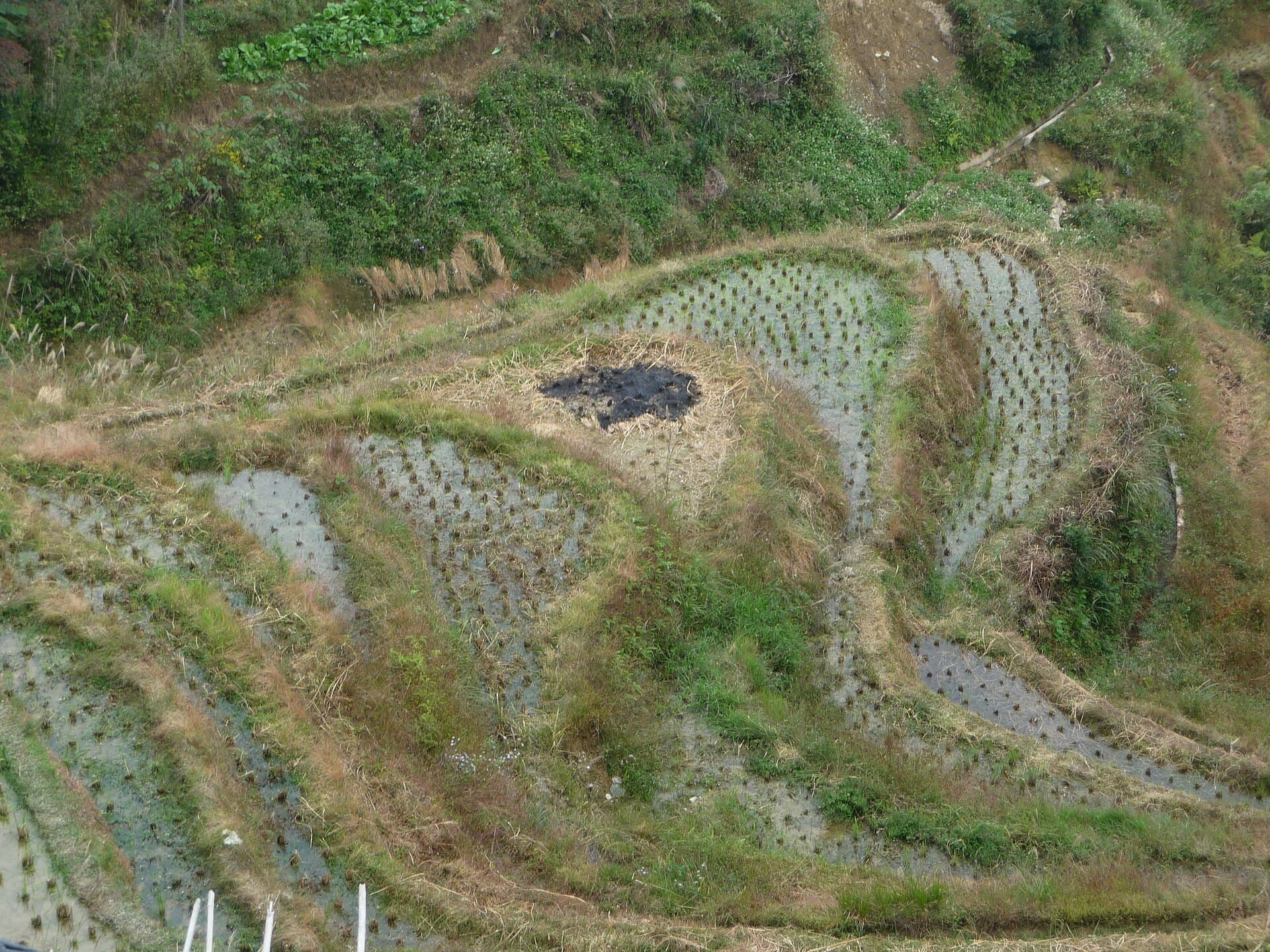
Two to three hours north of Guilin by bus, terraces climb whole mountainsides above the villages of the Zhuang and Yao peoples, who built them over several hundred years. Flooded and mirror-like in spring, green in summer, gold before the autumn harvest. Ping’an and Dazhai are the two villages to walk from. Stay a night to see the terraces at dawn.
What to eat in Guilin
Guilin rice noodles 桂林米粉
Guìlín mǐfěn
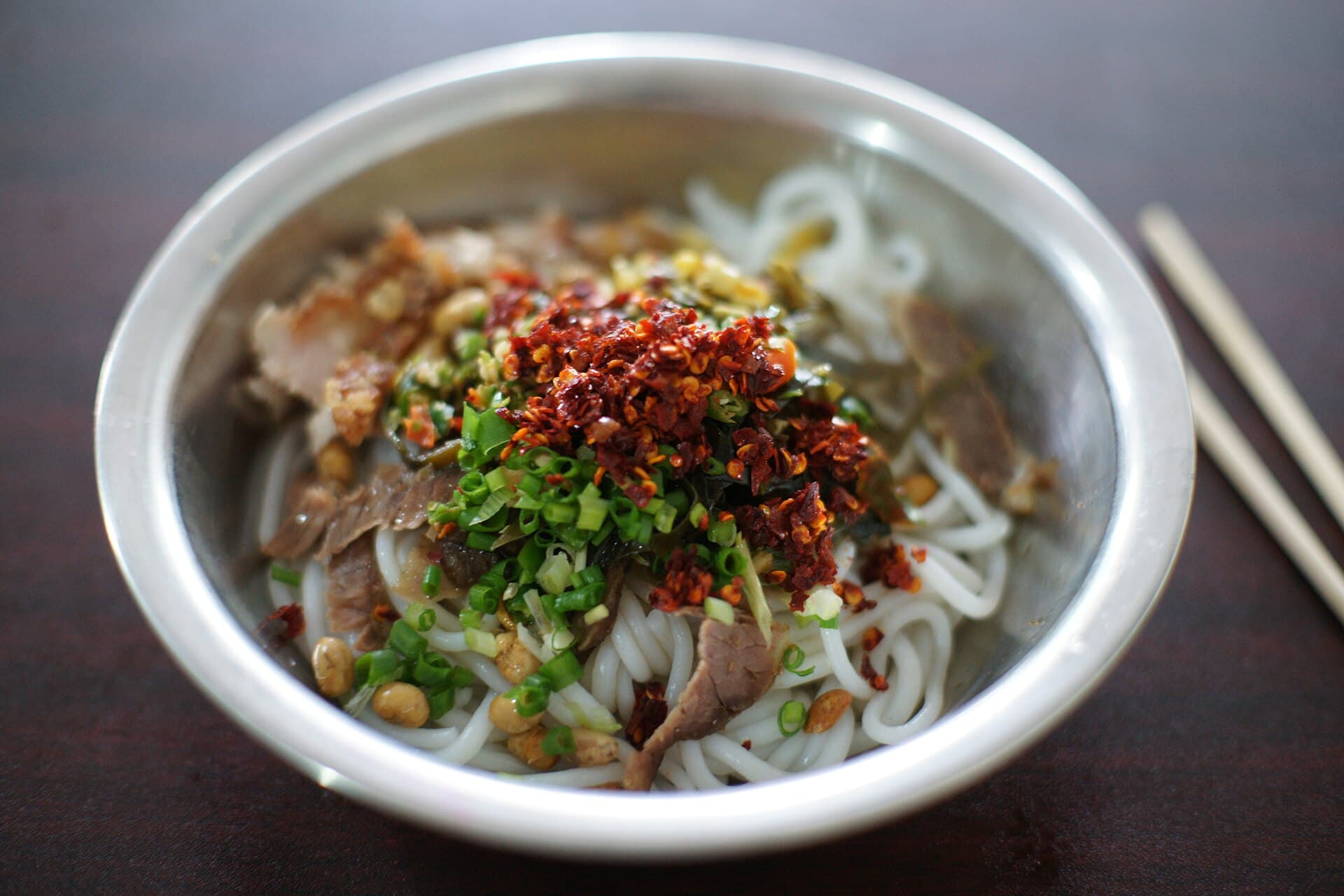
Soft round rice noodles with slices of braised meat, pickled beans, peanuts and chilli, eaten dry first and with broth poured in after. Breakfast for the whole city, from shops that sell nothing else.
Beer fish 啤酒鱼
píjiǔ yú
Yangshuo’s dish: river fish fried and then braised in local beer with tomato and peppers. Every restaurant on West Street does one.
Oil tea 油茶
yóuchá
A savoury tea from the hills, made by frying tea leaves with ginger and garlic, pounding them and boiling the paste, served with puffed rice and peanuts on top. Bitter at first sip; locals drink it by the bowl.
Plan your trip to Guilin
Best time to visit Guilin
April to October. Summer is hot and wet, but the river is full and the fields green. Spring brings the mist the paintings are after. Avoid the first week of October and Chinese New Year, when every boat is booked.
Getting to Guilin
Liangjiang airport is 28 km south-west of the centre: about 50 minutes on the airport bus, 40 by taxi. Buses also go from the airport straight to Yangshuo.
Guilin has three stations: Guilin, in the centre, and Guilin North and Guilin West on the edges of town. Check which is on your ticket. Fast trains from Guangzhou South take two to three hours. “Yangshuo” station is near Xingping, about 35 km from Yangshuo town, an hour by shuttle bus. The bus from central Guilin to Yangshuo takes about 90 minutes.
Getting around Guilin
Guilin has no metro. Walk the centre and use Didi, which has an English version and takes foreign cards. In Yangshuo, rent a bike.
Pay with Alipay or WeChat Pay, which both take foreign cards; carry some cash for noodle shops. Piers and big sights have English signs. Noodle shops don’t, so point at 米粉.
Where to stay in Guilin
In Guilin, stay in the centre near the lakes, walking distance from Elephant Trunk Hill and the evening pagodas.
In Yangshuo, West Street is loud until late. Guesthouses along the Yulong River are quieter and closer to the fields. Xingping suits an early start on the river.
Guilin in three days
- Day 1. Guilin: rice noodles for breakfast, Elephant Trunk Hill, then the lakes and the lit pagodas after dark.
- Day 2. The Li River cruise to Yangshuo, on deck past Xingping. Beer fish on West Street for dinner.
- Day 3. A bike along the Yulong River and a hand-poled raft. Add a fourth day and a night at Longji if you can.
Questions about visiting Guilin
Should you stay in Guilin or Yangshuo?
Both, one night each at least. Guilin has the airport, the main stations and the piers. Yangshuo is where the river ends and the countryside starts, and most people like it more.
How long is the Li River cruise?
About four hours. The river runs 83 km from Guilin to Yangshuo, and the boats, which board outside the city, cover about 60 km of it.
Boat or raft?
The boat if you want the whole river in one go and a ride to Yangshuo. The raft if you want the best hour up close: take a bus from Guilin to the Yangdi turn-off, about an hour, then a taxi to the pier, and raft down to Xingping.
Where is the 20-yuan note view?
On the Li River just outside Xingping, about 20 minutes’ walk from the pier across the old bridge. The cruise boats and the Yangdi rafts pass it.
Is the Longji terrace trip worth it?
Yes, if you have a fourth day. It is two to three hours each way, so a night in Ping’an or Dazhai beats a rushed day. Go in May or June for the flooded terraces or late September for the gold.
Chinese you’ll see in Guilin
On the piers, the bus signs and the noodle shops.
The line under each word is pinyin, the Chinese sounds written in our alphabet. The marks over the vowels are tones; people will understand you without them at first.
- 桂林Guìlín
- Guilin, "osmanthus forest"
- 漓江Lí Jiāng
- the Li River
- 阳朔Yángshuò
- Yangshuo
- 兴坪Xīngpíng
- Xingping, the 20-yuan-note town
- 西街Xī Jiē
- West Street, in Yangshuo
- 码头mǎtóu
- pier
- 游船yóuchuán
- cruise boat
- 竹筏zhúfá
- bamboo raft
- 梯田tītián
- rice terraces
- 米粉mǐfěn
- rice noodles
Want more? Browse Chinese vocabulary by level.
Hear Guilin in Mandarin
Our audio story takes the boat from Guilin to Yangshuo and asks how you see a place for the first time when it was printed on the money before you were born.
The story is Guilin: What the Water Didn't Finish Eating. It is told four ways, one for each level. Every version has a transcript with pinyin and English, so start with Beginner if you have no Chinese yet.