Harbin Travel Guide: Ice Festival, Central Street, St Sophia
Updated
Four and a half hours north-east of Beijing by fast train, Harbin averages minus 12 by day in January. The Songhua River freezes solid, and the city cuts it into blocks and builds a lit-up town out of the ice.
There is a short audio story about Harbin in Mandarin, with English alongside. No Chinese needed for the beginner version. Jump to the storyA short history of Harbin
Harbin barely existed before 1898, when Russian engineers arrived to build the Chinese Eastern Railway and made their base here. Russians came, then refugees from the revolution, then Jews, Poles and Japanese, and by the 1920s the city had onion domes, bakeries and a main street of European façades. Central Street and St Sophia are what remains.
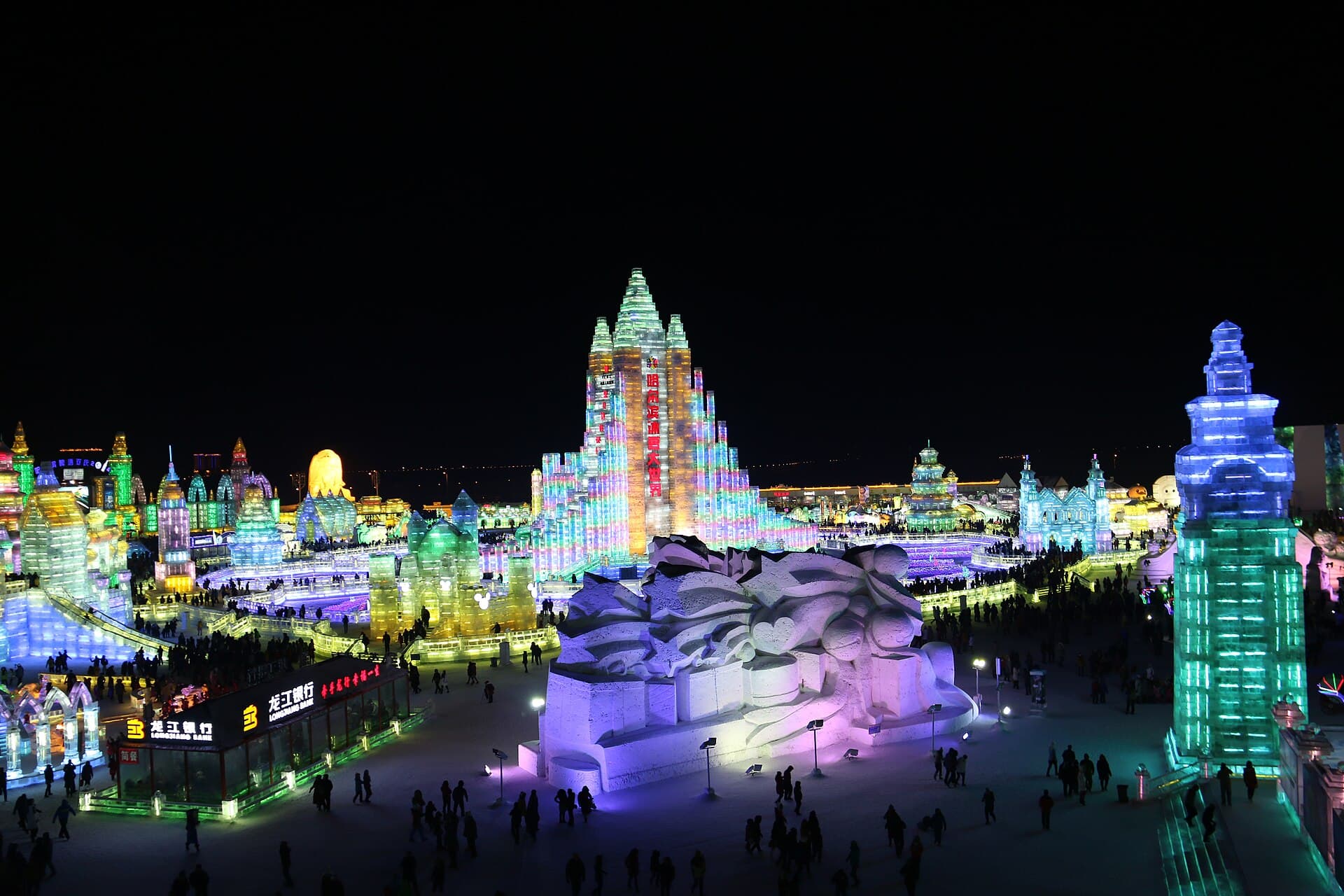
The ice came later. Fishermen here had always frozen water into hollow lanterns to keep a candle lit in the wind. In 1963 the city held its first ice lantern show, in Zhaolin Park. In 1999 it opened the Ice and Snow World, which last winter used some 400,000 cubic metres of ice and snow.
Harbin Ice and Snow World
冰雪大世界 Bīngxuě Dà Shìjiè
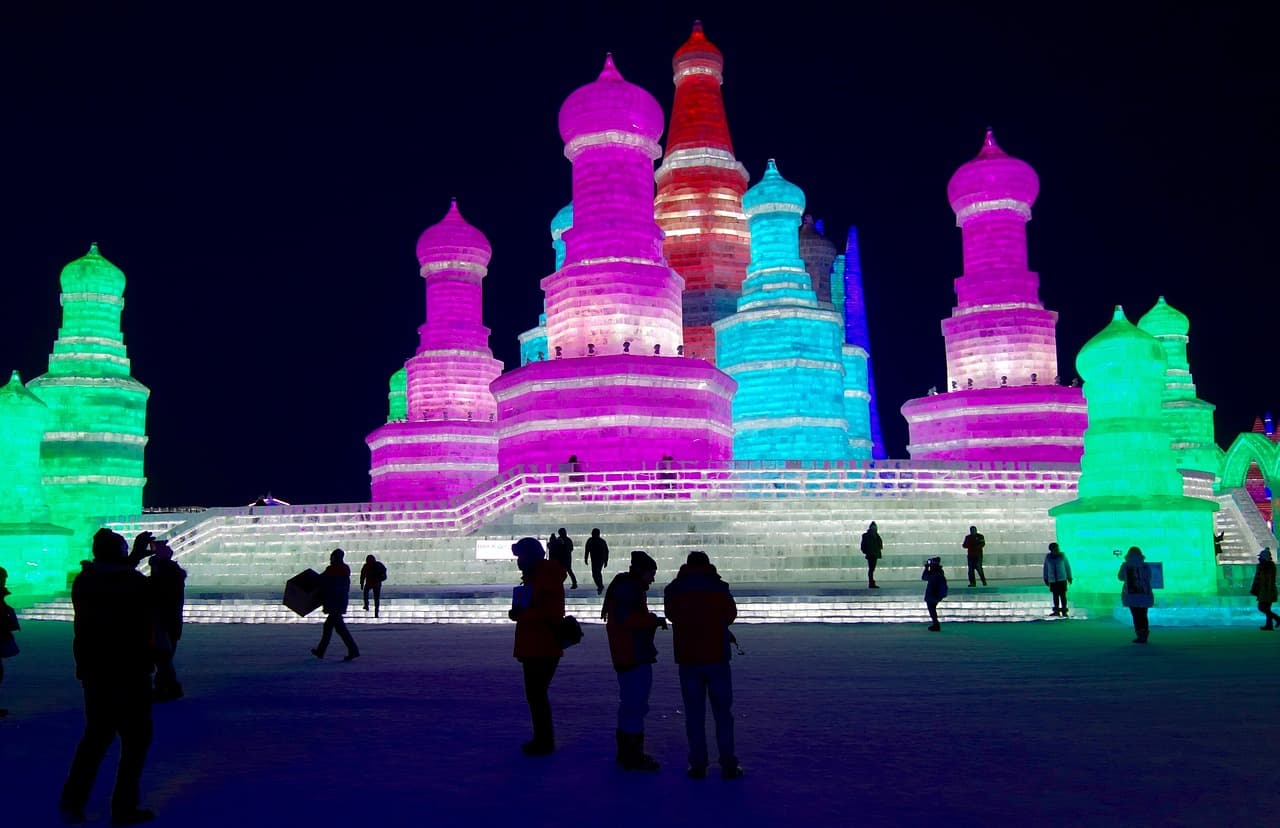
Every winter workers cut blocks the height of a man from the frozen Songhua and build a park of palaces, towers and slides out of them across the river from the city. Lights are set inside the ice, so at night the whole thing glows from within in blue, red and green. It is not dyed. The ice is clear.
Go in the mid-afternoon to see it in daylight, stay for the lights coming on after sunset, around half past four, and go inside when your feet tell you to. There are heated halls with food.
How to visit Harbin Ice and Snow World
- 1
Book with your passport
Trip.com sells tickets in English and takes a foreign card. The park’s own WeChat account is Chinese-only, and the ticket machines at the gate let you pick a language. An adult ticket was about 330 yuan last season. Bring the passport you booked with.
- 2
Dress for minus 22
That is the average January night. Thermal layers, a down coat, insulated boots, a hat that covers your ears, and two pairs of gloves. Hand warmers in your pockets and one against your phone, which will die in the cold otherwise.
- 3
Arrive before dark
Get there by mid-afternoon: you see the carving in daylight, then the lights come on. The big ice slide runs on timed slots, so scan its QR code as soon as you are in. On busy days the wait runs to hours.
- 4
Know when to stop
Two or three hours is a long time outdoors at night. Warm up in the indoor halls, then cross back to Central Street for dinner.
The park is on the north bank of the Songhua, across from the city. Metro Line 2 has an Ice and Snow World station, which beats the taxi queue at closing time.
Things to do in Harbin beyond the ice park
Central Street and the cathedral are in the old Russian quarter. The river is at the end of the street. Sun Island is across it.
Central Street 中央大街
Zhōngyāng Dàjiē
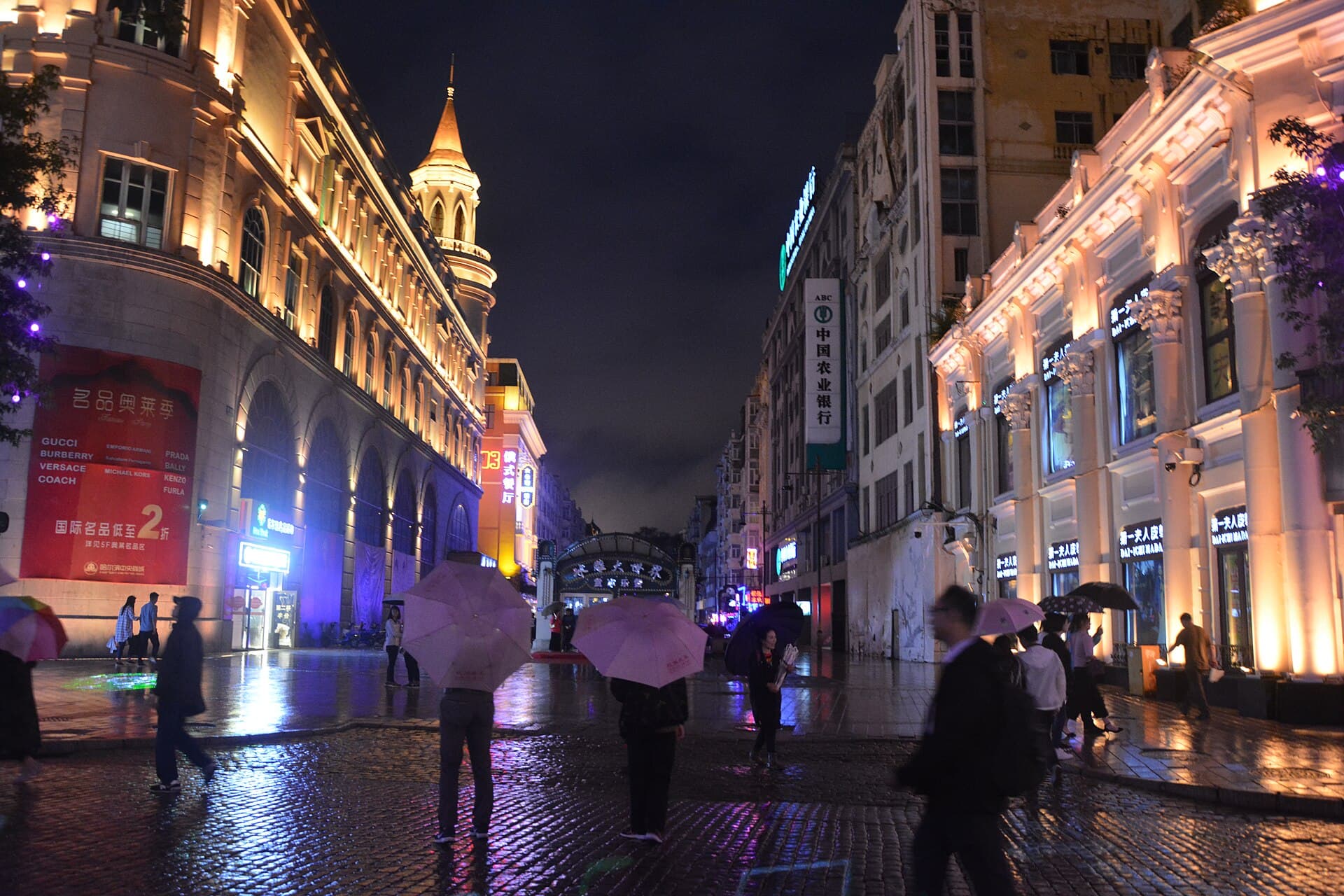
A 1.4 km pedestrian street of Russian and European buildings from the 1900s to the 1930s, paved with square granite blocks the locals call bread stones. Walk it end to end from the river, eat a Madieer ice cream on the way whatever the temperature, and duck into the bakeries. It began in 1898 as a dirt track for hauling railway materials.
St Sophia Cathedral 圣索菲亚教堂
Shèng Suǒfēiyà Jiàotáng
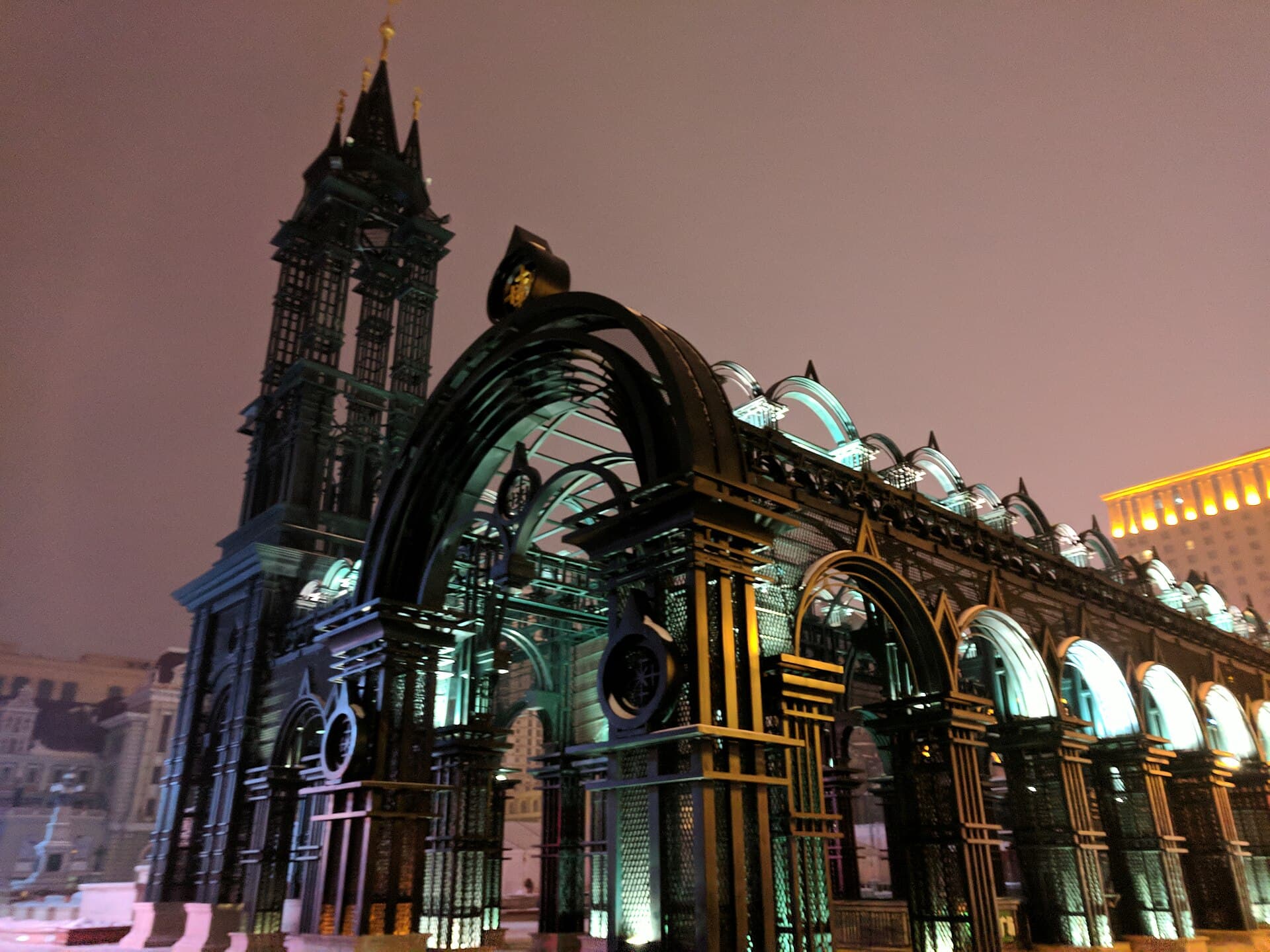
A Russian Orthodox cathedral finished in 1932, red brick with a green onion dome, on a square a block off Central Street. It is no longer a church but a museum of the city’s Russian years. The square is the place to stand in the snow at night and feel very far from the rest of China.
The Songhua River 松花江
Sōnghuā Jiāng
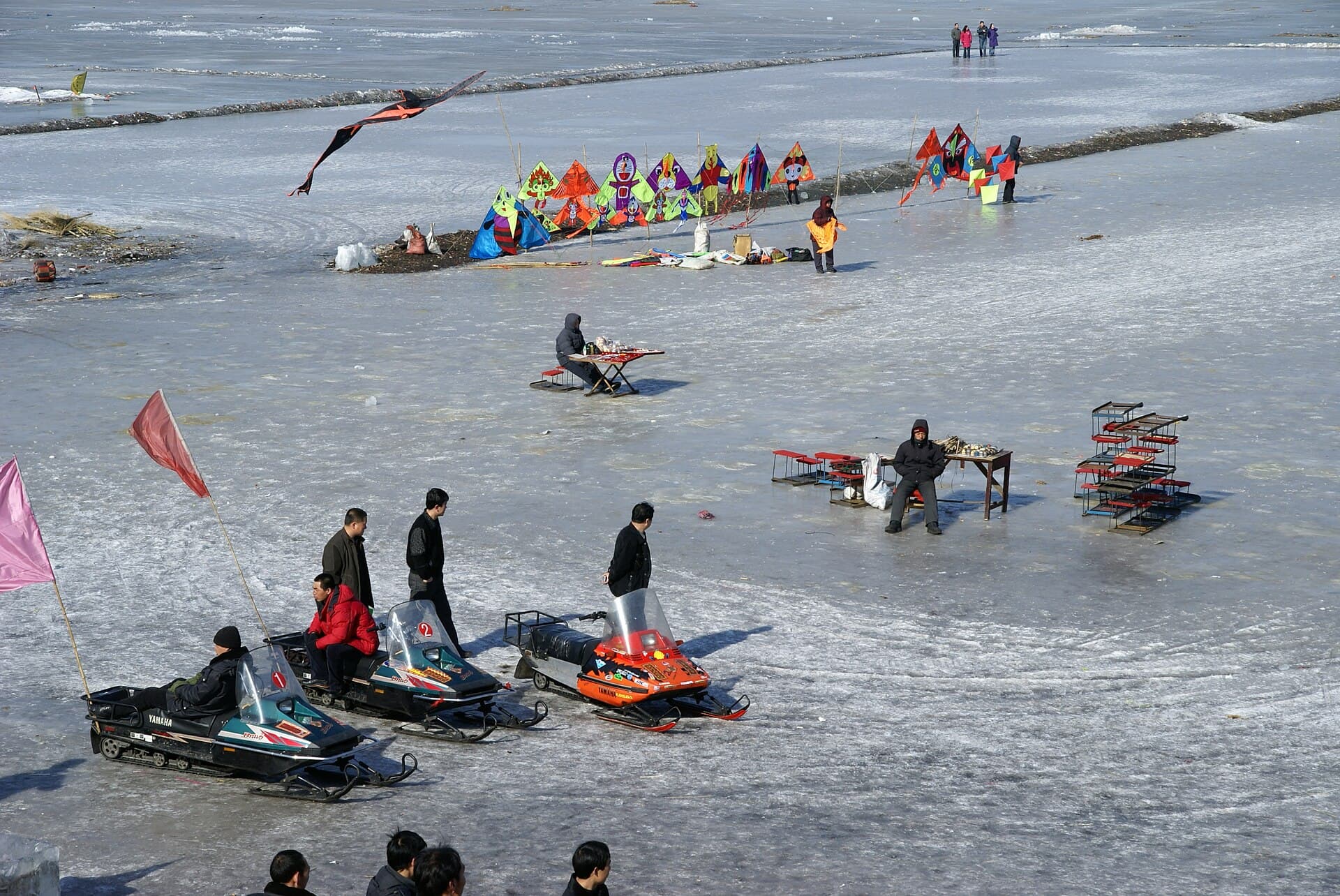
Frozen from December to March, and thick enough to walk and drive on. At the end of Central Street people go out onto it to sledge, skate and ride ice bikes. The blocks for the ice park are cut a little upstream. In summer it is a river again, with beaches and ferries.
Sun Island 太阳岛
Tàiyáng Dǎo
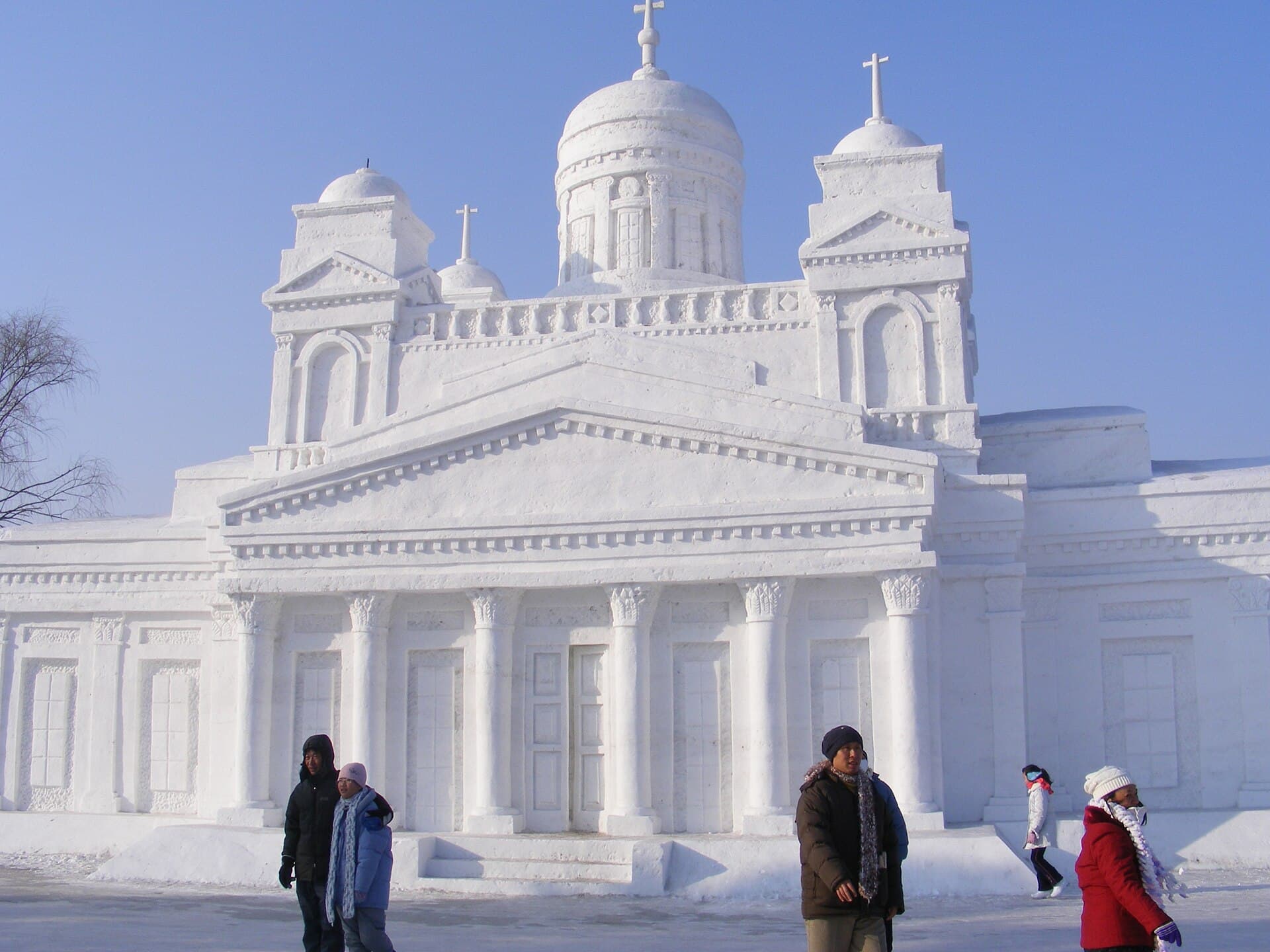
The island across the river holds the snow sculpture exhibition, the daytime half of the festival: huge carvings of buildings, animals and scenes in packed snow, best in the morning sun. It has its own ticket. The cable car from the Central Street end of the river is a good way over.
What to eat in Harbin
Guobaorou 锅包肉
guōbāoròu
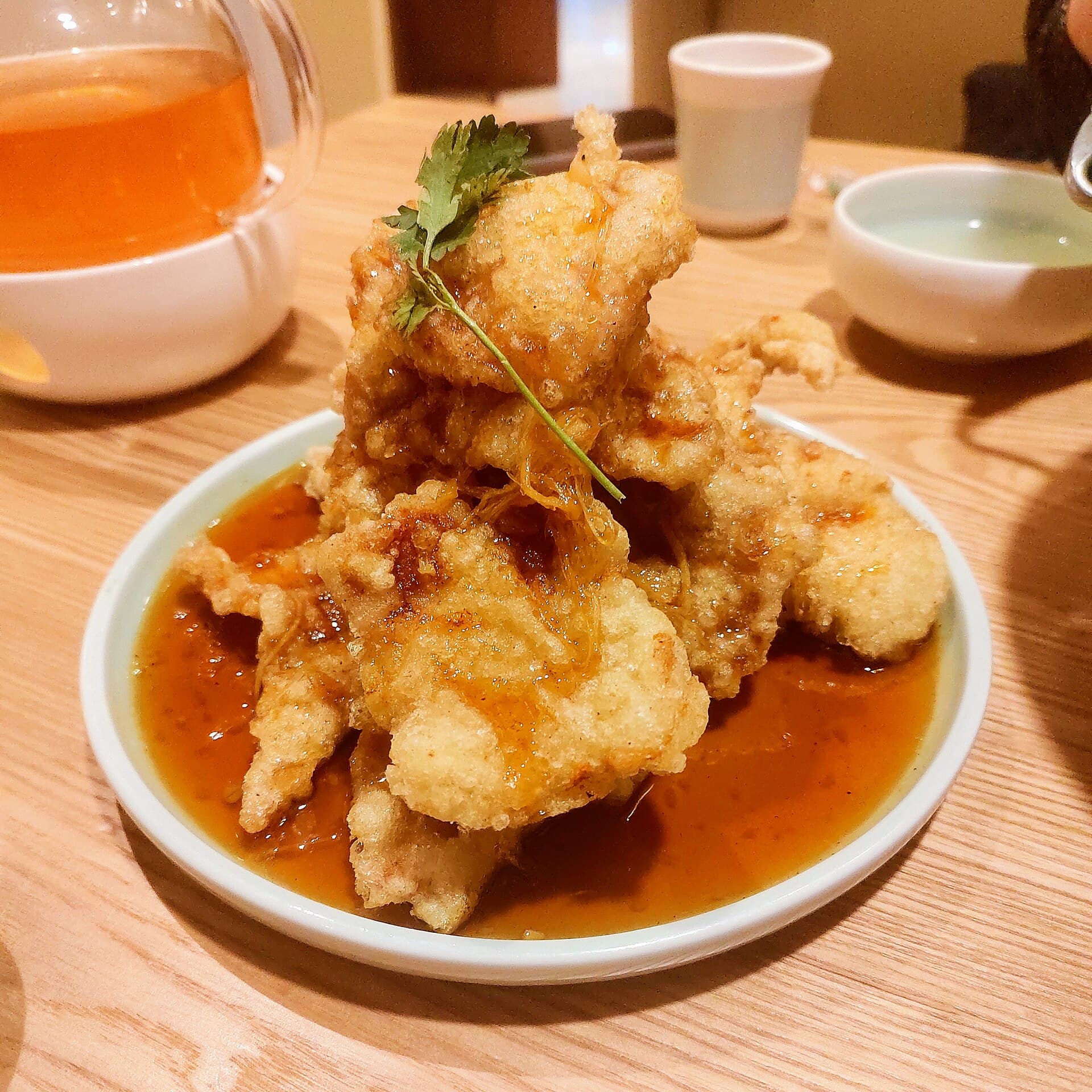
Thin pork slices fried crisp in a starch batter and tossed in a sweet-and-sour sauce with ginger and coriander. Invented in Harbin around 1907 for Russian guests, and now on every menu in the northeast.
Harbin red sausage 哈尔滨红肠
Hā’ěrbīn hóngcháng
A smoked garlic pork sausage the Russians and Lithuanians brought. Sold by weight at counters on Central Street; eat it cold with a bread roll.
Madieer ice cream 马迭尔冰棍
Mǎdié’ěr bīnggùn
A plain milk ice cream bar from the 1906 Madieer Hotel on Central Street. Eating one outdoors in January is the thing to do. It does not melt.
Plan your trip to Harbin
Best time to visit Harbin
The ice season runs from mid-December to late February. January is the coldest month. It is a dry cold, and it hurts exposed skin within minutes. Chinese New Year week brings the biggest crowds; January weekdays are calmer.
Summer is mild and green, with beaches and ferries on the river. The city is a day then, not two.
Getting to Harbin
Taiping airport is about 35 km south-west of the centre, with no metro. The airport bus takes about an hour; a taxi takes 45 minutes to an hour.
The fastest trains from Beijing reach Harbin West in about four and a half hours; it is on metro Line 3. Harbin Station, closer to Central Street, is on Line 2. From Shanghai it is about three hours by air.
Getting around Harbin
Metro Line 2 is the one you need: Harbin Station, Central Street, Sun Island and the Ice and Snow World are all on it. Didi has an English version and takes foreign cards.
Pay with Alipay or WeChat Pay, which both take foreign cards, and carry some cash for when your phone gives up in the cold. Metro signs have English; small restaurant menus don’t.
Where to stay in Harbin
Stay in Daoli district, around Central Street. You can walk to St Sophia and the river, and Line 2 takes you to the ice park. Hotels on the north bank are near the park but far from dinner.
Harbin in two days
- Day 1. Central Street, St Sophia and the frozen river in the morning. The Ice and Snow World from mid-afternoon into the dark.
- Day 2. Sun Island’s snow sculptures in the morning sun. Guobaorou and red sausage for dinner.
Questions about visiting Harbin
When is the Harbin Ice Festival?
The Ice and Snow World usually opens in mid to late December and runs into late February. Last season it opened on 17 December 2025 and closed early, on 21 February 2026, in a warm spell. The date is confirmed only weeks ahead; the festival’s official opening ceremony is on 5 January every year.
How cold is Harbin in January?
On average about minus 12 by day and minus 22 at night, and cold snaps go well below that.
Is the Ice and Snow World worth it?
Yes, if you go at dusk and stay into the dark. In daylight it is impressive carving; with the lights on it is the reason people fly to Harbin in January.
Is Sun Island included in the ticket?
No. The snow sculpture park on Sun Island has its own ticket, about 200 yuan last season. It is a daytime visit and the ice park is a night one, so do one each day.
Is Harbin worth visiting in summer?
For a day. Central Street and St Sophia are the same buildings, the river has beaches and ferries, and it is cooler than most of China.
Chinese you’ll see in Harbin
On the signs, the tickets and the menus.
The line under each word is pinyin, the Chinese sounds written in our alphabet. The marks over the vowels are tones; people will understand you without them at first.
- 哈尔滨Hā’ěrbīn
- Harbin
- 冰雪大世界Bīngxuě Dà Shìjiè
- the Ice and Snow World, literally "great world of ice and snow"
- 冰滑梯bīng huátī
- ice slide
- 冰灯bīngdēng
- ice lantern
- 太阳岛Tàiyáng Dǎo
- Sun Island
- 松花江Sōnghuā Jiāng
- the Songhua River
- 中央大街Zhōngyāng Dàjiē
- Central Street
- 出租车chūzūchē
- taxi
- 锅包肉guōbāoròu
- sweet-and-sour fried pork
- 红肠hóngcháng
- red sausage
Want more? Browse Chinese vocabulary by level.
Hear Harbin in Mandarin
Our audio story walks the Ice and Snow World at night and Central Street the next day, and hears a worker explain that the ice is borrowed from the river, not bought.
The story is Harbin Ice Festival Builds With Borrowed River Ice. It is told four ways, one for each level. Every version has a transcript with pinyin and English, so start with Beginner if you have no Chinese yet.