Lhasa Travel Guide: Potala Palace, Barkhor, Tibet Permit
Updated
Lhasa sits at 3,650 metres on the Tibetan plateau, and your first day here is for doing nothing: walk slowly, drink water, and sit in a sweet-tea house off the Barkhor.
There is a short audio story about Lhasa in Mandarin, with English alongside. No Chinese needed for the beginner version. Jump to the storyDo foreigners need a permit to visit Lhasa?
Yes, and you cannot travel in Tibet on your own. A licensed Tibetan travel agency arranges the Tibet Travel Permit, a guide for your whole time in Tibet, and a car and driver for anything outside Lhasa. You show the permit to board the plane or train; flights need the original, which the agency posts to your hotel.
Agencies want a passport scan 15 to 20 days ahead, longer in July and August. Everest Base Camp and other places beyond Lhasa need further permits, which the agency adds. Four days in Lhasa with a small group start around US$500, flights extra.
Tibet has usually closed to foreign visitors for some weeks around February and March, though in 2026 it stayed open. Rules change at short notice; check with the agency before booking flights.
A short history of Lhasa
Lhasa has been the centre of Tibetan Buddhism since the 600s, when King Songtsen Gampo built the Jokhang Temple for a statue his Nepalese queen, Bhrikuti, brought with her. His Chinese queen, Wencheng, brought another, the Jowo. Kept first at the nearby Ramoche Temple, it was later moved to the Jokhang, and it is the statue pilgrims queue for. The Barkhor’s streets grew up along the kora, the clockwise walk around it.
The Fifth Dalai Lama began the Potala in 1645 and made Lhasa the seat of Tibetan government, which it stayed until 1959. The palace is a museum now, UNESCO-listed since 1994.
The Potala Palace
布达拉宫 Bùdálā Gōng
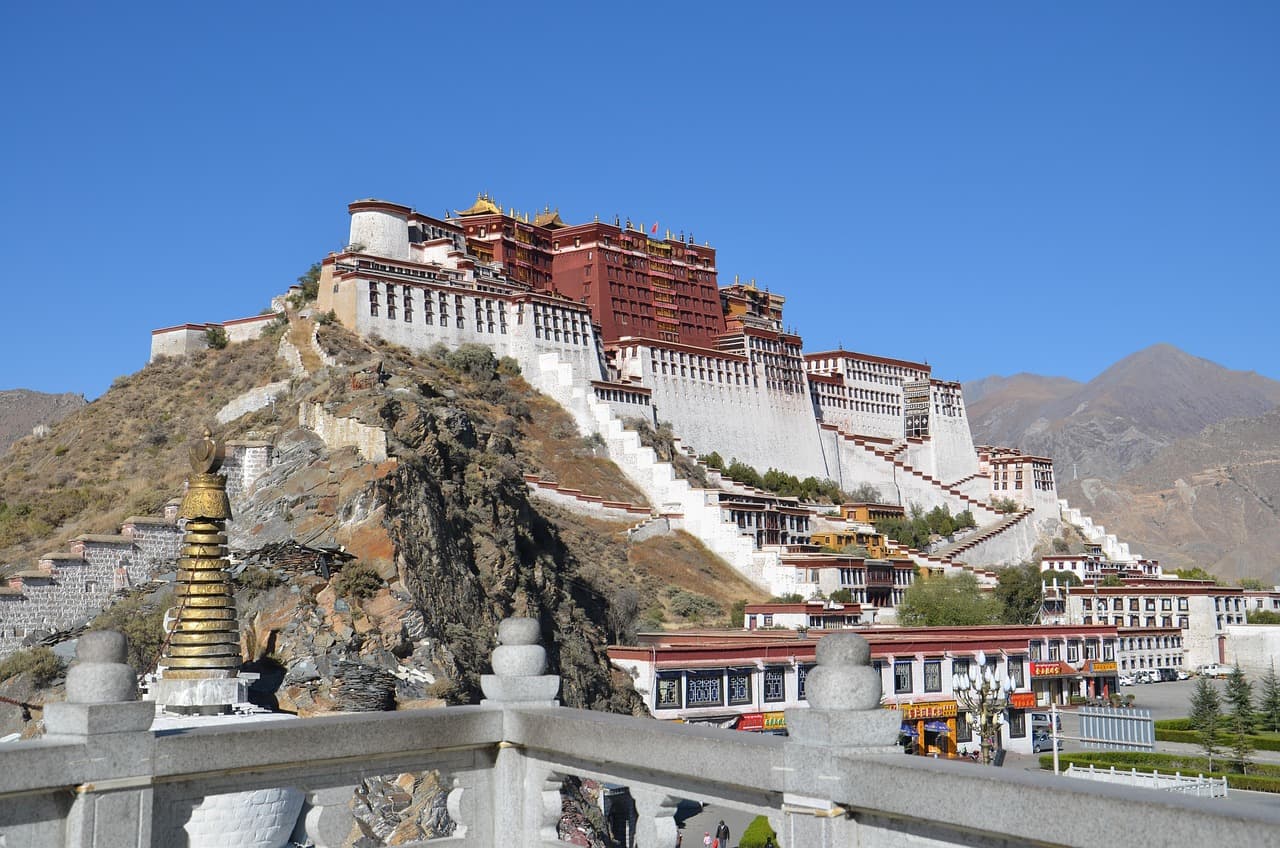
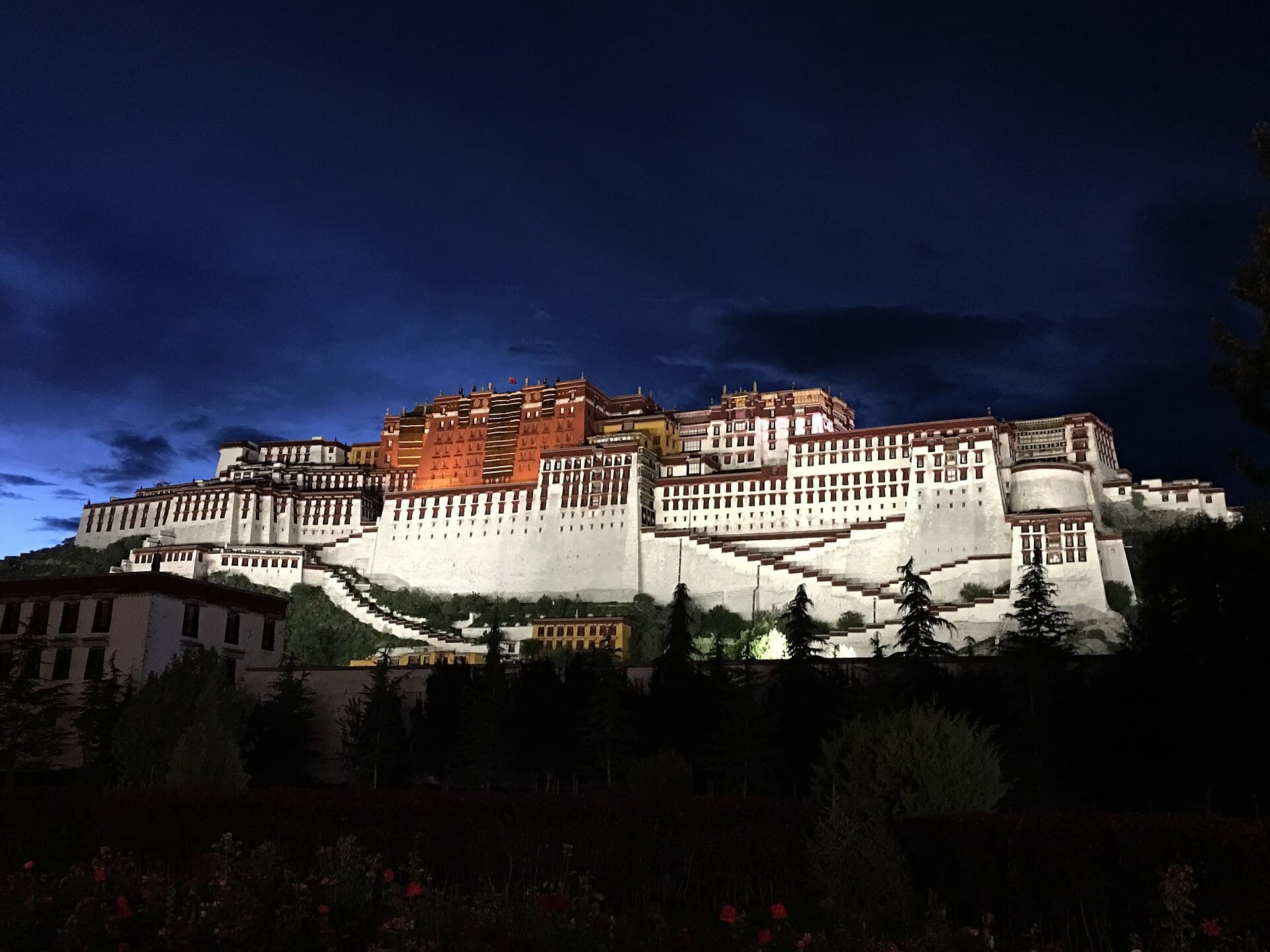
The Potala stands on Red Hill in the middle of the city: thirteen storeys, 117 metres high, a thousand rooms. The White Palace is where the Dalai Lamas lived and governed; the Red Palace is chapels and tombs.
The route inside is fixed: up the long stone stairs, through the Red Palace chapels past the gilded tombs of past Dalai Lamas, and down the other side. The climb is the hard part. Stop when you need to. Everyone does.
How to visit the Potala Palace
- 1
Let the agency book it
Foreigners can’t buy tickets themselves; the system needs a Chinese account. Your agency books a timed slot under your passport, days ahead from May to October, when tickets sell out.
- 2
Give yourself a day
Don’t visit on the day you arrive. The Potala’s stairs are much easier on day two or three.
- 3
Turn up at your slot
Your guide goes in with you. Bring your passport and arrive an hour early for the security check. Inside you get about an hour, and the slot is not flexible.
- 4
Climb slowly, then come back at dusk
Take the stairs in stages. Return at dusk to the square across the road, when the floodlights come on and the pilgrims stop to prostrate.
No photos inside the palace. Bags are checked and lighters are taken. Bring sunglasses; the light up here is fierce.
Things to do in Lhasa beyond the Potala
The Jokhang and the Barkhor are the heart of the old town. The rest is a short taxi ride.
The Jokhang and the Barkhor 大昭寺 · 八廓街
Dàzhāo Sì · Bākuò Jiē
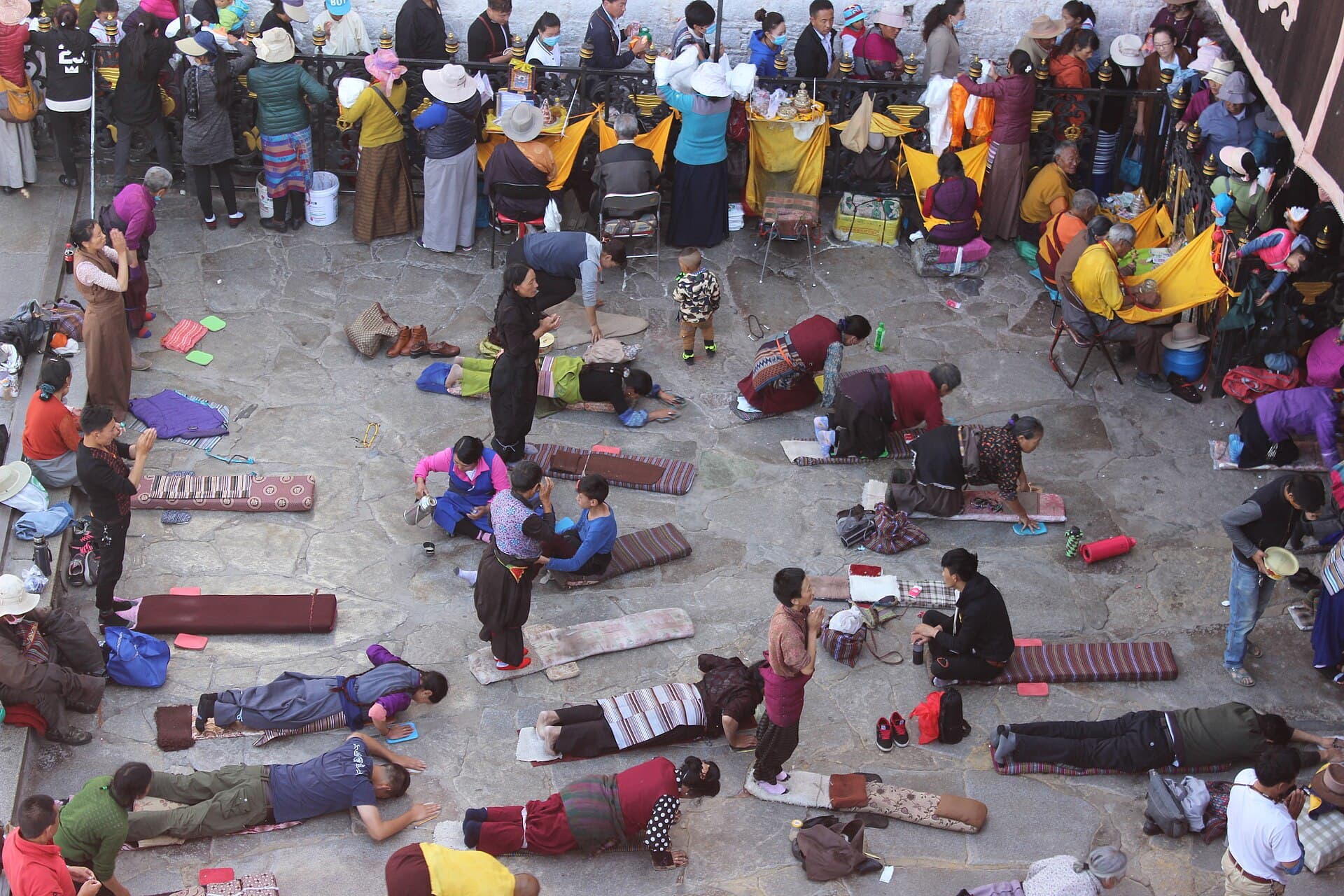
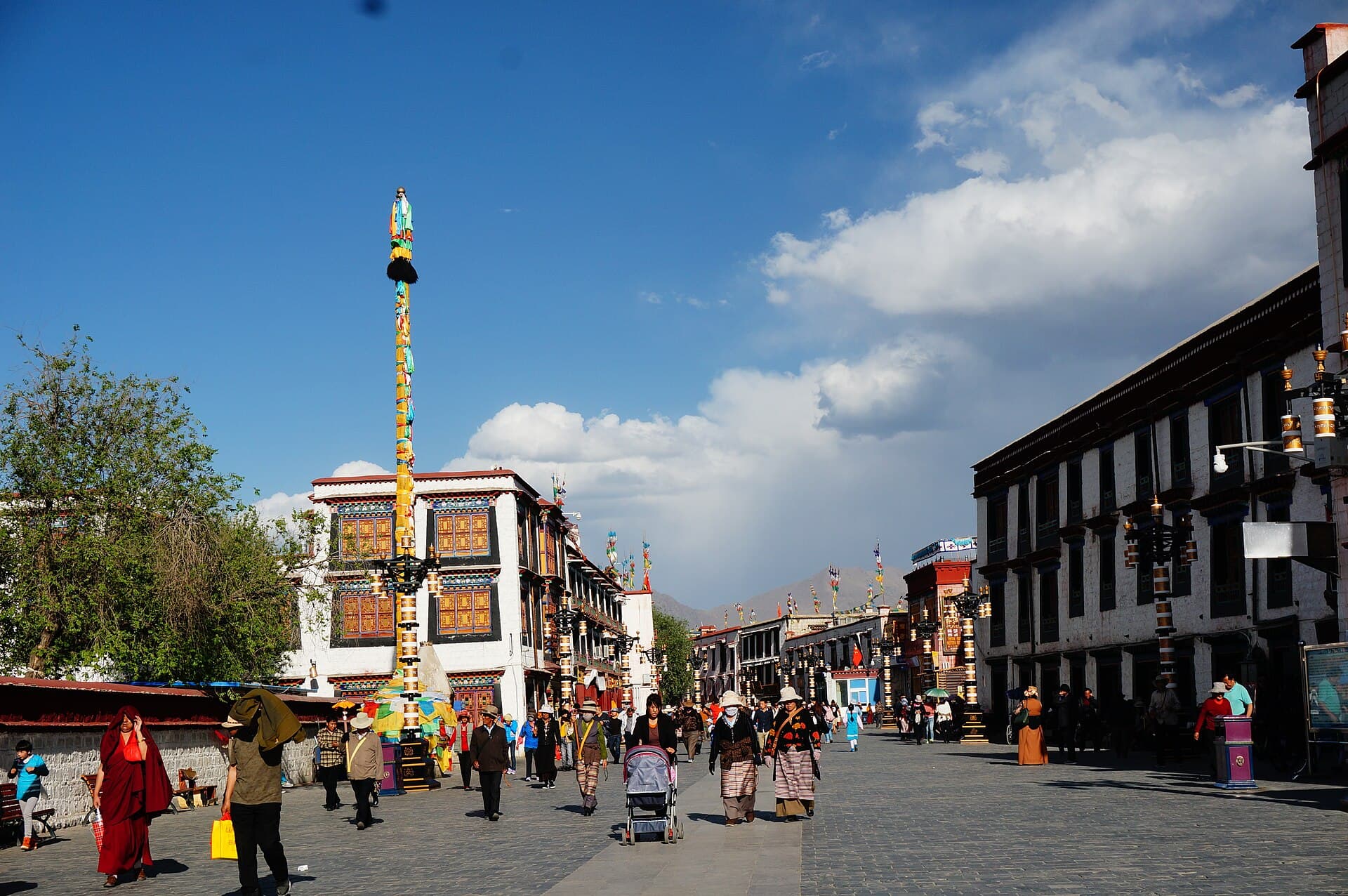
The Jokhang was built in the 640s and is the holiest temple in Tibet. The Barkhor is the kilometre of streets around it, and from before dawn people walk it clockwise, spinning prayer wheels, some prostrating full length every few steps. Walk it with them, in their direction, early. Later it is a market street, which is fine too.
Sera Monastery 色拉寺
Sèlā Sì
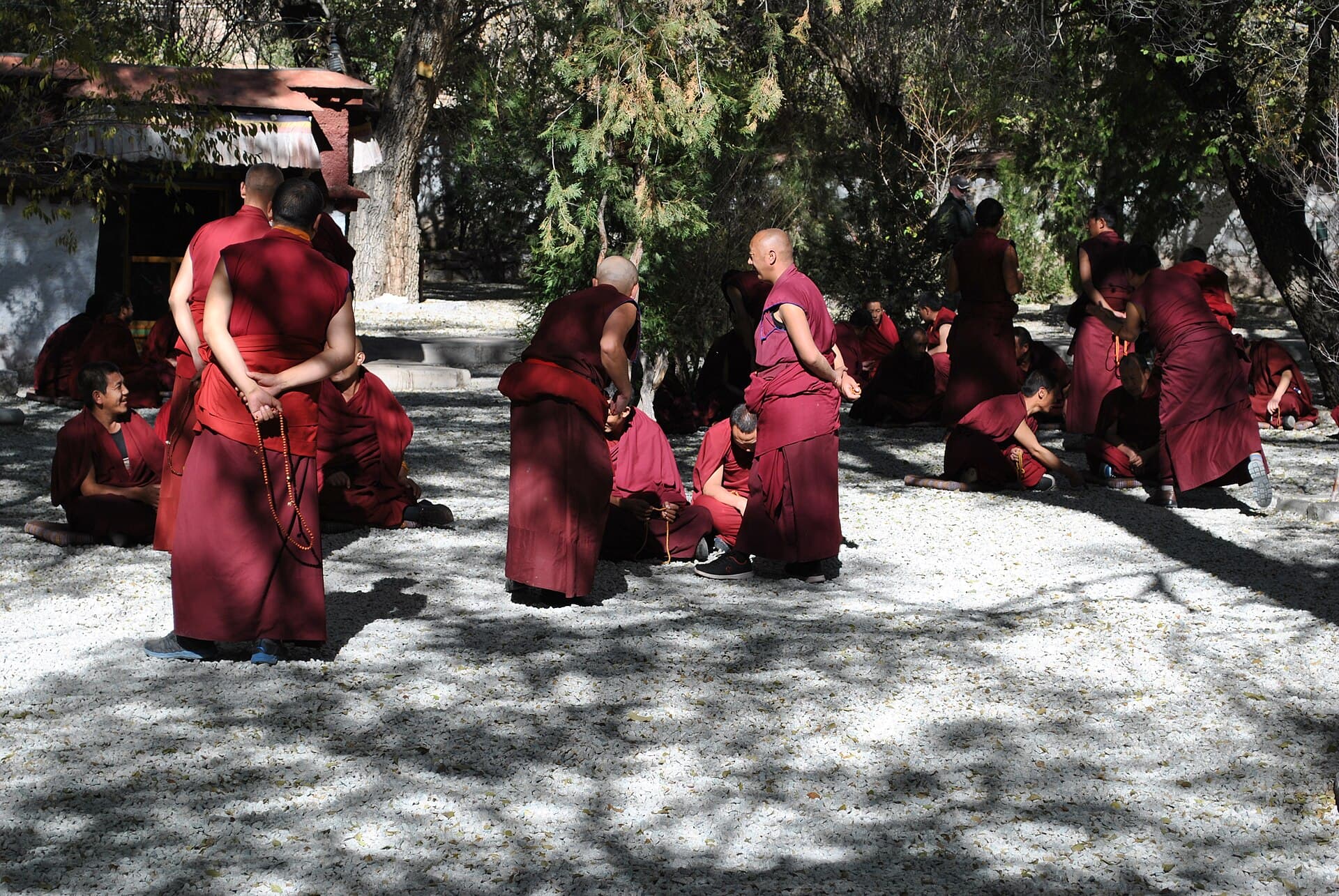
One of the three great monasteries of the Gelug school, the Dalai Lama’s branch of Tibetan Buddhism, founded in 1419 on the northern edge of the city. Most afternoons from about 3 pm, but not on Sundays, the monks debate in a walled courtyard: one stands, puts a question and claps his hands at the one sitting, who has to answer. Visitors watch from the edge.
Norbulingka 罗布林卡
Luóbùlínkǎ
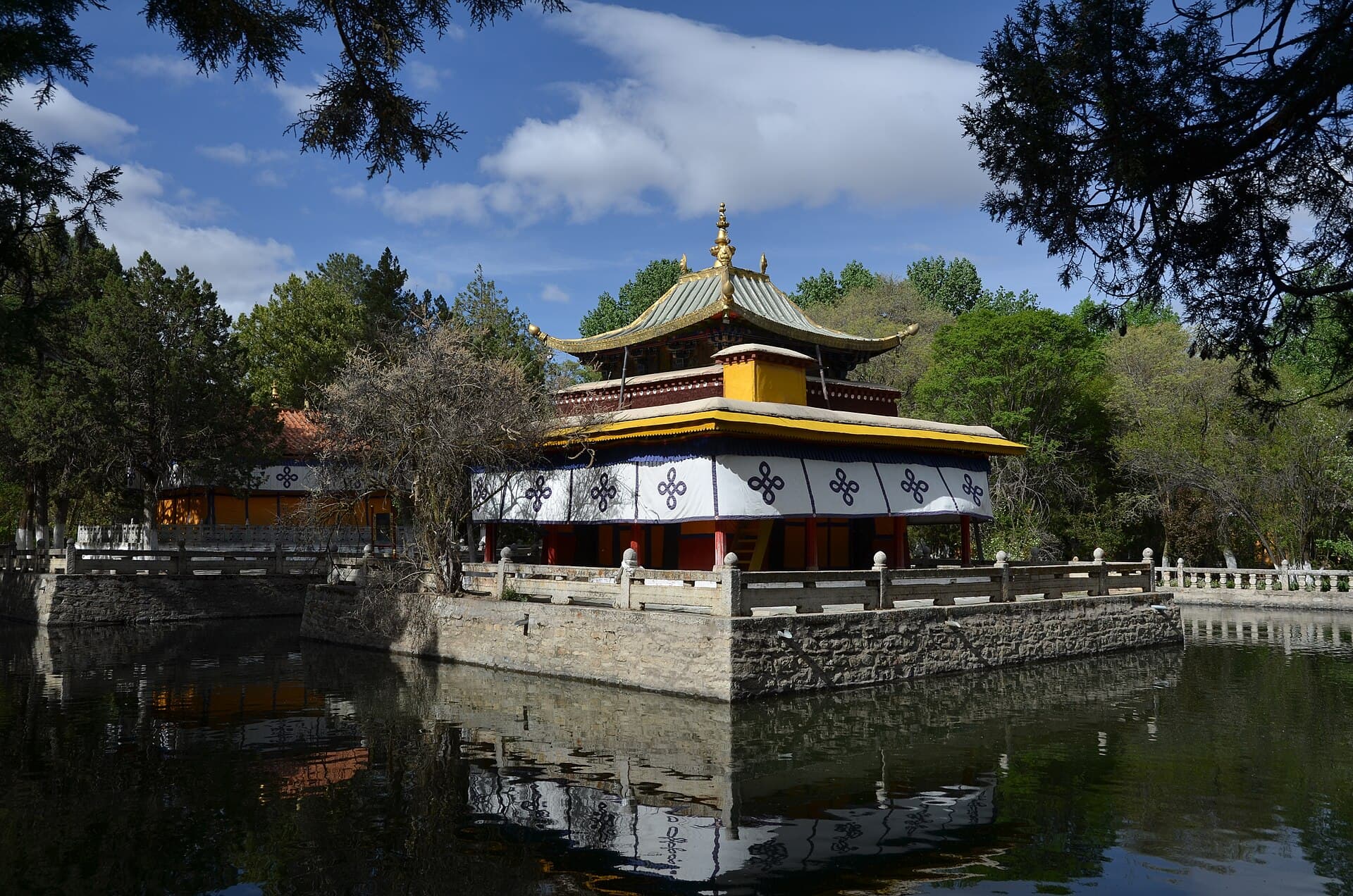
The Dalai Lamas’ summer palace, a park of pavilions, ponds and trees west of the Potala, begun in the 1750s. Quieter and greener than anything else in the city, and the place to go when the altitude says rest.
What to eat in Lhasa
Butter tea 酥油茶
sūyóuchá
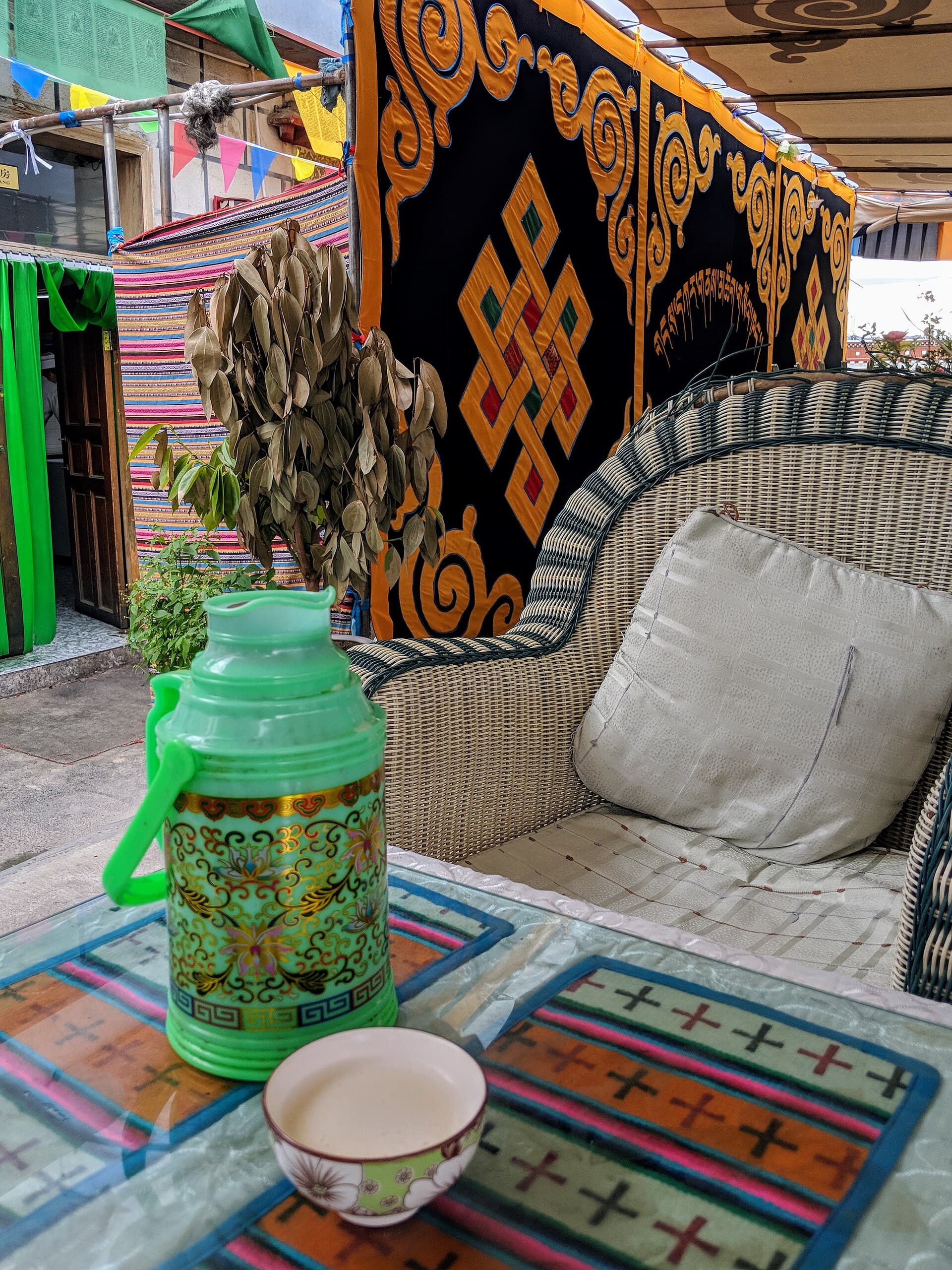
Strong tea churned with yak butter and salt until it is pale and thick. Salty, rich, and better on the second cup than the first. Teahouses serve it by the flask.
Sweet tea 甜茶
tiánchá
Milky, sugary black tea, poured by the glass in the sweet-tea houses of the old town, where the whole neighbourhood sits for hours. Leave small change on the table; the server tops you up and takes from it. The big ones, such as Guangming near the Jokhang, pour butter tea too.
Tsampa and momos 糌粑 · 藏包
zānba · zàngbāo
Tsampa is roasted barley flour mixed with butter tea into a dough, the staple of Tibet. Momos are steamed dumplings, usually yak meat. Both come to the table in any Tibetan restaurant along the Barkhor.
Plan your trip to Lhasa
Best time to visit Lhasa
May to October brings warm days and cold nights. July and August get most of the year’s rain, mostly at night, and the biggest crowds. The Shoton festival, when a giant painted Buddha is unrolled on the hill at Drepung Monastery, usually falls in August.
Winter is cold and very clear, pilgrims from the countryside fill the Barkhor, and Potala tickets are half price from November to April.
Getting to Lhasa
Lhasa Gonggar airport is about 60 km southwest of the city, an hour on the expressway. Your agency usually meets you; an airport bus also runs to near the Potala.
Lhasa Station is south of the river, about 20 minutes by taxi from the centre. Trains from Xining take about 20 hours.
Getting around Lhasa
The old town is small enough to walk. Taxis in the city usually charge about 10 yuan, and Didi works too. The agency’s car covers anything outside Lhasa.
Alipay and WeChat Pay, both linked to a foreign card, work in most shops; keep coins and small notes for sweet tea. Signs are in Tibetan and Chinese. Small restaurants rarely have English menus, so ask your guide.
Where to stay in Lhasa
Stay in the old town around the Barkhor if you can: you step out to the kora at dawn and back to a teahouse, and nothing needs a car. The streets west towards the Potala have bigger, newer hotels.
Lhasa in three days
- Day 1. Rest. Walk the Barkhor slowly in the afternoon and sit in a sweet-tea house.
- Day 2. The Potala at your slot, then the Jokhang and the Barkhor kora.
- Day 3. Norbulingka in the morning, Sera for the debates at 3 pm (not on a Sunday).
Questions about visiting Lhasa
How bad is the altitude in Lhasa?
Lhasa is at 3,650 metres, with about two thirds of the oxygen you get at sea level. Most people have a headache and short breath for a day or two. Rest, drink water, skip alcohol, climb nothing on day one.
Should I take altitude medicine for Lhasa?
Some travellers take acetazolamide (Diamox), usually starting the day before they arrive. It needs a prescription and doesn’t suit everyone, so ask your doctor first. Lhasa pharmacies and hotels sell oxygen in cans.
Can you walk around Lhasa without your guide?
Usually yes: you can walk the Barkhor, eat and sit in teahouses alone. The Potala, the big temples and monasteries, and anywhere outside Lhasa need your guide.
Train or plane to Lhasa?
The flight from Chengdu takes about two hours and lifts you to 3,650 metres at once. The train from Xining climbs over about 20 hours, with the plateau outside, though it crosses a 5,000-metre pass.
Can you visit Everest Base Camp from Lhasa?
Yes, on an agency tour with extra permits, usually eight days in all: two or three in Lhasa first, then about 700 km each way by road.
Chinese you’ll see in Lhasa
Signs here are in Tibetan and Chinese; these are the Chinese ones you’ll meet most.
The line under each word is pinyin, the Chinese sounds written in our alphabet. The marks over the vowels are tones; people will understand you without them at first.
- 拉萨Lāsà
- Lhasa
- 布达拉宫Bùdálā Gōng
- the Potala Palace
- 大昭寺Dàzhāo Sì
- the Jokhang Temple
- 八廓街Bākuò Jiē
- the Barkhor
- 寺sì
- temple, monastery
- 海拔hǎibá
- altitude
- 转经zhuànjīng
- to walk the kora, circling a holy place
- 酥油茶sūyóuchá
- butter tea
- 氧气yǎngqì
- oxygen; sold in cans here
- 入藏函rùzàng hán
- the Tibet Travel Permit
Want more? Browse Chinese vocabulary by level.
Hear Lhasa in Mandarin
Our audio story arrives short of breath, climbs the Potala one flight at a time and walks the Barkhor with the pilgrims at dawn.
The story is Lhasa: 3,650 Metres, and the Body Decides. It is told four ways, one for each level. Every version has a transcript with pinyin and English, so start with Beginner if you have no Chinese yet.