Dunhuang Travel Guide: Mogao Caves, Singing Dunes, Silk Road
Updated
Dunhuang is an oasis town in western Gansu province, two and a half hours by air from Xi’an. You spend the morning in painted caves 25 km out of town and the evening sliding down a sand dune 5 km south of it.
There is a short audio story about Dunhuang in Mandarin, with English alongside. No Chinese needed for the beginner version. Jump to the storyA short history of Dunhuang
Dunhuang sits at the western end of the Hexi Corridor, the strip of land between mountains and desert that links China to Central Asia. For caravans on the Silk Road, the trade routes west, it was the last reliable water before the desert. In the second century BC the Han, the dynasty then ruling China, made it a frontier town with two gates beyond it, Yumen Pass and Yangguan.
Buddhism came into China along the same road. For a thousand years, people hoping for a safe crossing paid to have caves cut and painted in a cliff outside town.
The Mogao Caves
莫高窟 Mògāo Kū
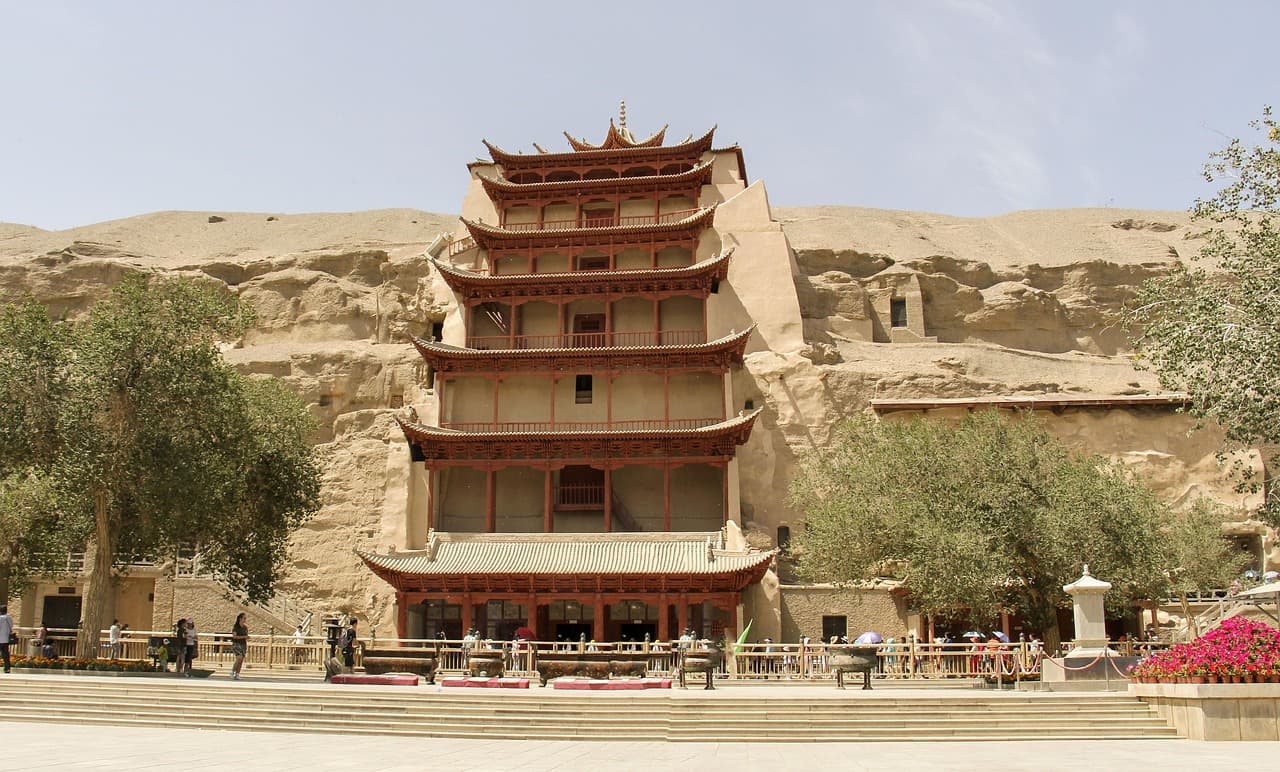
The Mogao Caves are cut into a cliff about 25 km southeast of the city. The first was dug in 366 and people kept adding more for a thousand years. 492 painted caves survive, with some 45,000 square metres of murals and more than 2,000 statues. UNESCO listed them in 1987.
The paintings show Buddhas and paradises, but also everyday life: musicians, merchants with their carts, farmers, a wedding. The flying figures called feitian (飞天) that drift across the ceilings became the symbol of the city.
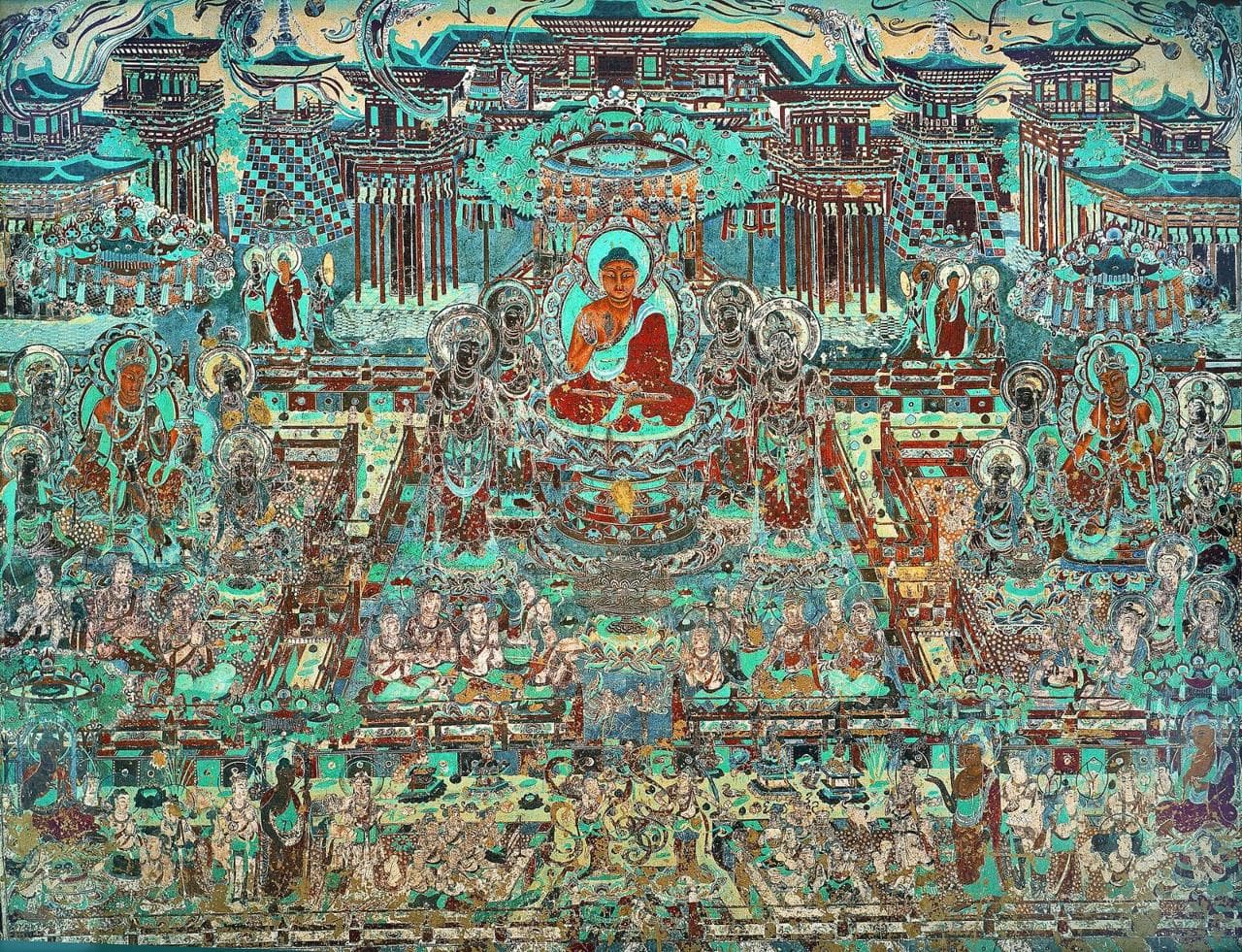
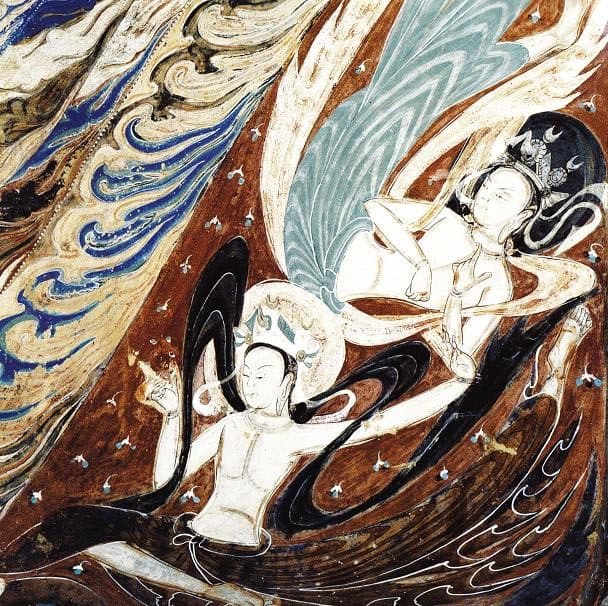
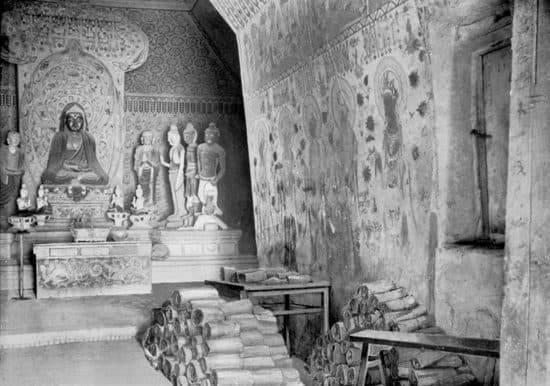
In 1900 a Daoist caretaker, Wang Yuanlu, found a sealed room behind a wall in Cave 17. Inside were tens of thousands of manuscripts from the 4th to the 11th century: sutras, contracts, letters, poems and account books. In 1907 the explorer Aurel Stein paid Wang about 130 pounds and left with cases of them. The British Library now holds some 14,000 Chinese scrolls and fragments from the cave. Other expeditions followed, and the collection is now split between Beijing, London, Paris and St Petersburg. The oldest dated printed book in the world, a Diamond Sutra from 868, came out of this room.
How to visit the Mogao Caves
- 1
Book as soon as you have dates
Tickets are timed, named and limited, open about 30 days ahead, and sell out in summer. Book with your passport on the official Mogao WeChat mini-program (in Chinese) or on Trip.com in English. If it will not take your passport, ask at the ticket office in the Digital Exhibition Center.
- 2
Start at the Digital Exhibition Center, not the caves
Every visit begins at the Digital Exhibition Center on the edge of the city; taxis that go straight to the caves are turned away. Arrive half an hour early with the passport you booked with.
- 3
Watch the two films
The standard ticket includes two films: one on the history of the caves, and a dome film that takes you inside caves that are closed.
- 4
Ride the shuttle to the cliff
A shuttle bus takes you to the caves, where a guide leads your group through about eight of them in two hours. Which ones are open changes, to protect the paintings.
Photos are not allowed inside the caves, and a few famous caves cost extra.
Things to do in Dunhuang beyond the caves
The dunes are at the edge of town. The passes and Yadan are out in the desert with no public transport. All three fit in one long day with a car and driver, 8 to 10 hours; your hotel can book one. Short on time? Skip Yangguan and end at Yadan for the sunset.
Mingsha Shan and Crescent Lake 鸣沙山 · 月牙泉
Míngshā Shān · Yuèyá Quán
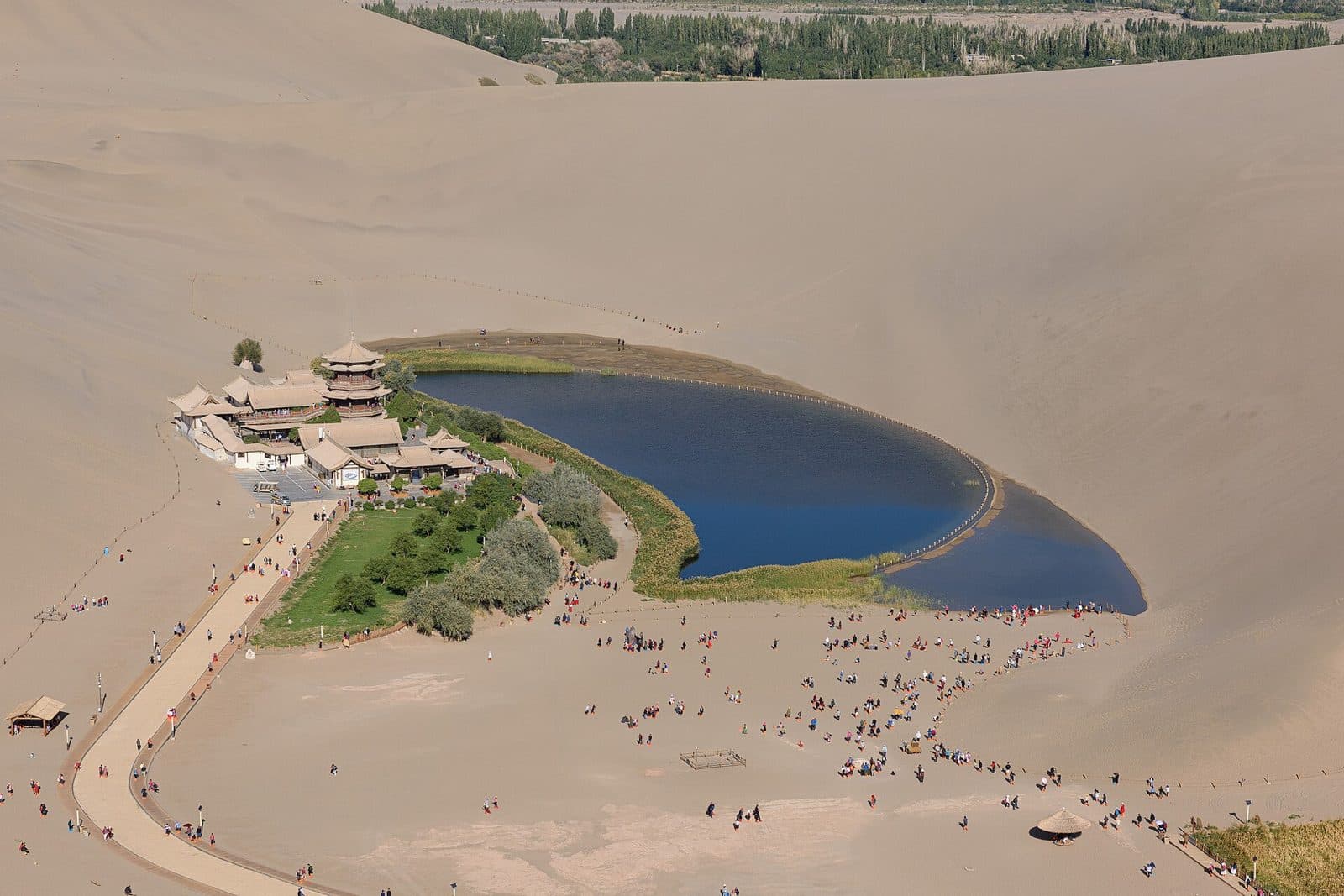
Five kilometres south of the city. The dunes get their name from the low hum the sand makes when it slides, and in a hollow between them sits Crescent Lake, a spring-fed pool the sand has never buried. Go in the late afternoon, climb a dune for the sunset, and slide back down.
Yumen Pass 玉门关
Yùmén Guān
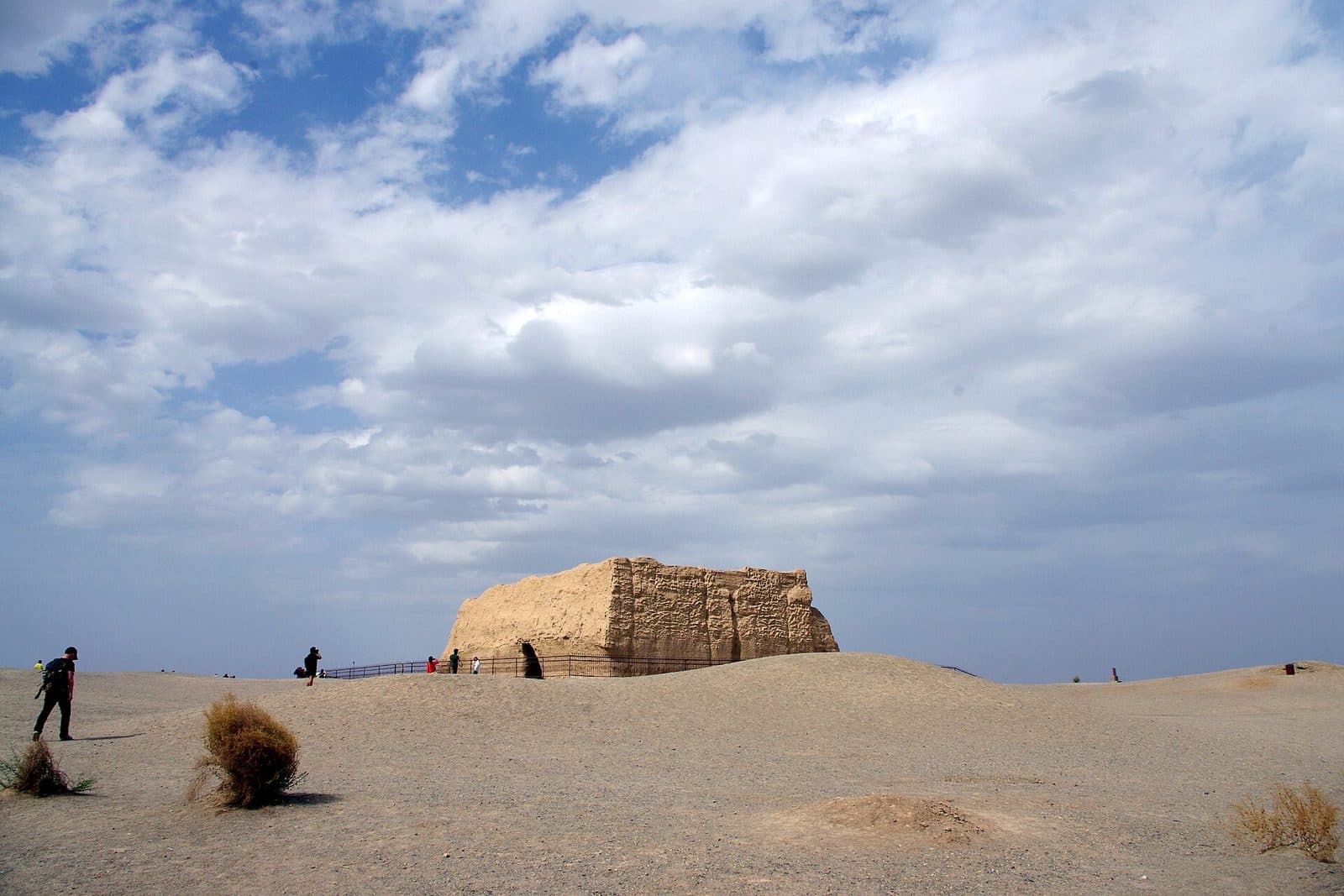
About 90 km northwest, the Jade Gate Pass was named for the jade carried through it from the west. A square mud-brick fort still stands, with stretches of Han wall nearby built from layers of reeds and gravel. Chinese readers know it from a poem of the Tang dynasty (618–907): 春风不度玉门关, "the spring wind never crosses Yumen Pass."
Yangguan 阳关
Yángguān
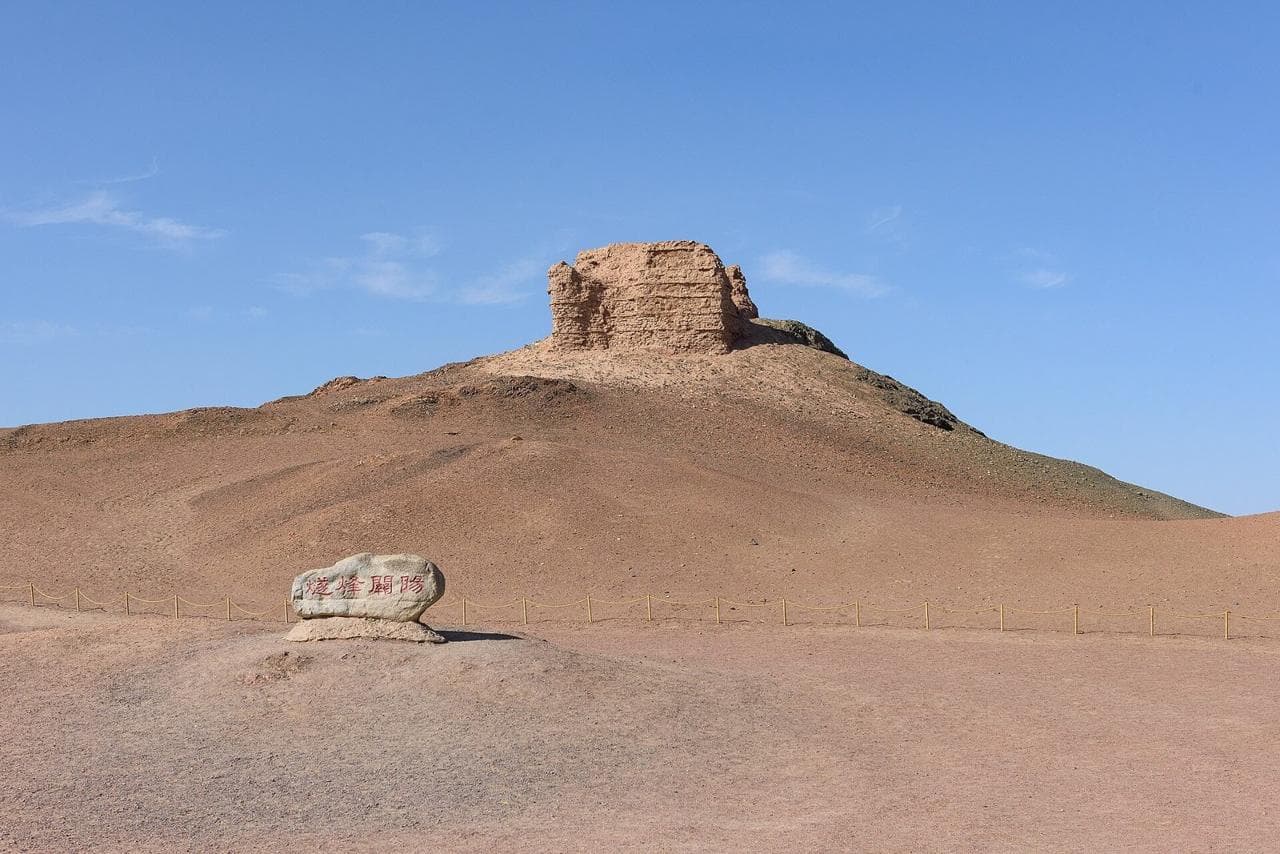
About 70 km southwest, the southern gate is mostly gone, but a beacon tower still stands on the hill. Wang Wei’s farewell poem made it famous: 西出阳关无故人, "west of Yangguan you will have no old friends."
Yadan National Geopark 雅丹
Yǎdān
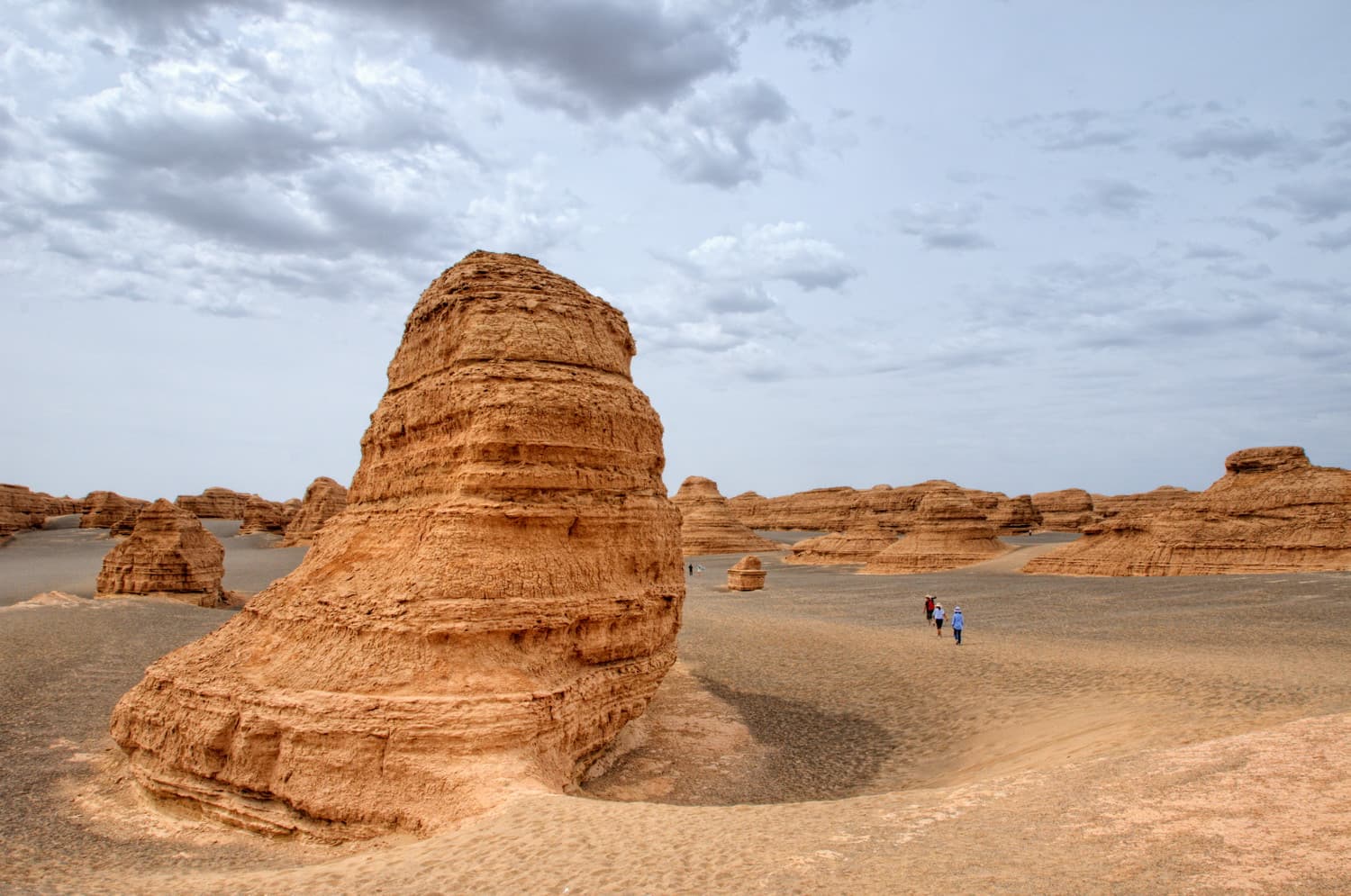
About 180 km northwest, wind has carved the desert floor into long ridges of clay that look like a fleet of ships at sunset. It is the farthest stop of the loop.
What to eat in Dunhuang
Donkey meat yellow noodles 驴肉黄面
lǘròu huángmiàn
Hand-pulled noodles with a yellow tint, topped with braised donkey meat. It is the local dish.
Apricot drink 杏皮水
xìngpíshuǐ
A sweet and sour drink made from dried apricots, served cold. It cuts through the grease of a night-market dinner.
Shazhou Night Market 沙洲夜市
Shāzhōu Yèshì
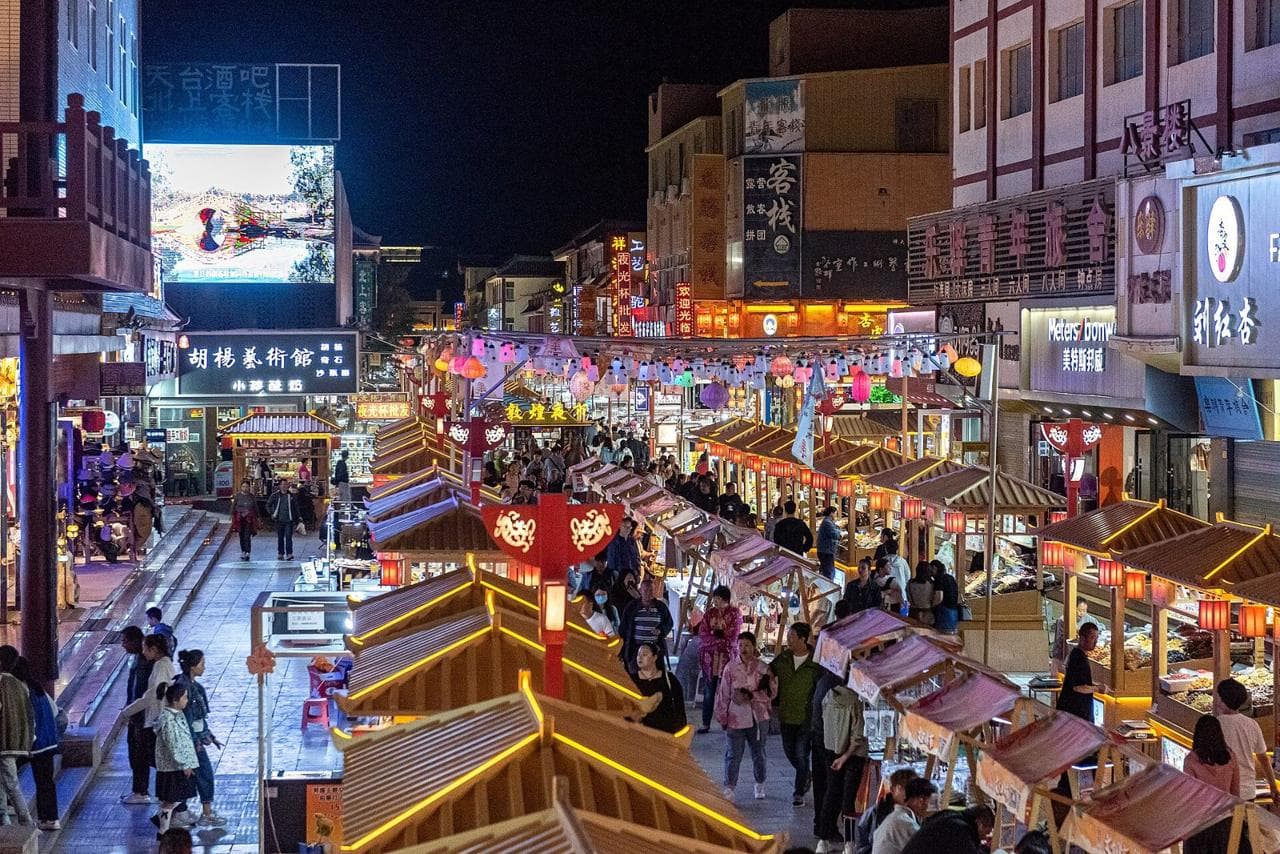
In the centre of town, busy from evening until around midnight: lamb skewers, noodles, apricot drink and craft stalls.
Plan your trip to Dunhuang
Best time to visit Dunhuang
May to October. July and August average about 33°C by day with almost no rain, and they are the busiest months, when Mogao slots go first. September and early October are cooler and clearer.
Avoid 1 to 7 October, the Golden Week holiday. Winter is quiet but cold, with January nights around minus 14°C.
Getting to Dunhuang
Dunhuang Mogao Airport is about 13 km east of town, 20 to 30 minutes by taxi. Direct flights come from Xi’an (about 2.5 hours) and Beijing (about 3.5).
Dunhuang Station, near the airport, takes trains from Lanzhou (about 8 hours by day, or overnight) and Xi’an (about 11 hours). Fast trains to Xinjiang stop at Liuyuan South instead, 130 km away: two hours by taxi.
Getting around Dunhuang
The centre is small and walkable, and taxis are cheap. Didi, the ride-hailing app, works here, has an English interface, takes foreign cards and shows the fare first. For the caves, set the Digital Exhibition Center as your destination.
Pay with Alipay or WeChat Pay; both link foreign cards now. Carry a little cash for night-market stalls. Expect little English outside the caves and big hotels, so keep your hotel’s address in Chinese.
Where to stay in Dunhuang
Stay in the centre, near the Shazhou Night Market: dinner on your doorstep and a short ride to the dunes and the Digital Exhibition Center.
For quiet, guesthouses in the villages by the dunes put you minutes from Crescent Lake at sunrise and sunset. You will need a taxi into town for dinner.
Dunhuang in three days
- Day 1. The Mogao Caves in the morning, then donkey noodles and apricot drink at the night market.
- Day 2. Reach the dunes in the late afternoon, climb one for the sunset and slide back down.
- Day 3. The desert loop with a driver: Yangguan, Yumen Pass, then Yadan at sunset.
Questions about visiting Dunhuang
Can foreigners book the Mogao Caves online?
Yes. The official WeChat mini-program takes a passport, and Trip.com sells tickets in English. For summer, book up to 30 days ahead, and bring the passport you booked with.
What if the Mogao Caves are sold out?
Go to the ticket office at the Digital Exhibition Center with your passport. In the summer peak it sells an emergency ticket: four caves, no films, usually with a Chinese-speaking guide.
Can you do the caves and the dunes on the same day?
Yes. See the caves in the morning, rest through the midday heat, and reach the dunes in the late afternoon for the sunset.
Can you get to Yumen Pass and Yadan without a tour?
Not by public transport. Hire a car and driver, shared or private, through your hotel. It is about 350 km there and back.
Can you visit Dunhuang without speaking Chinese?
Yes, with a phone. Book the caves on Trip.com, use Didi for taxis, and show drivers your hotel’s address in Chinese.
Chinese you’ll see in Dunhuang
Words from the signs, tickets and menus here.
The line under each word is pinyin, the Chinese sounds written in our alphabet. The marks over the vowels are tones; people will understand you without them at first.
- 敦煌Dūnhuáng
- Dunhuang
- 莫高窟Mògāo Kū
- the Mogao Caves
- 数字展示中心shùzì zhǎnshì zhōngxīn
- Digital Exhibition Center, where every cave visit starts
- 壁画bìhuà
- mural
- 飞天fēitiān
- flying celestial, the figures on the cave ceilings
- 月牙泉Yuèyá Quán
- Crescent Lake, literally "crescent-moon spring"
- 骆驼luòtuo
- camel, for rides on the dunes
- 关guān
- pass, frontier gate
- 预约yùyuē
- to book ahead
- 门票ménpiào
- admission ticket
Want more? Browse Chinese vocabulary by level.
Hear Dunhuang in Mandarin
Our audio story visits the Mogao Caves and follows the manuscripts from Cave 17 to the libraries that hold them now.
The story is Dunhuang: 492 Caves, 50,000 Manuscripts, 130 Pounds. It is told four ways, one for each level. Every version has a transcript with pinyin and English, so start with Beginner if you have no Chinese yet.